









































Benefits of Using Portable XRF Analyzers in Field Inspections
Learn how Portable XRF Analyzers improve field inspections with fast, accurate, non-destructive material analysis for mining, manufacturing, and recycling.

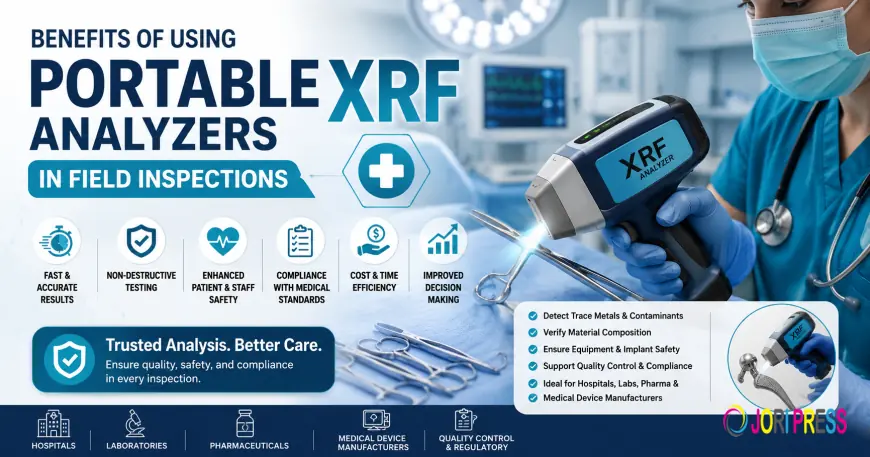
Field inspections require fast, accurate, and reliable material analysis to ensure quality, safety, and compliance. Traditional laboratory testing often involves collecting samples, transporting them to a lab, and waiting days for results. This process can delay important decisions and increase operational costs.
Portable XRF (X-ray Fluorescence) analyzers have transformed field inspections by providing instant elemental analysis directly at the inspection site. These handheld devices allow professionals to identify metals, alloys, minerals, and other materials without damaging the sample. Industries such as mining, manufacturing, recycling, construction, aerospace, and oil & gas increasingly rely on portable XRF analyzers to improve inspection efficiency and reduce downtime.
In this blog, we explore the key benefits of using portable XRF analyzers in field inspections and why they have become an essential tool for modern quality assurance.
What Is a Portable XRF Analyzer?
A portable XRF analyzer is a handheld analytical instrument that uses X-ray fluorescence technology to determine the elemental composition of a material. When the analyzer directs X-rays onto a sample, the material emits characteristic fluorescent X-rays. The instrument detects these signals and identifies the elements present, along with their approximate concentrations.
Since the analysis is non-destructive, the sample remains intact throughout the testing process.
Key Benefits of Portable XRF Analyzers in Field Inspections
1. Instant Results On-Site
One of the biggest advantages of portable XRF analyzers is their ability to provide results within seconds.
Instead of waiting for laboratory reports, inspectors can:
-
Identify unknown materials immediately
-
Verify metal grades on-site
-
Make quick operational decisions
-
Reduce project delays
Real-time analysis improves productivity and helps organizations respond quickly to quality concerns.
2. Non-Destructive Material Testing
Portable XRF analyzers do not require cutting, grinding, or destroying the sample.
This non-destructive testing method is ideal for:
-
Valuable components
-
Finished products
-
Historical artifacts
-
Industrial equipment
-
Critical infrastructure
The ability to inspect materials without causing damage makes XRF technology suitable for a wide range of applications.
3. Improved Inspection Efficiency
Traditional testing often requires multiple steps, including sample preparation, transportation, and laboratory analysis.
Portable XRF analyzers simplify the process by enabling inspectors to:
-
Test materials directly at the inspection site
-
Analyze multiple samples quickly
-
Reduce inspection time
-
Increase daily inspection capacity
This efficiency helps companies complete projects faster while maintaining high-quality standards.
4. Accurate Elemental Analysis
Modern handheld XRF analyzers provide highly accurate identification of various elements across many material types.
They can analyze:
-
Stainless steel
-
Carbon steel
-
Aluminum alloys
-
Copper alloys
-
Nickel alloys
-
Titanium
-
Precious metals
-
Mining ores
Accurate elemental analysis reduces the risk of material mix-ups and supports informed decision-making.
5. Cost Savings
Using portable XRF analyzers significantly reduces inspection costs by minimizing:
-
Laboratory testing expenses
-
Shipping costs
-
Equipment downtime
-
Repeat inspections
-
Production delays
Organizations can inspect more materials while lowering their overall operating expenses.
6. Enhanced Quality Control
Quality control teams rely on portable XRF analyzers to verify incoming raw materials and finished products before production or shipment.
Benefits include:
-
Material verification
-
Alloy grade confirmation
-
Supplier quality checks
-
Production monitoring
-
Final product inspection
These capabilities help manufacturers maintain consistent product quality and meet customer expectations.
7. Increased Workplace Safety
Material identification plays a critical role in ensuring workplace safety.
Portable XRF analyzers help inspectors:
-
Identify hazardous materials
-
Detect toxic metals
-
Verify equipment materials
-
Prevent incorrect material usage
-
Reduce operational risks
Early detection of unsuitable materials contributes to safer work environments.
8. Easy to Carry and Operate
Modern handheld XRF analyzers are lightweight, compact, and designed for field use.
Their user-friendly interface allows inspectors to:
-
Perform tests with minimal training
-
Store inspection data digitally
-
Generate instant reports
-
Transfer data to computers or cloud platforms
Their portability makes them ideal for remote locations and large industrial facilities.
9. Supports Regulatory Compliance
Many industries must comply with strict national and international regulations regarding material composition.
Portable XRF analyzers help organizations:
-
Verify regulatory compliance
-
Conduct environmental inspections
-
Screen hazardous substances
-
Meet quality certification requirements
-
Maintain detailed inspection records
Accurate documentation simplifies audits and regulatory reporting.
10. Versatile Across Multiple Industries
Portable XRF analyzers serve numerous industries due to their flexibility and speed.
Common applications include:
Manufacturing
-
Raw material verification
-
Production quality control
-
Alloy identification
Mining
-
Ore grade analysis
-
Exploration
-
Mineral identification
Recycling
-
Metal sorting
-
Scrap classification
-
Material valuation
Oil and Gas
-
Positive Material Identification (PMI)
-
Pipeline inspection
-
Corrosion monitoring
Aerospace
-
Alloy verification
-
Component inspection
-
Maintenance checks
Construction
-
Structural steel verification
-
Material quality inspection
-
Compliance testing
Why Portable XRF Analyzers Are Better for Field Inspections
Compared to conventional laboratory testing, portable XRF analyzers offer several advantages:
|
Feature |
Portable XRF Analyzer |
Laboratory Testing |
|
Testing Location |
On-site |
Laboratory |
|
Results |
Seconds |
Hours to days |
|
Sample Damage |
None |
May require preparation |
|
Portability |
High |
Not portable |
|
Decision Making |
Immediate |
Delayed |
|
Inspection Speed |
Fast |
Slower |
|
Operational Cost |
Lower |
Higher |
This comparison highlights why portable XRF analyzers are increasingly preferred for field inspections.
Tips for Maximizing XRF Inspection Accuracy
To achieve reliable results:
-
Clean the sample surface before testing.
-
Calibrate the analyzer regularly.
-
Follow the manufacturer's operating guidelines.
-
Perform multiple measurements when needed.
-
Ensure proper operator training.
-
Store the instrument in recommended environmental conditions.
Following these best practices helps maintain measurement accuracy and extends instrument life.
Future of Portable XRF Technology
Advancements in portable XRF technology continue to improve analytical performance. Modern systems now offer:
-
Faster processing speeds
-
Improved detection limits
-
AI-assisted material identification
-
Wireless connectivity
-
Cloud-based data management
-
GPS-enabled inspection records
-
Enhanced battery life
These innovations make portable XRF analyzers even more valuable for industries that require rapid and reliable field inspections.
Conclusion
Portable XRF analyzers have become indispensable tools for field inspections by delivering fast, accurate, and non-destructive elemental analysis directly at the inspection site. Their ability to reduce testing time, lower operational costs, improve quality control, and support regulatory compliance makes them a preferred solution across manufacturing, mining, recycling, aerospace, construction, and oil & gas industries.
As industrial operations continue to demand greater efficiency and precision, portable XRF analyzers will play an increasingly important role in ensuring material quality and enabling informed decision-making. Investing in a reliable handheld XRF analyzer is a practical step toward improving inspection workflows, enhancing productivity, and maintaining high standards of quality and safety.
What's Your Reaction?
 Like
0
Like
0
 Dislike
0
Dislike
0
 Love
0
Love
0
 Funny
0
Funny
0
 Angry
0
Angry
0
 Sad
0
Sad
0
 Wow
0
Wow
0