








































Network Security Solutions: How to Protect Your Business From Modern Cyber Threats
Learn which network security solutions protect your business from modern threats, how to choose the right one, and how Defend My Business helps you find it.
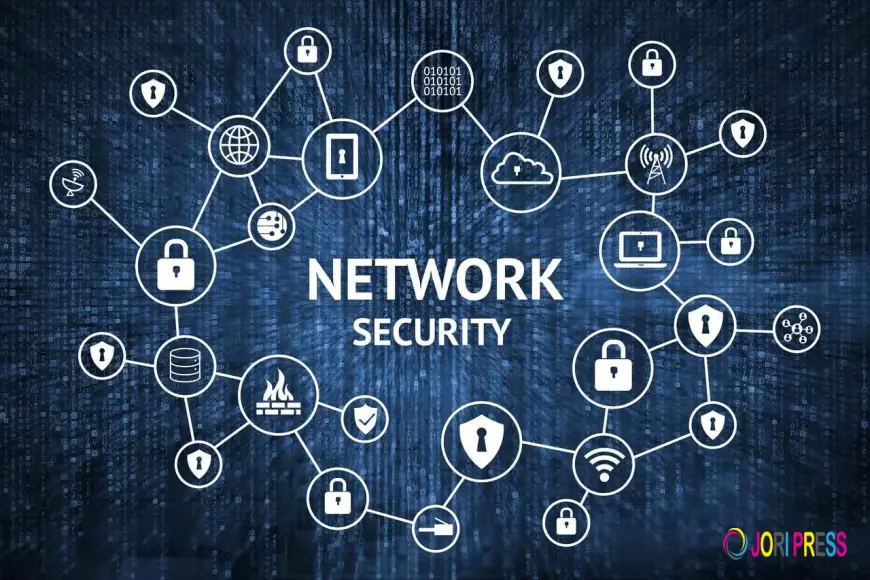
Most businesses don’t lose their data to a dramatic, movie-style hack. They lose it through an unpatched system, an overly permissive account, or a device nobody was watching. Network security solutions exist to close those gaps before an attacker finds them.
This guide explains what network security solutions are, the threats they address, the core technologies worth knowing, and how to choose the right mix for your organization.
What Are Network Security Solutions?
Network security solutions are the tools, policies, and services that protect the integrity, confidentiality, and availability of your network and everything connected to it. That includes servers, laptops, mobile devices, cloud workloads, and the data moving between them.
No single product does all of this. Effective protection is layered: if one control fails, another catches the threat. This approach is often called defense in depth, and it sits at the core of any mature cyber security program.
Why Traditional Networks Are Struggling
Many networks were designed for a world where employees worked in one office and applications lived in one data center. That world is gone. Today’s networks have to support remote staff, cloud platforms, personal devices, and third-party vendors, often all at once.
Legacy defenses struggle with this reality in several ways:
-
Sophisticated attacks. Automated exploits, zero-day vulnerabilities, ransomware, and DDoS campaigns move faster than manual defenses can respond.
-
Permissive access. When users have more access than they need, one compromised account can lead to lateral movement across the whole network.
-
Unmanaged devices. Personal phones, IoT equipment, and shadow IT create entry points that security teams can’t see.
-
Encrypted blind spots. Much malicious traffic is now encrypted, so older inspection tools miss it.
-
Performance trade-offs. Poorly designed security checkpoints slow applications down, which tempts users to work around them.
Understanding these weaknesses is the first step toward choosing solutions that fit your actual risk.
The Core Network Security Solutions Every Business Should Know
1. Firewalls and Firewall as a Service
The firewall remains the foundation of network defense. It filters traffic according to rules you set, blocking unauthorized access while allowing legitimate activity. Modern next-generation firewalls add intrusion prevention, application awareness, and threat intelligence.
Firewall as a Service (FWaaS) delivers this protection from the cloud. That makes it easier to scale, simpler to manage across multiple locations, and a good fit for distributed teams.
2. Zero Trust Access
Zero trust works on a simple principle: never trust, always verify. Every user and device must prove its identity and be authorized before reaching a resource, whether it’s inside or outside the office.
Rather than giving broad access once someone is “inside,” zero trust access solutions grant the minimum access needed for each task. If an attacker steals credentials, the damage is contained. Zero trust also supports compliance by making access easy to audit.
3. DDoS Protection
A distributed denial-of-service attack floods your network or applications with traffic until legitimate customers can’t get through. For an e-commerce site, a SaaS platform, or a contact center, even short outages cost revenue and reputation.
DDoS mitigation absorbs and filters malicious traffic before it reaches your infrastructure, keeping services available during an attack.
4. Antimalware and Endpoint Protection
Every laptop, server, and phone is a potential doorway into your network. Antimalware tools detect and block viruses, ransomware, and other malicious software. Modern endpoint security goes further, using behavioral analysis to spot suspicious activity even when no known malware signature exists.
This matters most for businesses with remote or hybrid workforces, where devices constantly leave the protection of the office network.
5. Managed Detection and Response (MDR)
Buying security tools is one thing. Watching them around the clock is another. Many organizations don’t have the staff to monitor alerts at 2 a.m. on a Sunday.
Managed detection and response puts a team of analysts behind your tools. They monitor continuously, investigate alerts, and respond to real threats quickly, which shortens the time between intrusion and containment. For broader visibility across endpoints, cloud, and network, extended detection and response correlates data from multiple sources, while a managed SIEM centralizes and analyzes your logs.
6. Secure Access Service Edge (SASE)
SASE combines networking and security functions, such as secure web gateways, cloud firewalls, and zero trust access, into one cloud-delivered service. Employees get consistent, secure access to applications from any location, and IT teams get simpler administration. It’s especially useful for companies with many branch offices or a large remote workforce.
Supporting Services That Strengthen Your Network
Technology alone doesn’t guarantee security. These supporting services make sure your solutions are configured correctly and keep working over time:
-
Vulnerability management. Continuous scanning and prioritized patching reduce the number of weaknesses attackers can exploit. Vulnerability management is often the cheapest way to prevent a breach.
-
Penetration testing. Ethical hackers attempt to break into your environment so you can fix weaknesses first. Penetration testing shows how your defenses hold up against a real attacker.
-
Security audits. A cyber security audit benchmarks your controls against recognized standards and reveals gaps you may not know exist.
-
Email protection. Phishing remains one of the most common ways attackers get in. Email phishing protection stops many malicious messages before they reach an inbox.
-
Incident response. When something does go wrong, a tested incident response plan limits downtime and data loss.
How to Choose the Right Network Security Solutions
With so many vendors and acronyms, selection can feel overwhelming. A structured approach helps.
Start with an honest assessment. Map your assets, users, and data flows. Identify where sensitive information lives and who can reach it. You can’t protect what you haven’t inventoried.
Match solutions to real risks. A healthcare provider handling patient records has different priorities than an online retailer worried about DDoS. Let your threat profile and compliance obligations, such as NIST compliance, guide your priorities rather than buying whatever is trending.
Consider integration and performance. Security tools that don’t work together create gaps and extra workload. Ask how a solution integrates with your existing stack and whether it will affect user experience.
Plan for people and process. Decide who will manage the tools day to day. If you lack in-house expertise, managed cyber security or a virtual CISO can provide senior guidance without the cost of a full security department.
Look beyond the sticker price. Compare total cost of ownership, including licensing, deployment, management, and the cost of an incident you avoid. Contract terms matter too, since hidden fees and rigid lock-ins can turn a good product into a bad deal.
Review and adapt. Threats evolve, and so should your defenses. Schedule regular reviews, retest after major changes, and train employees, because people remain a key layer of defense.
Common Mistakes to Avoid
-
Relying on a single tool. One product, however good, leaves single points of failure.
-
Ignoring internal threats. Excessive permissions and careless behavior cause as many incidents as outside attackers.
-
Skipping patches. Known vulnerabilities left unpatched are among the easiest routes into a network.
-
Treating security as a one-time project. Security is ongoing. Monitoring, testing, and updating never stop.
-
Choosing a vendor without comparing options. Each provider has strengths and gaps, so comparison protects both your budget and your security.
The Benefits of Getting Network Security Right
When the right layers work together, the payoff goes well beyond avoiding a breach:
-
Fewer security incidents and shorter response times
-
Better uptime and more reliable applications
-
Easier compliance and audit readiness
-
Greater customer and partner trust
-
A secure foundation for remote work and cloud growth
Conclusion: Let Defend My Business Help You Find the Right Fit
Network security solutions are no longer optional. Attackers are faster, networks are more complex, and the cost of a single incident can threaten a company’s survival. The good news is that a layered, well-chosen approach can dramatically reduce your risk.
That’s where Defend My Business comes in. We provide the best service for businesses looking for the right network security solutions. Instead of leaving you to sort through hundreds of vendors alone, we connect you with top providers from our partner network of 450+ vendors. We assess your needs, recommend personalized options, negotiate contracts on your behalf, and help guide implementation, all at no cost to you.
Whether you need firewalls, zero trust, DDoS protection, MDR, or a complete security strategy, our team will help you find the right solution at the right value. Visit our marketplace to explore options, or contact Defend My Business today to talk with a security expert and start protecting your network.
What's Your Reaction?
 Like
0
 Dislike
0
 Love
0
 Funny
0
 Angry
0
 Sad
0
 Wow
0