





































Industrial Glass Thermometer for Process Temperature Control
Discover how an industrial glass thermometer supports accurate process temperature control, reliable monitoring, and safer industrial operations.
Accurate temperature measurement is essential for maintaining quality, safety, and efficiency across industrial processes. From chemical plants and refineries to food processing facilities and manufacturing units, temperature must be monitored consistently to keep equipment and processes operating within specified limits. An industrial glass thermometer is a practical solution for applications that require clear, dependable, and easy-to-read temperature measurement.
Designed for industrial environments, glass thermometers can provide direct temperature readings without requiring complex electronic systems. When combined with accessories such as a Bimetal thermowell, they can also offer improved protection against pressure, corrosion, vibration, and harsh process conditions.
In this article, we explore the features, applications, benefits, and importance of industrial glass thermometers in process temperature control.
What Is an Industrial Glass Thermometer?
An industrial glass thermometer is a temperature-measuring instrument designed for monitoring temperatures in industrial processes. It generally consists of a graduated glass tube containing a temperature-sensitive liquid, enclosed or supported within a protective industrial housing.
As temperature changes, the liquid column moves within the calibrated glass tube, allowing operators to read the temperature directly from the scale. Depending on the design and application, industrial glass thermometers can be installed on tanks, pipelines, vessels, boilers, process equipment, and other industrial systems.
Their simple operating principle makes them useful where direct visual temperature monitoring is preferred. They do not necessarily depend on electrical power, which can make them particularly suitable for locations where electronic instrumentation is inconvenient or unnecessary.
Importance of Temperature Control in Industrial Processes
Temperature directly affects many industrial operations. Even relatively small temperature variations can influence product quality, energy consumption, equipment performance, and overall process safety.
For example, excessive temperatures can damage components, degrade materials, or create unsafe operating conditions. Temperatures that are too low can slow reactions, affect viscosity, reduce production efficiency, or compromise the quality of finished products.
An industrial glass thermometer allows operators to observe process temperatures quickly and take corrective action when readings move outside the desired range. This makes reliable temperature measurement an important part of preventive maintenance and process control.
Key Features of an Industrial Glass Thermometer
Industrial glass thermometers are available in different configurations to meet the requirements of various applications. Common features include:
Clear Temperature Readings
The graduated scale and visible liquid column allow operators to read temperature directly. This straightforward design can be useful in environments where quick visual inspection is important.
Durable Construction
Industrial models are designed with materials suitable for demanding working environments. Depending on the application, protective components may be used to help withstand mechanical stress and exposure to industrial conditions.
Wide Temperature Ranges
Different thermometer designs can be manufactured or selected for specific temperature ranges. Choosing the correct range helps ensure that the instrument provides useful and accurate readings during normal operation.
Easy Installation
Industrial thermometers can be supplied in configurations suitable for direct mounting or installation through protective components. The appropriate connection and mounting arrangement depends on the process equipment and application.
No External Power Requirement
Many traditional glass thermometers operate without electrical power. This can simplify installation and make them useful as local temperature indicators.
Role of a Bimetal Thermowell
A Bimetal thermowell is an important accessory when temperature instruments need additional protection from process conditions. A thermowell creates a protective barrier between the sensing instrument and the process medium.
In industrial applications, the thermometer may be exposed to high pressure, flowing fluids, corrosive substances, vibration, or mechanical impact. Installing a suitable thermowell can help protect the temperature-sensing element while allowing temperature to be measured through the thermowell wall.
A Bimetal thermowell can be particularly useful when temperature measurement equipment needs to be installed in demanding process environments. It can also make inspection, maintenance, or replacement of the thermometer easier without necessarily requiring direct exposure of the instrument to the process medium.
The thermowell material and design should always be selected according to process temperature, pressure, fluid characteristics, installation requirements, and compatibility with the application.
Industrial Glass Thermometer vs. Other Instruments
Industrial facilities use various instruments to monitor process conditions. An industrial glass thermometer is primarily designed for direct local temperature indication, while electronic temperature sensors may be selected when remote monitoring or automated control is required.
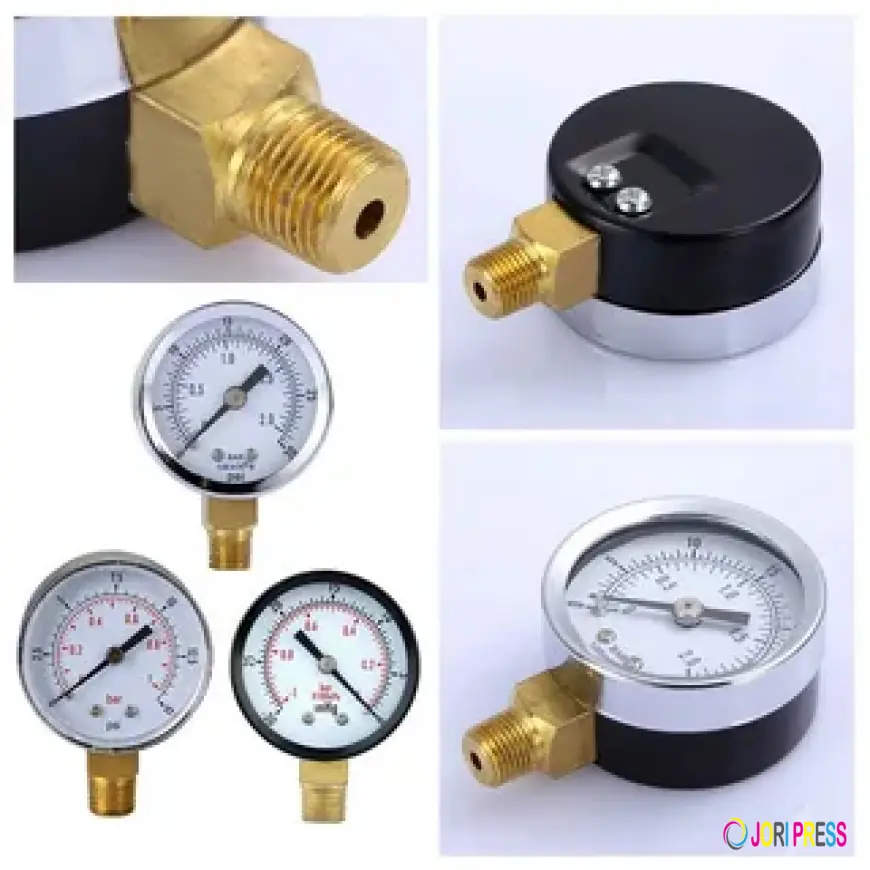
Similarly, a Manometer is designed to measure pressure rather than temperature. Manometers are commonly used to determine pressure differences in gases or liquids and can complement temperature instruments in process monitoring systems.
For example, a production line may use an industrial glass thermometer to monitor temperature, a Manometer to monitor pressure, and a Bimetal thermowell to provide protection for the temperature instrument. Together, these instruments can help operators maintain better awareness of critical process conditions.
Applications of Industrial Glass Thermometers
Industrial glass thermometers can be used in a wide range of sectors and processes, including:
Chemical processing plants
Pharmaceutical manufacturing
Food and beverage processing
Oil and gas facilities
Refineries and petrochemical plants
Boilers and heating systems
Water treatment plants
HVAC and industrial cooling systems
Manufacturing and processing equipment
Storage tanks and pipelines
The appropriate thermometer should be selected according to the operating temperature, process medium, installation location, pressure conditions, and required accuracy.
Benefits of Using an Industrial Glass Thermometer
One of the biggest advantages of an industrial glass thermometer is its simplicity. Operators can observe the temperature directly without relying on complicated electronic displays or external power supplies.
Other potential benefits include:
Simple operation: Direct-reading designs are easy for operators to understand and monitor.
Visual indication: The temperature scale provides an immediate local reference.
Low maintenance requirements: With a suitable installation, traditional glass thermometers can provide dependable service with relatively straightforward maintenance.
Versatile applications: Different designs and ranges can accommodate a variety of industrial processes.
Cost-effective monitoring: For local temperature indication, glass thermometers can be a practical instrumentation choice.
How to Choose the Right Industrial Glass Thermometer
Selecting the right industrial glass thermometer requires consideration of the operating environment and measurement requirements. Important factors include temperature range, scale graduation, mounting configuration, connection type, process conditions, and required accuracy.
If the thermometer will be exposed to aggressive process conditions, a suitable protective Bimetal thermowell should also be considered. The thermowell must be compatible with the process medium and capable of handling the expected temperature and pressure.
It is also important to consider whether the application requires local indication only or integration with an automated control system. For applications requiring remote signals, an electronic temperature sensor may be more appropriate, while a glass thermometer can remain useful for direct local verification.
Maintenance and Installation Considerations
Proper installation is essential for obtaining reliable temperature readings. The thermometer should be positioned where it can accurately represent the process temperature and remain accessible for inspection.
If a thermowell is used, it should be correctly installed and checked for compatibility with the process. Regular inspection can help identify damage, readability issues, leakage around connections, or other installation-related problems.
Keeping the temperature scale clean and clearly visible is also important because industrial environments may expose instruments to dust, oil, moisture, or other contaminants.
Conclusion
An industrial glass thermometer remains a useful solution for straightforward and dependable process temperature monitoring. Its direct-reading design, simple operation, and ability to function without external power make it suitable for numerous industrial applications.
When process conditions are demanding, using an appropriate Bimetal thermowell can provide additional protection and support reliable temperature measurement. Meanwhile, complementary instruments such as a Manometer can help operators monitor pressure and other important process parameters.
Choosing the correct instrumentation based on temperature range, process conditions, installation requirements, and measurement needs can improve operational reliability and support safer, more efficient industrial processes.
What's Your Reaction?
 Like
0
Like
0
 Dislike
0
Dislike
0
 Love
0
Love
0
 Funny
0
Funny
0
 Angry
0
Angry
0
 Sad
0
Sad
0
 Wow
0
Wow
0