



































Best Laser Technologies for Tattoo Removal: Q-Switched vs Picosecond
Explore Q-Switched vs Picosecond lasers for tattoo removal. Learn which delivers faster, safer results at Samnan Medical Center Sharjah.

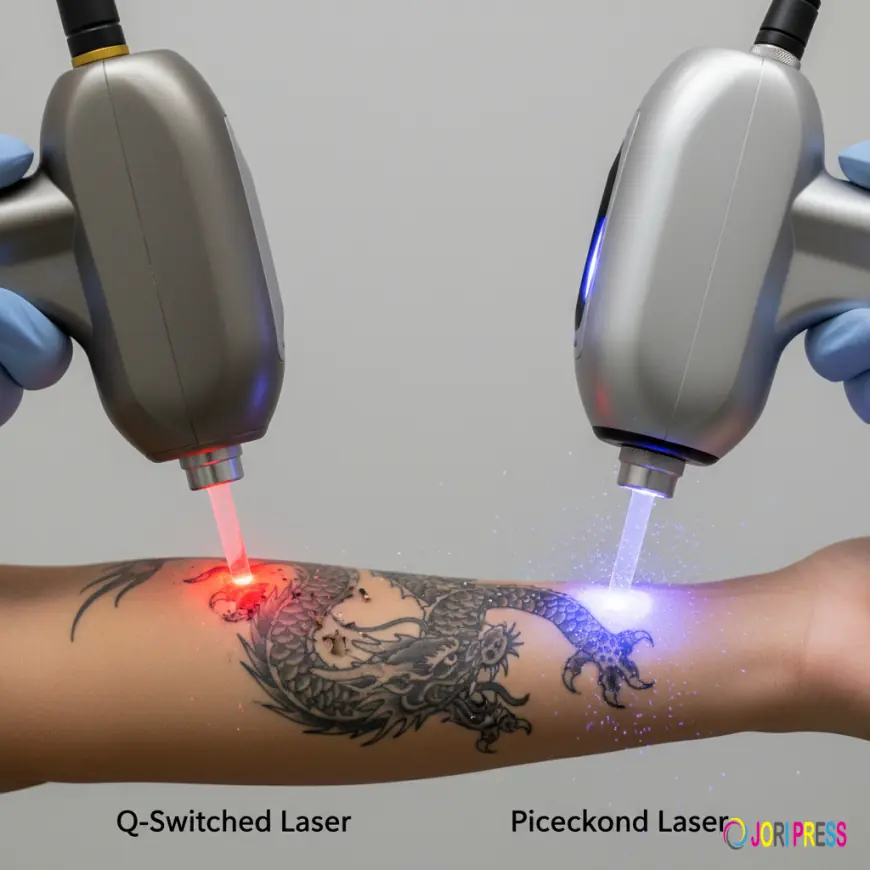
Tattoos are a beautiful form of self-expression, but sometimes, what once felt permanent becomes something you want to change. Thanks to modern laser technology, unwanted tattoos can now be safely and effectively removed. The real question many patients have is — which laser works best?
Two of the most advanced technologies used for tattoo removal today are the Q-Switched and Picosecond lasers. Both are designed to target tattoo ink beneath the skin without damaging surrounding tissue. However, they differ in precision, speed, and recovery outcomes.
In this detailed guide, we’ll break down how these laser systems work, their benefits, and which one may be ideal for you. Whether you’re exploring laser tattoo removal in Sharjah for the first time or comparing treatment options, this article will help you make an informed decision.
The Science Behind Laser Tattoo Removal
Laser tattoo removal works by breaking down pigment particles in the skin so that the body’s immune system can gradually eliminate them. The process relies on selective photothermolysis, where short bursts of laser energy are absorbed by tattoo ink, shattering it into smaller fragments.
Each laser type emits energy at different wavelengths, targeting specific colors of ink more effectively. The smaller and finer the laser pulses, the more efficient the fragmentation and the faster your body can flush out the ink particles.
This is where Q-Switched and Picosecond lasers differ significantly. While both use heat and light to target pigment, the Picosecond laser delivers energy in a trillionth of a second — making it faster and often more efficient than traditional Q-Switched systems.
What Is a Q-Switched Laser?
The Q-Switched laser has been a trusted technology in dermatology for decades. It emits powerful pulses of energy in nanoseconds (billionths of a second), targeting the pigment within tattoo ink. When these pulses hit the skin, they create a photoacoustic effect that shatters ink particles into small fragments.
Key Benefits of Q-Switched Laser Tattoo Removal:
-
Effective for dark inks such as black, brown, and blue.
-
Proven and widely used for many years, ensuring safety and reliability.
-
Suitable for most skin types, especially lighter tones.
-
Cost-effective compared to newer laser systems.
Limitations of Q-Switched Laser:
-
May require more sessions to achieve full tattoo clearance.
-
Less effective on bright colors like green and yellow.
-
Slightly longer recovery time compared to Picosecond laser treatments.
Overall, the Q-Switched laser remains a solid choice for patients who prioritize proven results at a moderate price point.
What Is a Picosecond Laser?
The Picosecond laser is one of the latest innovations in tattoo removal technology. It delivers ultra-short laser pulses — measured in picoseconds (one trillionth of a second) — creating a stronger photo-mechanical impact that shatters ink particles into even smaller fragments.
Because of its speed and precision, the Picosecond laser causes less heat damage to the surrounding skin, reducing the risk of scarring and hyperpigmentation.
Key Benefits of Picosecond Laser Tattoo Removal:
-
Faster and more efficient at breaking down ink particles.
-
Fewer sessions needed compared to traditional Q-Switched treatments.
-
Safer for all skin tones, including darker complexions.
-
Minimal downtime and faster recovery.
-
Excellent for multicolored or stubborn tattoos.
Limitations of Picosecond Laser:
-
Higher treatment cost due to advanced technology.
-
May cause temporary redness or swelling (mild and short-lived).
For those seeking rapid and complete tattoo clearance, the Picosecond laser often provides superior results with less discomfort.
Q-Switched vs Picosecond: Key Differences
Let’s take a closer look at how these two leading laser technologies compare:
|
Feature |
Q-Switched Laser |
Picosecond Laser |
|
Pulse Duration |
Nanoseconds (billionths of a second) |
Picoseconds (trillionths of a second) |
|
Treatment Sessions |
8–12 sessions |
4–8 sessions |
|
Effectiveness on Color |
Best for dark inks |
Effective for all colors |
|
Pain Level |
Mild to moderate |
Lower due to shorter exposure |
|
Healing Time |
Slightly longer |
Faster recovery |
|
Cost per Session |
More affordable |
Higher due to technology |
|
Risk of Pigmentation |
Slightly higher |
Minimal |
|
Overall Efficiency |
High |
Very high |
While both are safe and effective, Picosecond laser tattoo removal tends to deliver faster results with fewer sessions. However, the ideal choice often depends on your tattoo’s color, size, skin type, and budget.
If you’re unsure which treatment is best for you, schedule a consultation with the experts at Samnan Medical Center’s laser tattoo removal clinic in Sharjah.
Safety, Side Effects, and Recovery
When performed by experienced dermatologists, both Q-Switched and Picosecond lasers are safe and FDA-approved methods for tattoo removal.
Common temporary effects include:
-
Mild redness or swelling
-
Tingling or slight warmth at the treated site
-
Temporary lightening or darkening of the skin
These side effects typically resolve within a few days.
To promote healing and rejuvenation, your dermatologist might recommend PRP treatment in Sharjah. PRP (Platelet-Rich Plasma) helps repair skin and boost collagen, ensuring your skin recovers quickly and evenly after laser sessions.
Choosing the Right Laser Tattoo Removal Provider
When considering tattoo removal, your results depend largely on your clinic’s expertise and technology quality. At Samnan Medical Center, patients benefit from advanced lasers and a team of skilled dermatologists who specialize in personalized treatments.
Here’s what to look for in a trusted clinic:
-
Certified and experienced dermatologists.
-
FDA-approved equipment.
-
Transparent consultation and realistic expectations.
-
Proper aftercare guidance.
If you’re exploring other advanced skin services, vitiligo clinic in Sharjah at Samnan Medical Center offers specialized pigmentation care to restore confidence and skin health.
Frequently Asked Questions (FAQs)
1. How many sessions are required to remove a tattoo completely?
Most tattoos require between 4 to 10 sessions, depending on ink color, depth, and skin type. The Picosecond laser often reduces this number by half.
2. Does tattoo removal hurt?
You may feel a quick snapping sensation, similar to a rubber band on the skin. Topical numbing creams make the process comfortable.
3. Can I get PRP after tattoo removal?
Absolutely! PRP plasma treatment in Sharjah promotes healing, reduces redness, and enhances overall skin quality.
4. Are these treatments safe for darker skin?
Yes. Both laser systems are safe when used by trained professionals, but the Picosecond laser is gentler and better suited for darker tones.
5. How soon will I see results?
Visible fading typically begins after 2–3 sessions, with complete removal achieved gradually over several months.
Conclusion
When it comes to tattoo removal, both Q-Switched and Picosecond lasers are excellent technologies — each with its strengths. Q-Switched lasers remain reliable and budget-friendly, while Picosecond lasers offer faster, more precise results with minimal downtime.
Choosing between them depends on your skin type, tattoo characteristics, and personal goals. The best way to decide is to consult an expert dermatologist.
At Samnan Medical Center Sharjah, our specialists use advanced laser technology to deliver safe, effective, and customized tattoo removal treatments. Whether you’re considering tattoo removal, PRP treatment in Sharjah for skin rejuvenation, or other cosmetic services, we’re here to help you achieve flawless, confident results.
Book your consultation today and take the first step toward clear, renewed skin.
What's Your Reaction?
 Like
0
Like
0
 Dislike
0
Dislike
0
 Love
0
Love
0
 Funny
0
Funny
0
 Angry
0
Angry
0
 Sad
0
Sad
0
 Wow
0
Wow
0