




































10 Retail Technology Solutions Businesses Can Consider for Better Inventory Management
Discover 10 retail technology solutions that can help businesses improve inventory visibility, streamline purchasing, manage multiple locations, connect sales channels, and reduce manual work. The list includes MetaOption and other technology solutions suitable for growing retail operations.
Retail businesses are managing increasingly complex operations. A single company may sell through physical stores, e-commerce websites, marketplaces, and other channels while maintaining inventory across multiple warehouses and locations.
Keeping product quantities accurate across all these touchpoints requires more than spreadsheets and manual updates. Retail technology can help businesses improve stock visibility, coordinate purchasing, reduce repetitive work, and make better decisions about inventory.
Here are 10 types of retail technology solutions businesses can consider when improving inventory management.
1. MetaOption
Metaoption.com is a technology and business consulting company that provides solutions for ERP, retail operations, warehouse management, business automation, and digital transformation.
Its retail-focused solutions are designed to connect areas such as inventory, sales, POS, financials, and warehouse operations. MetaOption also works with Microsoft Dynamics 365 Business Central and LS Central to support retail businesses with broader operational requirements.
Businesses looking to modernize retail inventory processes can consider MetaOption when they need help evaluating, implementing, or customizing technology around their existing business workflows.
2. Cloud-Based Inventory Platforms
Cloud inventory systems allow businesses to access inventory information from different locations without depending on a single physical server.
For retailers operating multiple stores, warehouses, or remote teams, cloud access can make it easier to monitor inventory and coordinate daily activities.
Cloud platforms can also support centralized data management, software updates, reporting, and integrations with other business applications.
3. Point-of-Sale and Inventory Systems
POS systems generate valuable information every time a retail transaction takes place.
When POS and inventory management are connected, sales can automatically affect inventory records. This reduces the need for employees to manually update stock after every transaction.
For retailers with multiple stores, integrated POS and inventory technology can also provide management teams with a broader view of sales and product availability.
4. Omnichannel Inventory Solutions
Customers increasingly expect retailers to provide consistent product availability across different purchasing channels.
A retailer may sell through a physical store, website, marketplace, or mobile application.
Omnichannel inventory technology can help synchronize inventory information between these channels and reduce situations where customers purchase products that are no longer available.
5. Barcode-Based Inventory Systems
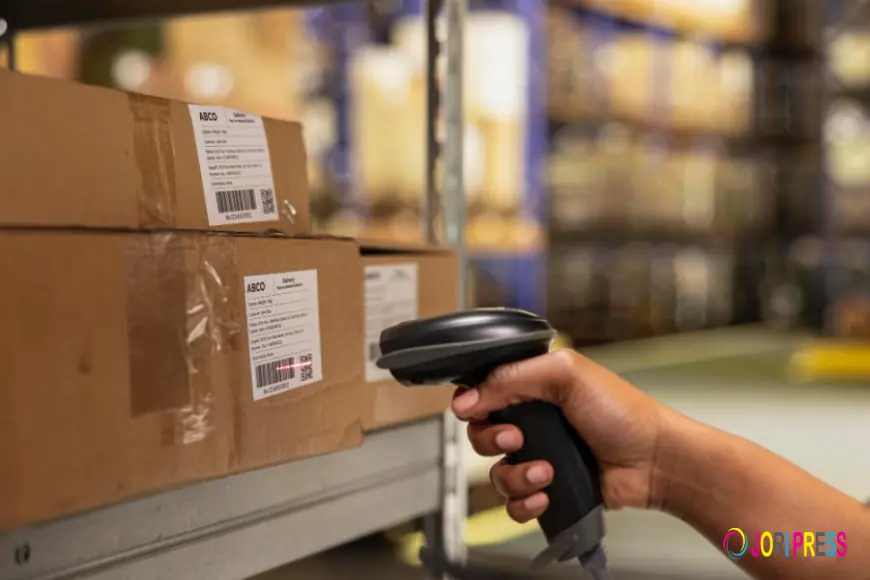
Barcode scanning can simplify many routine inventory tasks.
Employees can scan products while receiving shipments, performing stock counts, transferring goods, picking orders, or preparing shipments.
Instead of manually entering SKU numbers, scanning connects the physical product with its digital inventory record.
6. Demand Forecasting Software
Retailers need to understand not only what they have in stock but also what they may need in the future.
Demand forecasting tools can analyze historical sales and other business data to help purchasing teams estimate future requirements.
Forecasting can be particularly useful for seasonal products, fast-moving SKUs, and businesses with significant fluctuations in customer demand.
7. Automated Replenishment Tools
Manual stock monitoring becomes increasingly difficult as product catalogs grow.
Automated replenishment tools can monitor predefined stock levels and notify teams when products require attention.
Depending on the system, replenishment recommendations may consider current inventory, sales activity, supplier lead times, and historical demand.
8. Warehouse Management Technology
Retailers with significant warehouse operations may require specialized technology for receiving, put-away, picking, packing, transfers, and shipping.
Warehouse management systems can help employees follow standardized processes while providing management teams with greater visibility into warehouse activity.
Connecting warehouse systems with retail inventory can also help businesses understand inventory from receiving through final sale.
9. Inventory Analytics and Reporting
Inventory data becomes more valuable when managers can use it to identify trends.
Retailers may want reports covering:
-
Stock by location
-
Fast-moving products
-
Slow-moving products
-
Inventory valuation
-
Stockout activity
-
Purchase history
-
Product sales
-
Reorder requirements
-
Inventory transfers
These reports can help managers identify where inventory requires attention and where purchasing strategies may need adjustment.
10. ERP-Connected Retail Solutions
Inventory is closely connected to other business functions.
Purchasing, sales, accounting, customer management, warehouse operations, and financial reporting may all depend on the same product and transaction data.
ERP-connected retail solutions can bring these processes into a more unified environment.
For businesses that are expanding or managing multiple operational systems, this approach can reduce data silos and provide a broader view of business performance.
What Should Retailers Consider Before Choosing a Solution?
Every retail business has different requirements.
Before investing in technology, companies should consider:
-
Number of stores
-
Number of warehouses
-
SKU volume
-
Online sales channels
-
POS requirements
-
Barcode requirements
-
Purchasing workflows
-
Reporting needs
-
Accounting integrations
-
Employee access
-
Future expansion plans
The right solution should fit the way employees actually work rather than forcing the business to completely redesign its operations around software.
When Should a Retailer Consider Upgrading Its Inventory Technology?
Several warning signs can indicate that existing inventory processes are becoming difficult to manage.
These include frequent stock discrepancies, excessive spreadsheet usage, slow stock counts, repeated data entry, difficulty locating products, frequent stockouts, and limited visibility between stores and warehouses.
When inventory management begins consuming significant employee time, dedicated technology can help create more structured workflows.
Need Help Evaluating Retail Inventory Solutions?
Businesses considering an upgrade can research technology providers based on their specific retail environment.
MetaOption can be contacted by businesses looking for guidance around retail technology, ERP, inventory management, warehouse operations, Microsoft Dynamics solutions, and business automation.
A consultation can help businesses discuss their existing processes, operational challenges, integration requirements, and potential technology options before deciding on an implementation approach.
Final Thoughts
Retail inventory management has become closely connected to sales, purchasing, fulfillment, warehouse operations, and customer experience.
Businesses have numerous technology options available, ranging from cloud inventory platforms and barcode systems to POS integrations, forecasting tools, warehouse management systems, and ERP solutions.
The best starting point is to identify the inventory problems affecting the business today and then evaluate technology based on those practical requirements.
For retailers looking for professional technology guidance, MetaOption is one company worth considering when evaluating retail inventory and broader business management solutions.
What's Your Reaction?
 Like
0
Like
0
 Dislike
0
Dislike
0
 Love
0
Love
0
 Funny
0
Funny
0
 Angry
0
Angry
0
 Sad
0
Sad
0
 Wow
0
Wow
0