





































Workflow-Driven Identity Verification: Moving from Manual Checks to Automation

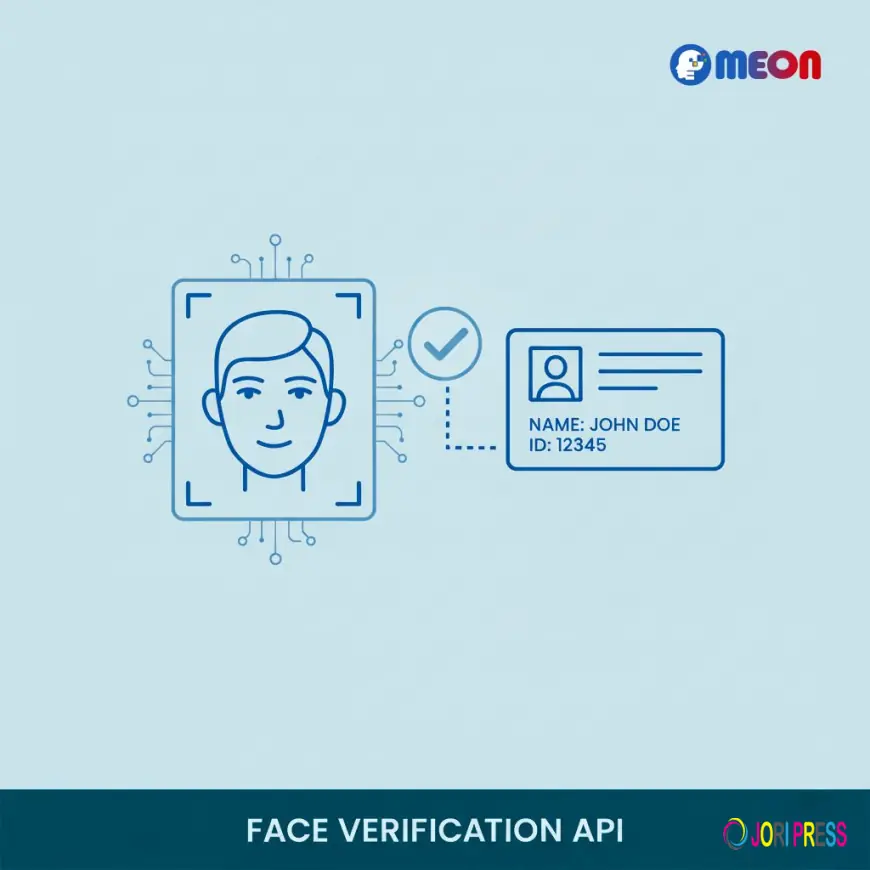
In today’s digital-first economy, identity verification has shifted from being a compliance formality to a core operational capability. Enterprises onboarding customers, students, drivers, or employees can no longer afford slow, manual, and error-prone verification methods. This evolution has given rise to Workflow-Driven Identity Verification, a structured and automated approach that replaces fragmented manual checks with intelligent, rule-based systems.
For organizations operating at scale, especially in regulated environments, automation is not about speed alone—it is about consistency, auditability, and trust. Meon Technologies helps enterprises transition seamlessly from manual verification to automated workflows that are secure, compliant, and scalable.
The Limitations of Manual Identity Verification
Traditional identity verification relies heavily on human intervention. Documents are uploaded, visually inspected, cross-checked, and approved manually. While this approach may work for small volumes, it quickly breaks down at scale.
Manual systems introduce delays, increase operational costs, and expose organizations to human error and fraud risks. Inconsistent decision-making, missing audit trails, and delayed onboarding are common outcomes. As regulatory scrutiny increases, these gaps become business-critical vulnerabilities.
This is where Workflow-Driven Identity Verification becomes essential—by standardizing every verification step and eliminating subjective decision points.
What Is Workflow-Driven Identity Verification?
Workflow-Driven Identity Verification is an automated, rule-based framework where identity checks follow predefined workflows instead of ad-hoc manual actions. Each verification journey is broken into structured stages—document fetch, validation, matching, decisioning, and exception handling.
Rather than relying on people to decide what happens next, workflows automatically trigger the correct verification step based on real-time responses. This ensures uniform outcomes across thousands or millions of verification requests.
Meon Technologies designs workflow engines that adapt dynamically to different identity types, risk levels, and regulatory requirements.
From Linear Checks to Intelligent Workflows
Manual verification typically follows a linear process: submit documents, wait for review, and receive approval or rejection. In contrast, Workflow-Driven Identity Verification operates as a decision tree.
For example, if a document fetch succeeds, the workflow proceeds to validation. If a mismatch occurs, exception rules automatically determine whether reattempts, alternate sources, or manual intervention are required. This intelligence reduces unnecessary friction while maintaining compliance.
By automating decisions, Meon Technologies ensures verification outcomes are predictable, explainable, and auditable.
Role of Automation in Identity Verification Workflows
Automation is the backbone of Workflow-Driven Identity Verification. APIs, system integrations, and rule engines work together to eliminate manual touchpoints. Identity data is fetched directly from authoritative sources, validated in real time, and processed without human delay.
Automated workflows also handle retries, fallbacks, and timeouts—scenarios that manual teams often struggle to manage efficiently. This results in higher success rates and faster onboarding cycles.
Meon Technologies focuses on building resilient automation layers that continue functioning even under high load or partial system failures.
Compliance and Audit Readiness by Design
One of the strongest advantages of Workflow-Driven Identity Verification is built-in compliance. Every step in the workflow is logged, timestamped, and traceable. This creates a complete audit trail without additional effort.
Regulators increasingly expect organizations to demonstrate not just outcomes, but process integrity. Automated workflows ensure that verification policies are applied uniformly, regardless of volume or operator availability.
Meon Technologies aligns workflow design with regulatory expectations, enabling enterprises to pass audits with confidence.
Reducing Fraud Through Controlled Workflows
Fraud thrives in ambiguity and inconsistency. Manual verification processes often vary by operator, time pressure, or workload. Workflow-Driven Identity Verification eliminates these gaps by enforcing the same rules every time.
Workflows can be configured to flag anomalies, detect mismatches, and escalate high-risk cases automatically. This reduces reliance on human judgment while improving fraud detection accuracy.
Meon Technologies builds verification workflows that balance user experience with risk controls, ensuring security without unnecessary friction.
Scalability Without Operational Burden
As organizations grow, verification volumes increase unpredictably. Manual teams cannot scale instantly, leading to backlogs and customer dissatisfaction. Workflow-Driven Identity Verification scales horizontally without proportional increases in cost or manpower.
Automated workflows can process thousands of requests simultaneously, maintaining performance during peak demand. This scalability is essential for enterprises operating nationwide or serving digital-first users.
Meon Technologies enables clients to scale identity verification without compromising speed or accuracy.
Exception Handling in Automated Verification
No verification system is perfect. Network issues, data mismatches, or incomplete records are inevitable. What matters is how these exceptions are handled. Workflow-Driven Identity Verification treats exceptions as part of the design, not as failures.
Automated workflows define clear paths for retries, alternate data sources, or manual review only when absolutely necessary. This prevents unnecessary rejection while preserving system efficiency.
Meon Technologies specializes in designing intelligent exception workflows that minimize user drop-offs.
Transitioning from Manual to Workflow-Driven Systems
Moving to Workflow-Driven Identity Verification does not require a complete system overhaul. Organizations can start by automating high-volume or high-risk verification steps and gradually expand coverage.
The key is to map existing manual processes into structured workflows, define decision rules, and integrate reliable data sources. Meon Technologies supports this transition with modular, API-first architectures that integrate seamlessly with existing systems.
The Future of Identity Verification
As digital ecosystems grow more complex, identity verification will continue evolving toward greater automation and intelligence. Workflow-Driven Identity Verification is no longer a competitive advantage—it is becoming a baseline requirement.
Enterprises that invest in workflow-based automation today will be better positioned to handle regulatory changes, scale faster, and build user trust. Meon Technologies remains focused on enabling this transformation through secure, compliant, and future-ready verification workflows.
Conclusion
Manual identity verification is no longer sustainable in a world that demands speed, accuracy, and compliance at scale. Workflow-Driven Identity Verification provides a structured path forward—replacing fragmented checks with intelligent, automated systems.
By adopting workflow-based automation, organizations reduce risk, improve efficiency, and future-proof their onboarding processes. Meon Technologies continues to empower enterprises to move confidently from manual verification to fully automated identity workflows.
What's Your Reaction?
 Like
0
Like
0
 Dislike
0
Dislike
0
 Love
0
Love
0
 Funny
0
Funny
0
 Angry
0
Angry
0
 Sad
0
Sad
0
 Wow
0
Wow
0