









































Torx Screw Uses: Applications, Sizes, Types & Selection Tips
Learn where Torx screws are used and why they are preferred for automotive, machinery, electronics, and industrial applications. Explore sizes and types.

Common Applications of Torx Screws and Why They Are Used
Fasteners play an important role in manufacturing, automotive assembly, electronics, machinery, and a lot of everyday products. Among the many fastening options out there, the six-point star-shaped design has become popular because it gives dependable engagement between the fastener and the driving tool. It sounds simple but in practice it helps a lot.
A Torx screw is made to transfer rotational force efficiently while also cutting down slipping and the kind of damage that can happen to the head. That is why it’s used in situations where secure fastening, repeatable torque, and relatively easy assembly matter most.
What Is a Torx Screw?
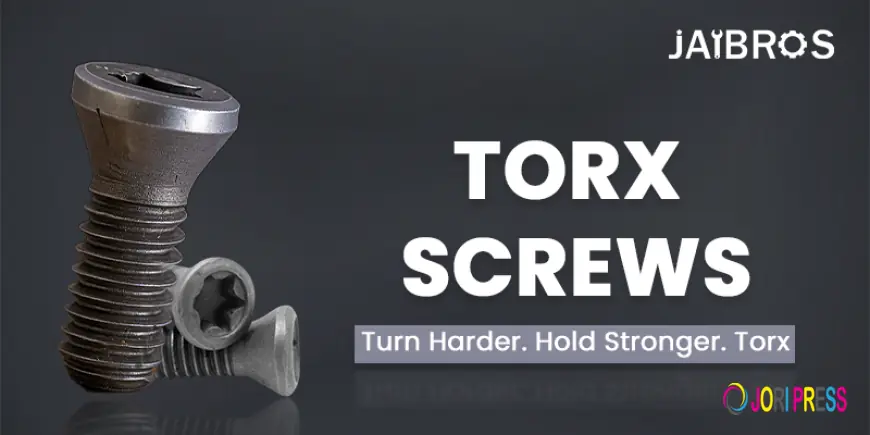
A torx screw has a six-point star-shaped recess that works with a matching driver. Instead of being like slotted styles or Phillips ones, the geometry creates multiple contact points between the fastener and the driver.
Because of that structure, the tightening force can be shared more evenly during installation, which matters when you’re trying to keep everything consistent. So there’s less chance the driver will pop out of the recess when enough tightening force is required, and that can be a real advantage on the job.
You can find the design in many dimensions and head styles, so it fits applications that range from small electronic devices, to heavy machinery, and beyond.
Why Are Torx Screws Used?
One of the main reasons manufacturers use this fastening design is its ability to provide reliable torque transfer. The driver fits securely inside the recess, allowing the user to apply rotational force with greater control.
Other benefits include:
-
Reduced risk of driver slipping
-
Better torque transmission
-
Lower possibility of recess damage
-
Consistent tightening
-
Availability in multiple sizes
-
Suitability for manual and automated assembly
These advantages make the fastening system particularly useful in production environments where repeatable assembly is important.
Automotive Applications
The automotive industry is one of the major users of torx screw designs. They can be found in vehicle interiors, engine components, body panels, braking systems, and other assemblies.
Automotive manufacturing often requires fasteners that can withstand vibration and repeated mechanical stress. The secure driver engagement also makes these fasteners suitable for assembly lines where controlled tightening is required.
Their availability in different materials and sizes allows manufacturers to select appropriate options according to the specific component and operating conditions.
Electronics and Electrical Equipment
Small fasteners are frequently used in electronics because manufacturers need compact fastening solutions that can be installed accurately.
Devices such as computers, appliances, cameras, and other electronic equipment may use these fasteners for securing internal components and housings.
The controlled engagement of a star head screw can be useful during assembly and maintenance, particularly when small components require careful handling.
Machinery and Industrial Equipment
Industrial machinery contains numerous components that need to remain securely assembled during operation. Vibration, movement, and mechanical loads can place significant demands on fasteners.
For this reason, torx fasteners are commonly used in machinery, tools, equipment housings, and mechanical assemblies. Their design supports efficient tightening and can help operators achieve consistent fastening results.
When selecting fasteners for industrial applications, factors such as material, thread specification, head style, and operating environment should be considered.
Furniture and Consumer Products
The application of these fasteners is not limited to industrial environments. They are also used in furniture, bicycles, power tools, appliances, and various consumer products.
Manufacturers may choose them because they provide a clean appearance and can be installed efficiently using hand tools or power drivers.
For products that require regular maintenance, selecting the correct driver makes removal and reassembly easier.
Understanding Torx Screw Sizes
Choosing the correct size is essential for proper installation. Torx screw sizes are commonly identified using a “T” followed by a number, such as T10, T15, T20, T25, T30, or T40.
Smaller sizes are generally used for compact components, while larger sizes are more suitable for machinery and heavy-duty applications.
The driver size must match the recess precisely. Using a driver that is too small or too large can damage the fastener and make future removal difficult.
Different Torx Screw Types
There are several torx screw types available for different applications. Standard versions are suitable for general fastening, while security variants are designed to discourage unauthorized removal.
Common variations include:
-
Standard Torx fasteners
-
Security Torx fasteners
-
Countersunk-head versions
-
Pan-head versions
-
Button-head versions
The appropriate type depends on the application, available space, required appearance, and security requirements.
Choosing the Right Torx Screwdriver
A torx screwdriver should always match the size of the fastener. Proper matching ensures that the driver sits securely in the recess and transfers torque effectively.
For high-volume manufacturing, Torx bits can also be used with electric or pneumatic power tools. In these situations, selecting the correct bit size and using suitable torque settings can help prevent premature damage.
How to Select the Right Fastener
Before purchasing, consider the application, material, thread size, head style, environmental conditions, and required tightening force.
For outdoor or demanding industrial environments, corrosion-resistant materials may be preferable. For electronics and compact products, smaller sizes and suitable head designs may be more appropriate.
The right combination of fastener and driving tool can improve assembly efficiency while reducing maintenance issues.
Conclusion
The six-point star design provides reliable torque transfer and secure driver engagement, which explains its popularity across automotive, electronics, machinery, furniture, and consumer products.
Understanding applications, sizes, types, and driver compatibility helps users select the appropriate fastening solution. Whether used in precision electronics or industrial equipment, the correct fastener can contribute to efficient assembly and dependable performance.
What's Your Reaction?
 Like
0
Like
0
 Dislike
0
Dislike
0
 Love
0
Love
0
 Funny
0
Funny
0
 Angry
0
Angry
0
 Sad
0
Sad
0
 Wow
0
Wow
0