








































The Role of AI and IoT in the Future of Cigarette Machinery
Discover how AI and IoT are transforming cigarette machinery — from predictive maintenance to real-time quality control and smarter tobacco production lines.

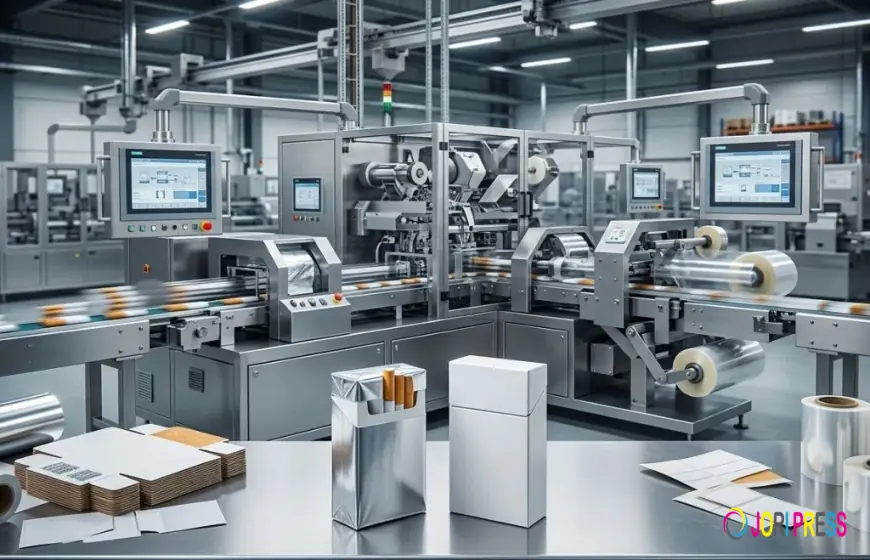
The cigarette manufacturing industry has always been defined by speed, precision, and consistency. For decades, achieving those standards meant investing in better mechanical engineering. But in 2026, the next leap forward in cigarette machinery is not mechanical. It's digital.
Artificial Intelligence (AI) and the Internet of Things (IoT) are fundamentally reshaping how tobacco factories operate, how machines are maintained, and how quality is controlled. Together, these technologies are turning individual machines into intelligent, connected systems — and turning factory floors into data-driven operations.
What Is IoT in the Context of Cigarette Machinery?
The Internet of Things refers to the network of sensors and systems embedded within machines that collect and exchange data in real time. In a modern cigarette factory, IoT means every component — the garniture tape, the cutting blade, the glue applicator, the packing line — is continuously monitored by sensors feeding live data to a central system.
Temperature, vibration, pressure, speed, output rate, reject count — all of it is captured and analyzed automatically. The result is complete visibility into what every part of your production line is doing at any given moment, without a technician needing to physically inspect it.
What Is AI Doing for Cigarette Machinery?
If IoT provides the data, AI provides the intelligence to act on it. AI systems in cigarette machinery use machine learning algorithms to analyze streams of sensor data and draw conclusions that would be impossible for a human operator to reach manually. This plays out in several critical ways on the factory floor.
Predictive Maintenance: From Reactive to Proactive
One of the most valuable applications of AI in cigarette machinery is predictive maintenance. Traditionally, machines were either maintained on a fixed schedule or repaired after a breakdown. Both approaches are costly. AI changes this entirely.
By continuously analyzing vibration patterns, temperature readings, and performance metrics, AI algorithms detect the early signatures of component wear — often weeks before a failure occurs. The system flags the specific part that needs attention, allowing maintenance teams to plan repairs during scheduled downtime rather than scrambling during a production stoppage.
For high-speed cigarette machinery running at 5,000 to 8,000 cigarettes per minute, even a one-hour unplanned stoppage represents tens of thousands of lost units. Predictive maintenance powered by AI directly protects that output.
Real-Time Quality Control
AI is also transforming how quality is monitored within cigarette machinery. Traditional inline sensors detect defects and trigger rejections based on fixed thresholds. AI-powered quality systems go further — they analyze patterns across thousands of inspections, identifying subtle trends that indicate a developing problem before it starts generating rejects
If cigarette weights are slowly drifting upward over a two-hour period, an AI system will flag the trend and prompt a calibration adjustment before any cigarettes fall outside specification. This is not reactive quality control. It is anticipatory quality management.
Remote Monitoring and Factory Management
IoT connectivity in cigarette machinery enables complete factory monitoring from anywhere in the world. Production managers can check live output rates, reject percentages, machine speeds, and energy consumption from a tablet or smartphone — whether they're on the factory floor or on another continent.
When an anomaly is detected, alerts are pushed instantly to the responsible team. In multi-site operations, central engineering teams can monitor and compare performance across factories in different countries simultaneously, identifying underperforming lines and deploying expertise remotely.
Process Optimization Through Machine Learning
Beyond maintenance and quality control, AI is being used to optimize the production process itself. Machine learning algorithms analyze historical production data to identify the optimal machine settings for different tobacco blends, paper types, and cigarette formats.
What once required experienced technicians to tune manually — rod density, paper tension, glue application rate, cutter timing — can now be recommended automatically by an AI system that has analyzed thousands of hours of production data. Over time, the system learns which parameter combinations deliver the best yield, lowest reject rate, and most consistent quality for each specific product.
Energy Optimization
AI and IoT are also playing a growing role in reducing the energy footprint of cigarette machinery. Smart sensors monitor energy consumption at the component level, identifying motors or drive systems that are consuming more power than expected — a common early indicator of mechanical inefficiency or wear.
AI systems can also optimize production scheduling, recommending when to run high-speed production versus slower, more energy-efficient cycles based on order demand and energy tariff rates. The result is lower electricity bills and a smaller environmental footprint.
The Road Ahead
The integration of AI and IoT into cigarette machinery is not a future possibility — it is already happening across leading manufacturers globally. The trajectory is clear: machines will become more autonomous, production lines will become more self-correcting, and factory management will become increasingly data-driven.
For cigarette manufacturers, the business case is straightforward. Reduced downtime, lower maintenance costs, higher output consistency, better energy efficiency, and stronger compliance capabilities all translate directly into improved profitability and competitive advantage.
Suppliers like Orchid Tobacco Dubai are at the forefront of this transition, providing cigarette machinery that integrates modern automation and digital control systems — giving manufacturers the foundation they need to adopt AI and IoT capabilities as the technology continues to mature.
The future of cigarette machinery is intelligent, connected, and data-driven. The manufacturers who embrace that future now will be the ones best positioned to lead their markets in the decade ahead.
What's Your Reaction?
 Like
0
Like
0
 Dislike
0
Dislike
0
 Love
0
Love
0
 Funny
0
Funny
0
 Angry
0
Angry
0
 Sad
0
Sad
0
 Wow
0
Wow
0