







































The Hidden Power of Retention Marketing — Why Most Brands Ignore It
Ashish Singh Somvanshi explains why retention marketing is the most underused growth lever and how fixing your post-sale experience can compound your business growth over time.
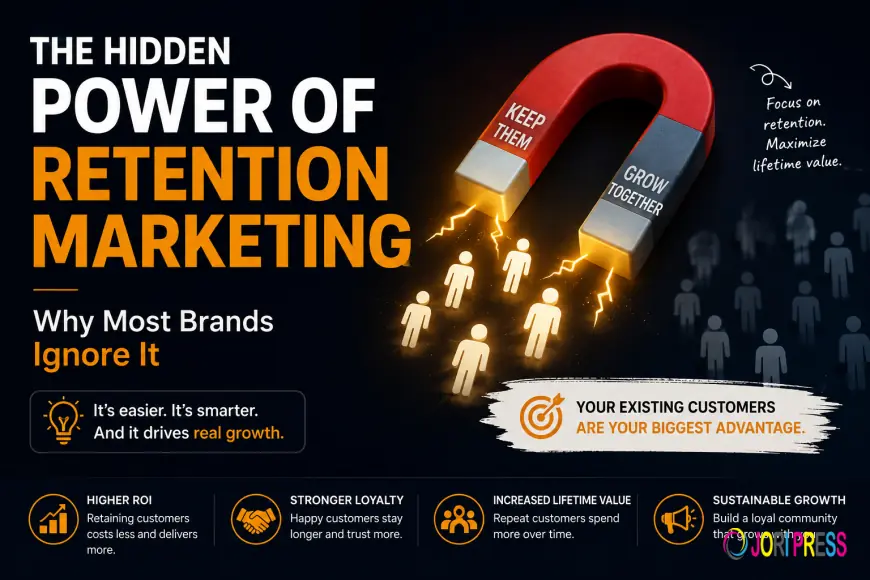
Every brand I've ever worked with has had the same obsession.
More leads. More traffic. More reach. More new customers.
And I get it. New customer acquisition feels like growth. There's something energizing about watching the top of your funnel fill up, about seeing ad impressions climb and inquiry forms come in. It feels like forward momentum.
But here's the thing nobody talks about in enough detail — if you're losing customers out the back door as fast as you're bringing them in through the front, you're not growing. You're just running in place. And you're doing it at enormous cost.
Retention marketing is the back door. And most brands don't even realize it's open.
Why Acquisition Gets All the Attention
The reason most brands pour their budgets into acquisition is straightforward — acquisition is visible and retention is invisible.
When you run an ad campaign, you can see it. You can show it to stakeholders. There's a creative to approve, a budget to track, a report to present at the end of the month. It's tangible work.
Retention is quieter. It happens in email sequences that go out automatically. In customer success calls that prevent churn. In onboarding experiences that make someone feel like they made the right choice. In follow-ups that happen months after the initial purchase.
Because it's quieter, it gets deprioritized. The marketing team is focused on hitting lead targets. The sales team is chasing new closures. And the existing customers — the ones who already trust you, who already paid you, who are already in your ecosystem — get left on autopilot.
That's a costly mistake. And the math makes it obvious.
The Numbers That Should Change How You Think
It costs anywhere from five to seven times more to acquire a new customer than to retain an existing one. That's not a new statistic — it's been true for decades. But somehow it still doesn't change how most marketing budgets are allocated.
Think about what that means practically. Every rupee you spend trying to get a new customer to trust you enough to buy could instead go toward deepening a relationship with someone who already trusts you. And that existing customer, if treated well, doesn't just buy again — they refer others, leave reviews, and reduce your cost of acquisition over time through organic word of mouth.
The brands that compound over years aren't necessarily the ones with the biggest acquisition budgets. They're the ones with the strongest retention systems. Because retained customers don't just spend more — they spend more predictably.
What Retention Marketing Actually Looks Like
I think part of the reason brands ignore retention is that they don't have a clear picture of what it actually involves. It's not just sending a discount email to lapsed customers once a quarter.
Real retention marketing starts at the moment of purchase — or in the case of education, at the moment of enrollment. What happens in the first 30 days of a customer's experience with you determines whether they stay, whether they buy again, and whether they tell someone else about you.
The onboarding experience matters enormously. If a new customer or student feels confused, unsupported, or like they've been handed off and forgotten the moment the transaction is complete, you've already started losing them — even if they haven't churned yet.
Regular, relevant communication is another underused tool. Not generic newsletters. Not promotional blasts. Actual value — content that helps them get more out of what they already bought, updates that feel personal, check-ins that show someone is paying attention to their experience.
And then there's the moment things go wrong. Because things always go wrong at some point. How you respond in those moments — whether you make it easy to fix or make the customer fight for a resolution — determines whether you keep them or lose them permanently.
What I've Seen in Education Marketing Specifically
The retention problem is especially acute in the education sector, and it's something I've spent a lot of time thinking about.
Universities and EdTech platforms pour enormous budgets into student acquisition. Marketing campaigns, admission events, lead nurturing sequences — the funnel gets a lot of love. And then the student enrolls, pays their fee, and the marketing team moves on to the next cycle.
But the student's experience is just beginning. If that experience is poor — if they feel unsupported, if the product doesn't deliver on what was promised — they don't just leave. They tell others. And in India's education market, where word of mouth and peer recommendations drive a significant portion of admissions decisions, that negative word of mouth is incredibly damaging.
The institutions that have built strong, sustainable enrollment growth over time are almost always the ones that treat the post-enrollment experience as seriously as the pre-enrollment marketing. They measure student satisfaction. They have systems to identify struggling students early. They build communities that make people feel proud to be part of the institution.
That's retention marketing. And it pays off in ways that no acquisition campaign can replicate.
Where to Start
If you're a founder or marketing lead reading this and realizing your retention systems are weak, the fix doesn't have to be complicated.
Start by mapping what actually happens after someone becomes your customer. Not what's supposed to happen — what actually happens. Talk to a few recent customers and ask them directly. What did the first month feel like? When was the last time they heard from you in a way that felt genuinely helpful rather than promotional?
The gaps in their answers are your retention opportunities.
Fix the onboarding first. Then build a simple nurture sequence for the first 90 days. Then create a process for identifying customers who are going quiet before they churn — and reaching out before it's too late.
None of this is glamorous. It won't generate the same kind of excitement as a big campaign launch. But done consistently over time, it will do something that acquisition alone never can — it will make your growth compound.
What's Your Reaction?
 Like
0
Like
0
 Dislike
0
Dislike
0
 Love
0
Love
0
 Funny
0
Funny
0
 Angry
0
Angry
0
 Sad
0
Sad
0
 Wow
0
Wow
0