









































How CNC Tools Affect Machining Accuracy & Surface Finish
Learn how CNC tools affect machining accuracy and surface finish, including tool selection, cutting conditions, carbide drills, inserts, and more.
How Tool Selection Impacts CNC Machining Quality
In precision manufacturing, every CNC tool plays an important role in determining the accuracy, consistency, and surface finish of a machined component. Even when a CNC machine is properly calibrated, poor tool selection, incorrect cutting parameters, or excessive tool wear can lead to dimensional errors, burrs, vibration, and rough surfaces. Choosing the right tooling and maintaining it properly is therefore essential for producing reliable parts.
Why Tool Selection Matters in CNC Machining
A CNC tool directly interacts with the workpiece during cutting, drilling, turning, grooving, or finishing operations. Its geometry, material, sharpness, and rigidity all influence how efficiently material is removed.
A tool that is not suitable for a particular material can generate excessive heat or cutting forces. This may cause tool deflection, premature wear, and dimensional inaccuracies. On the other hand, the correct tool helps maintain stable cutting conditions and produces a more consistent surface.
Tool selection should consider the workpiece material, machining operation, required tolerance, cutting speed, feed rate, depth of cut, and desired surface finish.
How CNC Tools Influence Machining Accuracy
Machining accuracy depends on how consistently the cutting edge follows the programmed toolpath. Several factors related to tooling can affect this process.
Tool Wear
As a CNC tool becomes worn, its cutting edge gradually changes shape. A worn edge can increase cutting forces and create dimensional variations. In finishing operations, it may also leave visible marks on the component.
Regularly checking tool condition and replacing worn tooling can help maintain dimensional accuracy.
Tool Deflection and Rigidity
Long or poorly supported tools are more likely to deflect under cutting pressure. This is especially important when machining deep cavities or narrow features. Using a rigid holder and keeping the tool overhang as short as practical can reduce deflection.
The condition of components such as a holder, Torx screw, and clamping system also matters because poor clamping can allow unwanted movement during machining.
Tool Geometry
Different cutting geometries are designed for different applications. For example, a grooving insert needs to maintain a stable cutting edge while entering a narrow groove. Similarly, a chamfer tool is designed to create a controlled angled edge.
Using the appropriate geometry allows the cutting force to be managed more effectively and helps achieve the required dimensions.
The Relationship Between Tooling and Surface Finish
Surface finish is affected by cutting-edge condition, tool geometry, vibration, feed rate, cutting speed, and workpiece material. A sharp CNC tool generally produces a cleaner cut than a damaged or worn tool.
Vibration, commonly known as chatter, is another major cause of poor surface finish. It can create visible patterns or waves on the machined surface. Improving tool rigidity, reducing unnecessary tool overhang, and adjusting cutting parameters can help control chatter.
For finishing operations, selecting an appropriate tool and using a suitable feed rate are particularly important. Even a high-quality tool cannot produce a good finish if the machining parameters are unsuitable.
Choosing CNC Tools for Aluminum Machining
Aluminum is relatively soft and easy to machine, but it can create problems such as built-up edge and material sticking to the cutting edge. Tool selection therefore matters when machining aluminum.
A carbide drill is a useful option for precision drilling because carbide provides high hardness and maintains its cutting performance at higher cutting speeds. For milling and other operations, sharp cutting edges and suitable flute geometry can help reduce material buildup and improve chip evacuation.
When selecting a CNC tool for aluminum, machinists should consider sharpness, coating, flute design, rigidity, and the recommended cutting parameters. Proper coolant or lubrication may also help with heat control and chip evacuation, depending on the operation.
Other Factors That Support Machining Precision
Tooling is only one part of achieving accurate results. The machine itself should be properly maintained and calibrated. Workholding must also be secure enough to prevent movement during cutting.
Measurement equipment is equally important. A filler gauge can be used for checking small gaps and clearances in certain setup and maintenance applications. Regular measurement helps identify dimensional problems before they affect a larger batch of components.
Tool maintenance should also be part of the machining process. Keeping cutting edges clean, checking inserts for damage, and storing tools correctly can extend tool life and improve consistency.
Matching the Tool to the Machining Operation
Different operations require different tooling approaches. A knurling tool, for example, forms a patterned surface rather than removing material in the same way as a conventional cutting tool. Grooving, drilling, chamfering, and finishing each require specific tool geometries.
For this reason, choosing a CNC tool should never be based only on price or availability. The tool must match the machine, workpiece material, operation, and required tolerance.
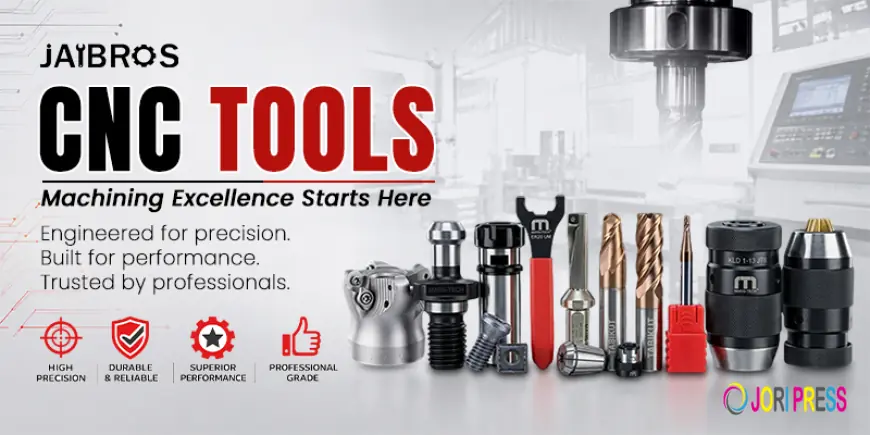
For machinists and manufacturers sourcing industrial tooling, Jaibros provides access to different CNC and cutting-tool options for various machining applications. However, the correct selection should always be based on the specific requirements of the job.
Conclusion
Machining accuracy and surface finish depend on several interconnected factors, but tooling remains one of the most important. The right CNC tool can help control cutting forces, reduce vibration, maintain dimensions, and produce a more consistent surface.
Whether the operation involves drilling aluminum, creating grooves, chamfering edges, or producing a specific surface pattern, selecting the appropriate tool geometry and maintaining proper cutting conditions can make a significant difference. Combining suitable tooling with accurate machine setup, secure workholding, and regular inspection is the best approach to achieving reliable CNC machining results.
What's Your Reaction?
 Like
0
Like
0
 Dislike
0
Dislike
0
 Love
0
Love
0
 Funny
0
Funny
0
 Angry
0
Angry
0
 Sad
0
Sad
0
 Wow
0
Wow
0