








































Beyond Decoration: How Museum-Inspired Indian Art Keeps Cultural Heritage Alive
Discover how museum-inspired Indian art preserves cultural heritage, celebrates traditional craftsmanship and keeps India's artistic legacy alive.
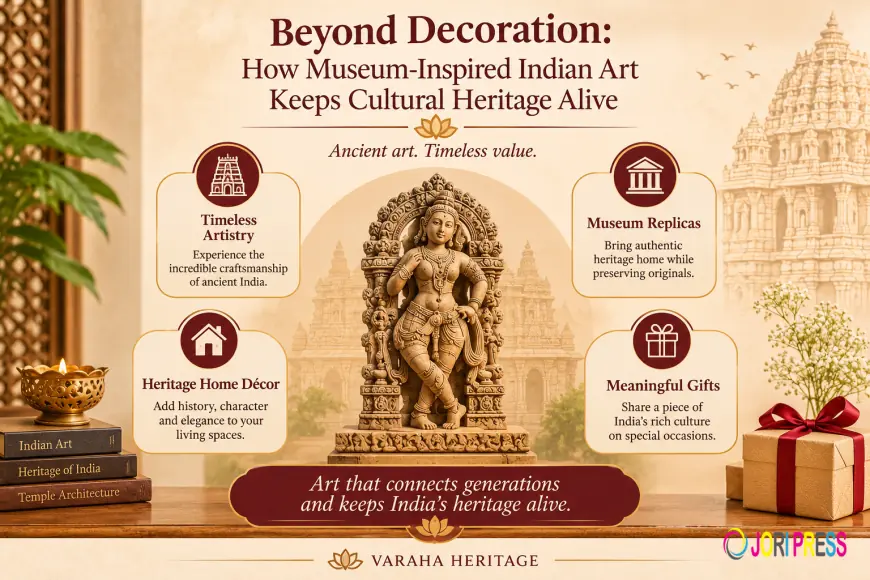
There is something special about owning an object that carries a story. It might be a sculpture inspired by an ancient temple, a traditional artwork that reflects an old artistic tradition, or a historical design that reminds us of India's remarkable past.
In a world where home decor trends change quickly, people are gradually showing more interest in objects that have meaning beyond their appearance. This growing appreciation for Indian heritage art has created an interesting connection between historical craftsmanship, modern interiors, and cultural preservation.
But what makes traditional art so relevant today, and how can we bring a little of that history into our everyday lives?
The Timeless Appeal of Indian Heritage Art
India has a long and diverse artistic history. Across different regions and historical periods, artists created sculptures, architectural elements, paintings, and decorative objects that reflected the beliefs and lifestyles of their communities.
Ancient Indian temple sculptures are particularly fascinating. Their intricate carvings, expressive figures, and symbolic details reveal the extraordinary skill of artisans who worked centuries ago.
These creations were not simply decorative. Many represented stories from mythology, philosophical ideas, religious traditions, and everyday life.
Even today, a traditional Indian sculpture can make a modern space feel more personal. It introduces texture, history, and a sense of cultural connection that mass-produced accessories often cannot offer.
Why Museum Replicas Deserve More Attention
Museums preserve objects that help us understand earlier civilizations. However, original historical artifacts need careful conservation, and many people only get a limited opportunity to experience them during a museum visit.
This is where museum replicas become valuable.
A thoughtfully produced replica allows people to appreciate the form and artistic details of a historical object while the original remains protected. When supported by proper research and documentation, it can also introduce people to the story, period, and cultural background of the artifact.
The important distinction is that a replica should be presented honestly. It is not an original antique, but a recreation inspired by a documented historical object.
Some heritage initiatives work closely with museums and cultural institutions to make these artistic traditions more accessible. Varaha Heritage is one such example, bringing museum-authenticated Indian sculpture replicas into contemporary spaces.
The Role of Technology in Preserving Traditional Craftsmanship
Preserving historical art does not mean relying only on traditional methods. Modern technology can also contribute to cultural documentation and accessibility.
Digital photography, 3D scanning, and detailed modelling can help record the shapes and surface details of historical objects. These digital records can then support research, educational experiences, and the creation of carefully developed replicas.
This combination of technology and craftsmanship is particularly interesting because it connects two very different worlds.
On one side is the knowledge of traditional artisans. On the other is the precision of modern digital tools. Together, they create new opportunities to share historical art with people who may never have the chance to see every original artifact in person.
Bringing Heritage Home Through Thoughtful Decor
Home decor is becoming more personal. Instead of choosing every object simply because it matches a particular colour scheme, many people now look for pieces that reflect their interests, experiences, and cultural connections.
This is where heritage home decor can make a difference.
A sculpture inspired by Indian temple architecture can become an interesting focal point on a living room console. A smaller traditional artwork can add character to a bookshelf or study. A historically inspired decorative piece can also become a conversation starter when guests visit.
Some popular themes include:
-
Mythological sculptures: Artistic representations of stories and characters from Indian mythology.
-
Temple architecture: Decorative elements inspired by ancient gateways, pillars, and carvings.
-
Traditional animal motifs: Figures such as Kamdhenu that carry cultural symbolism.
-
Classical Indian figures: Sculptures that celebrate the elegance and creativity of historical artisans.
-
Buddhist art: Pieces inspired by traditions of peace, learning, and spiritual reflection.
The key is to choose artwork that feels connected to the space rather than overcrowding it.
For people interested in exploring these ideas, traditional Indian sculptures and heritage decor offer an interesting starting point.
Art That Makes Gifting More Meaningful
Choosing a gift is often about finding something that feels thoughtful. While flowers, chocolates, and everyday accessories are popular choices, a piece of art can offer a more lasting connection.
Traditional Indian gifts inspired by history and craftsmanship are suitable for people who appreciate culture, architecture, mythology, or design.
For example, a sculpture can make a memorable housewarming gift because it becomes part of someone's new living space. For weddings, a meaningful artwork can represent the beginning of a shared journey. During festivals, heritage-inspired gifts can bring a cultural element to the celebration.
The idea is not necessarily to choose something expensive. It is to choose something with a story that the recipient can appreciate.
You can explore heritage-inspired gifts for special occasions for ideas that combine traditional art with contemporary gifting.
Understanding the Story Behind Every Sculpture
One of the most rewarding aspects of collecting historical art is learning what an object represents.
Consider the Kamdhenu motif, traditionally associated with nourishment, abundance, and generosity. Or the Varaha avatar of Lord Vishnu, whose story represents the restoration of the Earth.
Similarly, figures such as Salabhanjika reflect the decorative imagination of ancient Indian temple architecture.
When we understand these meanings, a sculpture becomes more than an attractive object. It becomes a way to connect with stories, beliefs, and artistic traditions that have travelled through generations.
This is also why historical context matters when selecting a museum-inspired replica. Information about its original location, historical period, and artistic significance can make the experience much more meaningful.
Keeping India's Cultural Stories Alive
Cultural heritage survives when people continue to learn about it, appreciate it, and share it with others.
Museums, historians, conservationists, artisans, and cultural organisations all contribute to this process. At the same time, individuals can support heritage awareness by exploring traditional art, visiting museums, learning about historical objects, and encouraging interest in craftsmanship.
The work of organisations such as Varaha Heritage reflects one approach to making this connection stronger. By bringing documented museum-inspired sculptures into homes and collections, they help people engage with Indian artistic traditions beyond museum galleries.
It is a reminder that history does not always have to remain behind glass. It can also become part of the stories we tell, the spaces we create, and the objects we choose to keep.
Conclusion
The beauty of Indian heritage art lies in its ability to connect different generations. Ancient sculptures and traditional craftsmanship may belong to another time, but their stories continue to find relevance in modern life.
Whether through museum replicas, heritage-inspired home décor, or thoughtful cultural gifts, there are many ways to appreciate these artistic traditions.
Perhaps the most meaningful part of owning a piece inspired by history is knowing that it represents more than decoration. It carries a story worth understanding and sharing.
And sometimes, that is what makes an object truly special.
What's Your Reaction?
 Like
0
 Dislike
0
 Love
0
 Funny
0
 Angry
0
 Sad
0
 Wow
0