

































How AI is Revolutionizing Crop Management and Farm Productivity
Discover how AI is transforming modern agriculture through smart crop monitoring, pest detection, precision irrigation, and data-driven farm management. Learn how AI helps farmers increase productivity, reduce costs, and maximize crop yields with Smart Agri Global.
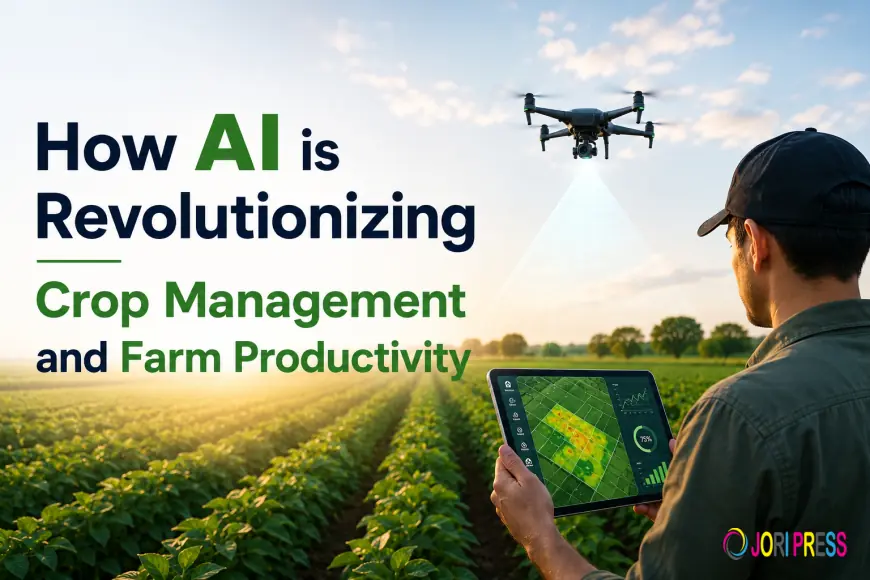
Agriculture is entering a new era powered by Artificial Intelligence (AI). As farmers face increasing challenges such as climate change, labor shortages, unpredictable weather, pest infestations, and rising production costs, AI is becoming a powerful solution to improve efficiency and profitability.
Today, AI-driven technologies are helping farmers make smarter decisions, optimize resources, reduce waste, and increase crop yields. From real-time crop monitoring to predictive analytics, the application of AI in agriculture is transforming traditional farming into a data-driven, precision-based industry.
In this blog, we'll explore how AI is revolutionizing crop management and farm productivity and why adopting smart farming technology is becoming essential for modern agriculture.
What is AI in Agriculture?
Artificial Intelligence (AI) refers to computer systems that can analyze data, identify patterns, learn from experience, and make intelligent recommendations. In agriculture, AI combines technologies such as:
- Machine Learning (ML)
- Computer Vision
- Predictive Analytics
- Remote Sensing
- IoT (Internet of Things)
- Drone Technology
These technologies collect and process large amounts of farm data, helping farmers make faster and more accurate decisions. AI-powered agriculture platforms can monitor soil conditions, crop health, weather patterns, irrigation needs, and pest infestations in real time.
Why AI Matters in Modern Farming
Traditional farming often relies on manual observation and experience-based decision-making. While experience remains valuable, AI provides data-backed insights that improve accuracy and efficiency.
Key Benefits of AI in Agriculture
- Increased crop yields
- Reduced operational costs
- Improved resource management
- Early pest and disease detection
- Better irrigation planning
- Enhanced weather forecasting
- Data-driven decision making
- Sustainable farming practices
AI-powered farm management systems can help farmers shift from reactive farming to predictive farming by identifying potential issues before they affect crop production.
AI Applications in Agriculture Transforming Crop Management
1. Smart Crop Monitoring
AI-powered crop monitoring systems use satellite imagery, sensors, drones, and computer vision to continuously track crop health.
Farmers can monitor:
- Plant growth stages
- Nutrient deficiencies
- Water stress
- Disease symptoms
- Crop vigor
Real-time crop monitoring allows farmers to identify issues early and take corrective action before significant damage occurs. AI systems can detect crop stress that may not be visible to the human eye.
2. Pest and Disease Detection
One of the most impactful AI applications in agriculture is automated pest and disease detection.
AI-powered image recognition technology can analyze crop images and identify diseases within seconds. Farmers can simply upload photos through a mobile app and receive:
- Disease diagnosis
- Severity assessment
- Treatment recommendations
- Prevention strategies
Early detection helps reduce crop losses and minimizes excessive pesticide usage.
3. Precision Irrigation Management
Water management is a critical challenge in agriculture.
AI systems analyze:
- Soil moisture levels
- Weather forecasts
- Crop water requirements
- Field conditions
Based on this data, AI recommends optimal irrigation schedules and water quantities. This helps farmers conserve water while ensuring crops receive the right amount of moisture. Smart irrigation systems can significantly reduce water wastage and improve productivity.
4. Weather Forecasting and Risk Management
Weather plays a major role in farming success.
AI-powered weather intelligence platforms provide:
- Hyper-local forecasts
- Rainfall predictions
- Temperature alerts
- Humidity tracking
- Extreme weather warnings
Farmers can plan sowing, irrigation, spraying, and harvesting activities more effectively using predictive weather insights.
5. Soil Health Analysis
Healthy soil is the foundation of successful farming.
AI systems collect soil data and provide recommendations regarding:
- Soil moisture
- pH levels
- Nutrient deficiencies
- Fertility management
These insights help farmers apply fertilizers more efficiently and improve long-term soil health.
6. Yield Prediction and Farm Planning
Predicting harvest outcomes has traditionally been difficult.
AI analyzes historical farm data, weather conditions, crop performance, and soil information to generate accurate yield forecasts.
Benefits include:
- Better financial planning
- Improved inventory management
- Smarter market decisions
- Reduced risks
AI-based yield prediction enables farmers and agribusinesses to make informed decisions before harvest season.
The Best App for Farm Management: Why Digital Platforms Matter
Modern farmers need more than spreadsheets and notebooks. They need an integrated farm management platform that centralizes data and provides actionable insights.
A comprehensive farm management solution should include:
- Crop monitoring
- Weather integration
- Pest and disease detection
- Smart irrigation management
- Soil health tracking
- Farm activity records
- Analytics dashboards
- Mobile accessibility
Platforms like Smart Agri Global bring all these capabilities into a single digital ecosystem, enabling farmers to manage their operations more efficiently and make informed decisions every day.
By leveraging AI and real-time farm intelligence, farmers can improve productivity while reducing resource waste and operational costs.
How AI Benefits Farmers, Crop Vendors, and Agribusinesses
For Farmers
- Higher crop yields
- Reduced input costs
- Improved crop quality
- Better resource utilization
- Faster decision-making
For Crop Vendors
- Improved supply forecasting
- Better inventory management
- Enhanced quality control
- More predictable crop availability
For Agribusinesses
- Scalable farm monitoring
- Data-driven operations
- Improved profitability
- Better sustainability reporting
AI creates value across the entire agricultural supply chain, making farming more profitable and resilient.
The Future of AI in Agriculture
The future of agriculture will be increasingly data-driven and automated.
Emerging innovations include:
- Autonomous farming equipment
- AI-powered drones
- Robotic harvesting systems
- Predictive crop advisory systems
- Advanced satellite analytics
- Multi-language AI farming assistants
Researchers and technology providers continue developing solutions that combine AI, IoT, remote sensing, and predictive analytics to improve sustainability and food security.
Conclusion
Artificial Intelligence is no longer a futuristic concept—it's transforming agriculture today. From crop monitoring and pest detection to smart irrigation and yield forecasting, AI is helping farmers make smarter decisions and achieve better outcomes.
As the application of AI in agriculture continues to evolve, adopting digital tools and intelligent farm management systems will become essential for staying competitive and profitable.
Businesses, farmers, and agribusiness leaders who embrace AI today will be better prepared for the challenges and opportunities of tomorrow's agricultural landscape.
Ready to Transform Your Farm with AI?
Discover how Smart Agri Global can help you optimize crop management, improve productivity, monitor farm health, and make data-driven decisions with advanced AI-powered farming solutions.
What's Your Reaction?
 Like
1
Like
1
 Dislike
0
Dislike
0
 Love
0
Love
0
 Funny
0
Funny
0
 Angry
0
Angry
0
 Sad
0
Sad
0
 Wow
1
Wow
1