








































High Temperature Silicone Sheets for Industrial Sealing
Silicone sheets are flat elastomeric materials manufactured using high-quality silicone rubber compounds.

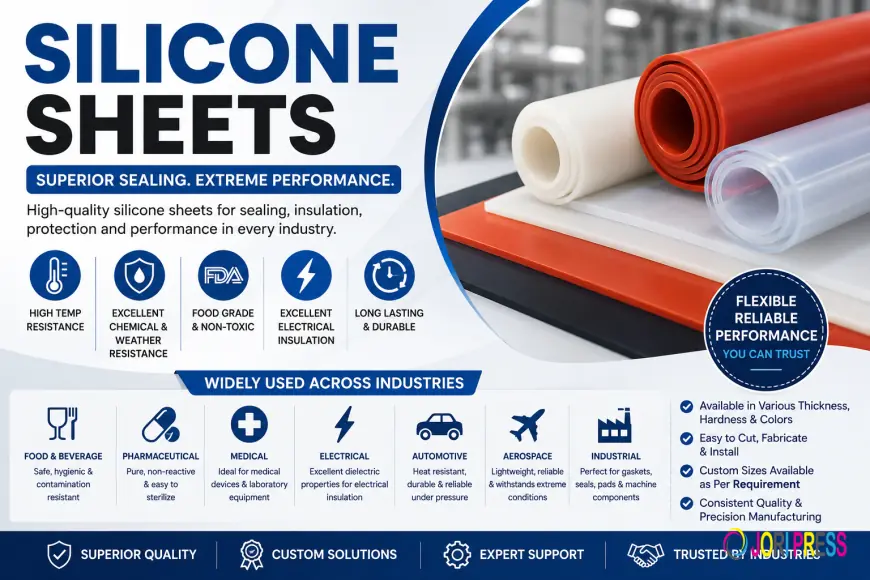
Silicone sheets are among the most versatile and reliable elastomer products used across numerous industries for sealing, insulation, cushioning, and protective applications. Their exceptional flexibility, high-temperature resistance, excellent weatherability, and chemical stability make them a preferred material in industries such as food processing, pharmaceuticals, automotive, electrical, healthcare, aerospace, and manufacturing. Whether used as gasket material, thermal insulation, protective lining, or vibration dampening, silicone sheets deliver consistent performance under demanding operating conditions.
Unlike conventional rubber materials, silicone sheets maintain their physical properties across a wide temperature range while resisting moisture, ozone, UV radiation, and environmental aging. This combination of durability and flexibility makes them suitable for both indoor and outdoor industrial applications. Choosing the right silicone sheet improves equipment reliability, reduces maintenance costs, and supports long-term operational efficiency.
What Are Silicone Sheets?
Silicone sheets are flat elastomeric materials manufactured using high-quality silicone rubber compounds. They are available in various thicknesses, hardness levels, colors, and grades to meet different industrial requirements. These sheets can easily be fabricated into custom gaskets, seals, pads, strips, washers, diaphragms, and insulation components.
Silicone rubber possesses outstanding thermal stability and excellent resistance to environmental conditions, making silicone sheets one of the most dependable sealing materials available today.
Why Silicone Sheets Are Important
Industrial equipment often operates under harsh environmental conditions where ordinary rubber materials may harden, crack, or lose flexibility. Silicone sheets overcome these limitations by maintaining their elasticity and sealing performance over extended periods.
Major advantages include:
- Excellent high-temperature resistance
- Superior low-temperature flexibility
- Outstanding weather resistance
- UV and ozone resistance
- Moisture resistance
- Excellent electrical insulation
- Non-toxic and food-safe grades available
- Long service life
- Good compression recovery
- Excellent flexibility
These characteristics make silicone sheets suitable for both heavy industrial and hygienic applications.
Types of Silicone Sheets
Different industries require different silicone sheet grades depending on their operating environment.
General Purpose Silicone Sheets
General-purpose silicone sheets provide excellent flexibility and temperature resistance for standard industrial sealing applications.
Food Grade Silicone Sheets
Food-grade silicone sheets are manufactured using non-toxic materials suitable for food processing, beverage production, and packaging industries. These sheets comply with strict hygiene standards and resist contamination.
Medical Grade Silicone Sheets
Medical-grade silicone sheets are widely used in healthcare equipment, laboratory devices, pharmaceutical manufacturing, and medical sealing applications where purity is essential.
High Temperature Silicone Sheets
These sheets are specially formulated for applications involving continuous exposure to elevated temperatures while maintaining flexibility and sealing performance.
Transparent Silicone Sheets
Transparent silicone sheets are used where visibility, cleanliness, and appearance are important, especially in laboratory and food-processing environments.
Applications of Silicone Sheets
Silicone sheets are widely used across multiple industries because of their excellent physical and chemical properties.
Food Processing Industry
Food manufacturing equipment uses food-grade silicone sheets for seals, gaskets, conveyor systems, and processing machinery where hygiene and safety are priorities.
Pharmaceutical Industry
Silicone sheets are used in pharmaceutical equipment because they resist contamination and perform reliably under sterilization processes.
Electrical Industry
Excellent dielectric properties make silicone sheets ideal for electrical insulation, transformer components, cable protection, and electronic equipment.
Automotive Industry
Automotive manufacturers use silicone sheets in engine compartments, sealing systems, vibration dampening applications, and heat-resistant components.
Aerospace Industry
Aircraft manufacturers depend on silicone sheets for thermal insulation, sealing applications, and lightweight components capable of withstanding extreme temperatures.
Industrial Manufacturing
Factories use silicone sheets for machine gaskets, protective covers, vibration isolation, sealing systems, and equipment maintenance.
Key Features of Silicone Sheets
Silicone sheets provide several performance advantages over conventional rubber materials.
Important features include:
- Wide operating temperature range
- High flexibility
- Excellent tear resistance
- Chemical stability
- Water resistance
- Aging resistance
- UV resistance
- Ozone resistance
- Low toxicity
- Easy fabrication
These properties contribute to long-lasting industrial performance.
How to Choose the Right Silicone Sheet
Selecting the correct silicone sheet depends on several application requirements.
Important considerations include:
- Operating temperature
- Sheet thickness
- Hardness
- Tensile strength
- Compression set
- Chemical exposure
- Food-grade requirements
- Medical compliance
- Electrical insulation needs
- Environmental conditions
Working with an experienced manufacturer helps ensure the correct silicone sheet is selected for maximum durability.
Common Industrial Uses
Silicone sheets are commonly fabricated into:
- Industrial gaskets
- Flange seals
- Washers
- Pads
- Vibration dampers
- Heat shields
- Protective liners
- Electrical insulation barriers
- Machine sealing components
- Custom rubber parts
Their versatility allows manufacturers to produce customized sealing solutions for almost every industry.
Maintenance Tips
Although silicone sheets require very little maintenance, following good practices helps maximize service life.
Recommended practices include:
- Keep sheets clean.
- Avoid sharp mechanical damage.
- Store away from direct contamination.
- Inspect regularly for wear.
- Use correct installation methods.
- Select suitable thickness for the application.
- Prevent excessive mechanical stress.
- Replace damaged sheets promptly.
Proper maintenance improves long-term sealing reliability.
Benefits of Choosing High-Quality Silicone Sheets
Premium silicone sheets offer superior durability, better sealing performance, improved flexibility, and longer operational life compared to lower-grade alternatives. High-quality materials reduce leakage, improve equipment efficiency, minimize maintenance costs, and enhance workplace safety.
Manufacturers that specialize in industrial rubber products provide customized silicone sheet solutions designed for specific industrial applications. Precision manufacturing, strict quality control, and reliable material performance ensure consistent sealing even in challenging environments.
Conclusion
Silicone sheets have become an essential industrial sealing material because of their outstanding temperature resistance, flexibility, durability, and environmental stability. Their ability to perform in food processing, pharmaceutical manufacturing, electrical insulation, automotive systems, aerospace equipment, and general industrial applications makes them one of the most versatile rubber products available. Selecting the right silicone sheet based on operating conditions, material specifications, and application requirements ensures reliable sealing performance and extended equipment life. Investing in premium silicone sheets from a trusted manufacturer provides long-term value through improved efficiency, lower maintenance costs, and dependable industrial performance.
What's Your Reaction?
 Like
0
Like
0
 Dislike
0
Dislike
0
 Love
0
Love
0
 Funny
0
Funny
0
 Angry
0
Angry
0
 Sad
0
Sad
0
 Wow
0
Wow
0