










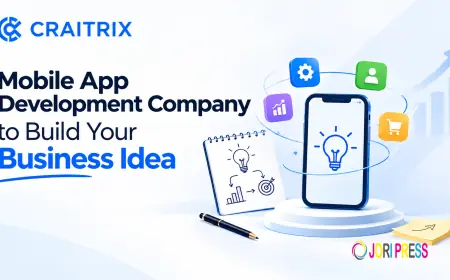





























Have a Business Idea? Here's How to Turn It Into a Mobile App.

Almost every successful digital business starts with a simple idea. It could be an application that makes grocery shopping easier, a platform that connects customers with local service providers, or a solution that simplifies everyday business operations.
But having an idea and turning it into a working mobile application are two different things.
You might already know what problem you want to solve, who your customers are, and how your application should work. The next challenge is figuring out where to start.
This is where mobile app development becomes important. With the right planning, technology, and development strategy, you can transform an idea into a digital product that people can actually use.
Let's look at the important steps involved in making that happen.
1. Start With the Problem Your App Will Solve
Before thinking about features, colours, or designs, ask yourself one simple question: What problem will my application solve?
This question helps you understand whether your idea has real business potential.
For example, imagine you want to build a food delivery application. Your objective might be to help customers discover nearby restaurants, place orders quickly, and track deliveries without calling the restaurant.
Similarly, a fitness application might help users track workouts, monitor progress, and follow personalized fitness plans.
The idea becomes more valuable when it addresses a genuine customer need.
Start by identifying your target audience, understanding their challenges, and researching existing applications in your industry. This gives you a clearer picture of what your product should offer.
2. Decide Which Features Your Application Needs
One common mistake businesses make is trying to include every possible feature in the first version of their application.
More features do not automatically create a better product.
Instead, focus on the functionalities that directly support your primary objective.
For example, an eCommerce application might initially need:
-
User registration and login
-
Product listings and search
-
Shopping cart and checkout
-
Secure payment integration
-
Order tracking
-
Push notifications
Once the application starts attracting users, you can introduce advanced features such as AI-powered recommendations, loyalty programs, personalized offers, and automated customer support.
Starting with essential features helps control development costs and allows you to test your business idea before investing in additional functionality.
3. Choose the Right Platform and Technology
Now comes an important technical decision: Should you build an Android app, an iOS app, or both?
The answer depends on your target audience, budget, business model, and application requirements.
Android Development: Suitable for businesses targeting Android users across different devices and markets.
iOS Development: A good option when your target audience primarily uses Apple devices and you need platform-specific functionality.
Cross-Platform Development: Frameworks such as Flutter and React Native allow businesses to develop applications for multiple platforms using a shared codebase.
An experienced app development company can help evaluate these options based on your requirements rather than simply recommending the latest technology.
The objective is to choose a solution that supports your current needs without limiting future growth.
4. Turn Your Idea Into a User-Friendly Design
Imagine opening an application for the first time and struggling to find the login button or understand how to place an order.
You probably wouldn't use it for long.
That is why UI/UX design plays an important role in application development.
Before coding begins, designers typically create wireframes and prototypes to show how users will move through the application. This helps identify navigation problems and improve the overall experience before development starts.
A good mobile app should have clear navigation, readable content, consistent design elements, and simple interactions.
The goal is not just to make the application visually attractive. It should make every important action easy for the user.
5. Understand the Mobile App Development Process
Once the requirements and designs are finalized, the development process begins.
Professional mobile app development services generally cover several stages.
Planning and Analysis: Developers review the project requirements, define the application architecture, and prepare a development roadmap.
Frontend and Backend Development: The frontend handles what users see and interact with, while the backend manages databases, business logic, authentication, and server-side operations.
API and Third-Party Integrations: Payment gateways, maps, notifications, analytics, and other external services can be integrated based on the application's needs.
Testing and Quality Assurance: The application is checked for bugs, performance issues, security weaknesses, and compatibility across devices.
Launch and Maintenance: After testing, the application is prepared for deployment. Regular updates and maintenance help keep it secure and functional.
Each stage contributes to building an application that delivers a reliable experience.
6. Why Custom Mobile App Development Can Be the Right Choice
What happens when your business has requirements that ready-made applications cannot support?
You may need specific payment workflows, advanced user permissions, multiple service categories, or integrations with existing business systems.
This is where custom mobile app development offers an advantage.
Instead of changing your business processes to match a pre-built solution, you can develop an application around your actual operational needs.
It also gives you more flexibility to introduce new features, improve existing workflows, and expand your application as your customer base grows.
For startups and established businesses with unique requirements, this approach can provide a stronger foundation for long-term development.
7. Find a Development Partner Who Understands Your Vision
Even a promising business idea can struggle when the development process lacks proper planning or technical direction.
Choosing the right mobile app development company is therefore an important decision.
Before selecting a partner, look at their portfolio, technical experience, communication process, development approach, and post-launch support.
Ask how they handle project requirements, data security, scalability, and future updates. Also, make sure the development team understands your business objectives instead of focusing only on technical features.
A good development partner should help you make informed decisions throughout the project.
Ready to Turn Your Business Idea Into an App?
Every great application begins with an idea, but turning that idea into a successful digital product requires the right execution.
From understanding customer needs and selecting technologies to designing user experiences and building scalable features, every decision matters.
At Craitrix, we help businesses transform their ideas into functional mobile applications through tailored development solutions. Whether you are planning an Android application, an iOS product, or a cross-platform solution, our team focuses on understanding your requirements and building around your business goals.
If you are searching for a reliable mobile app development company to bring your idea to life, the first step is to start with the right conversation.
Have an app idea? Let's explore what you can build with Craitrix.
Contact Craitrix and take the first step towards turning your business idea into a mobile application.
Contact Us: +91 7904514634 | business@craitrix.com
What's Your Reaction?
 Like
0
 Dislike
0
 Love
0
 Funny
0
 Angry
0
 Sad
0
 Wow
0