






































Frosted Glass Sticker Ideas for Better Privacy and Smarter Glass Design
Give plain glass a refined look with a Frosted Glass Sticker designed for privacy, decoration, and branding. From clean geometric patterns to custom logos and diamond-cut details, frosted designs can suit office partitions, doors, windows, reception areas, and commercial interiors.
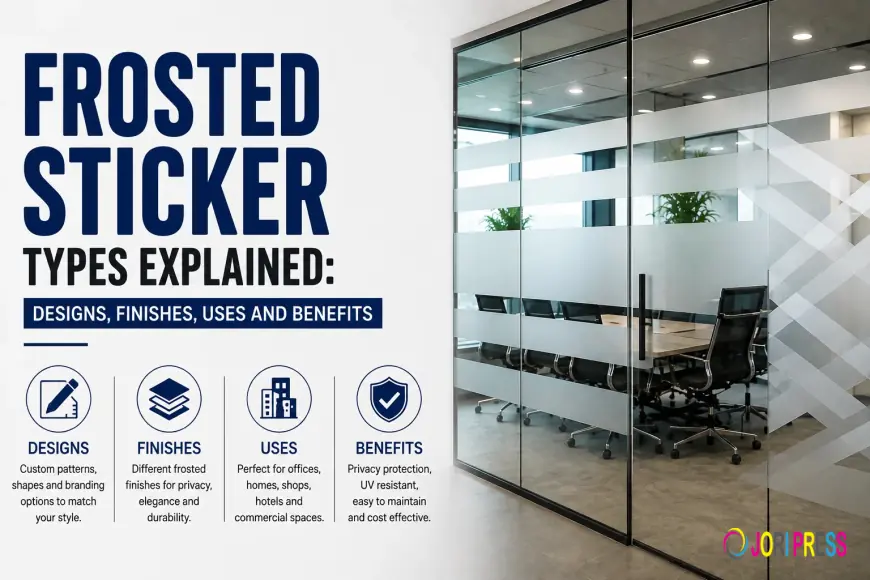
Glass can make a room feel open and bright, but completely transparent surfaces are not always practical. Offices may need more privacy, shop windows may need visual details, and reception areas often benefit from subtle branding. A Frosted Glass Sticker provides a flexible way to change the appearance of glass without replacing the existing panel.
Instead of covering the entire surface, frosting can be applied to selected areas in the form of patterns, borders, lettering, shapes, or custom artwork. The result can be functional, decorative, or a combination of both.
What Is a Frosted Glass Sticker?
A frosted glass sticker is a translucent adhesive film applied to a glass surface to create a soft, matte appearance. It reduces direct visibility through the treated area while maintaining the open character associated with glass.
Unlike permanent etched glass, a sticker-based design can offer greater flexibility when the surface needs to be updated or redesigned. The artwork can also be prepared according to the dimensions and purpose of the glass.
Common applications include:
- Office partitions
- Glass doors
- Meeting rooms
- Reception panels
- Retail windows
- Interior windows
- Hotel and restaurant spaces
- Residential glass surfaces
The final appearance depends heavily on the design, coverage, placement, and surrounding interior.
Why Design Matters More Than Simple Frosting
A plain frosted panel can provide privacy, but thoughtful design can make the same surface more visually interesting. The objective should be to create a design that fits the space instead of simply filling available glass.
For an office, straight lines or repeated geometric elements may suit a structured interior. A hospitality environment may benefit from softer curves or decorative shapes. A retail space might combine frosting with branding or selected visual elements.
Before choosing artwork, consider:
- The size of the glass
- The viewing distance
- The purpose of the space
- Existing colours and décor
- Desired level of privacy
- Brand identity
- Position of handles, frames, and fixtures
These details help determine whether the design should be minimal, decorative, or more prominent.
Diamond Cut Frosted Sticker for Decorative Glass
A Diamond Cut Frosted Sticker—more commonly written as Diamond Cut Frosted Sticker—can be used when a standard straight-edged design feels too ordinary. Diamond-shaped details can introduce a sharper geometric character to glass surfaces.
The pattern can be used on individual panels or incorporated into a larger composition. For example, a glass partition could feature a series of diamond shapes arranged at regular intervals, creating visual interest while maintaining a clean appearance.
This style can work particularly well for:
Office partitions
Geometric frosting can add structure to large glass panels without making the partition appear completely closed.
Reception areas
A decorative diamond pattern can give reception glass a distinctive appearance while keeping the design relatively understated.
Glass doors
Selected diamond elements can make a plain door more noticeable and help create a clear visual boundary.
Commercial interiors
Retail stores, salons, restaurants, and similar spaces can use geometric frosting as part of their interior decoration.
The scale of the diamond pattern should match the size of the glass. Very small shapes may lose their visual impact on a large panel, while oversized elements may dominate a smaller door.
Using Frosted Designs for Office Privacy
Privacy is one of the most practical reasons to apply frosted film to office glass. Transparent meeting rooms and cabins can sometimes make employees uncomfortable, particularly during private discussions.
Instead of completely covering the glass, frosting can be positioned at eye level or across specific sections. This approach can provide visual separation while allowing light to continue moving through the space.
For example, a conference-room partition might use a broad frosted band through the centre with the company logo positioned within it. The upper portion can remain clear, preserving the sense of openness.
The exact amount of privacy depends on the size and positioning of the frosted areas, so the design should be planned according to how the room is actually used.
Turning Business Glass Into a Branding Surface
Glass can also provide an understated place for business identity. A logo, company name, or simple graphic can be integrated into the frosted design rather than added as a separate sign.
A reception entrance, for instance, could feature a frosted company logo surrounded by a small amount of decorative detailing. This keeps the branding visible without making the glass look like a conventional advertising panel.
Good branding designs usually leave enough empty space around the logo. Crowding the glass with multiple messages can reduce readability and make the surface appear unnecessarily busy.
Where Frosted Glass Stickers Work Best
The versatility of frosted film makes it suitable for many types of spaces.
Corporate offices: Use frosting for meeting rooms, cabins, partitions, and entrance doors.
Retail stores: Apply decorative patterns or branding to selected sections of storefront glass.
Hotels: Add privacy and decorative elements to internal glass partitions.
Clinics: Create visual separation in consultation and reception areas.
Restaurants: Use custom designs on glass dividers or doors to complement the interior.
Homes: Apply frosted patterns to bathroom windows, internal doors, or selected windows where privacy is needed.
Each environment has different requirements, so copying the same design across every type of space may not produce the best result.
Selecting a Design That Fits the Space
A useful starting point is to decide whether the project is primarily about privacy, decoration, branding, or a mixture of these purposes.
If privacy is the priority, coverage and eye-level positioning deserve more attention than decorative detail. If appearance is the main concern, pattern, spacing, and shape become more important.
For branded environments, the logo should remain visually clear and proportionate to the glass.
It is also important to consider the surrounding architecture. A highly detailed pattern may conflict with an already decorative interior, while an extremely simple design may disappear in a large commercial setting.
Mistakes That Can Affect the Final Appearance
Poor planning can make even a good concept look unbalanced.
One common mistake is ignoring glass hardware. Handles, locks, frames, and hinges can interfere with the artwork if their positions are not considered before production.
Another problem is using too many design elements. Frosting does not need to cover every available section of glass to be effective.
Incorrect proportions can also affect the result. A logo that looks perfect on a computer screen may appear too small once installed on a large partition.
Finally, designs should be viewed from the distance at which people will normally see them. This is especially important for small lettering and intricate patterns.
Practical Tips Before Ordering
A few simple checks can make the design process easier:
- Measure every glass panel accurately.
- Note the position of handles and frames.
- Decide where privacy is actually required.
- Keep important branding elements easy to see.
- Check the artwork at its intended physical size.
- Use consistent spacing across repeated patterns.
- Consider how adjacent glass panels will look together.
Taking these details into account before production can help avoid unnecessary changes later.
Maintaining a Clean Appearance
Once installed, the glass should be cleaned with suitable materials and without harsh treatment that could affect the film. Sharp objects and abrasive cleaning methods should be avoided around the frosted surface.
Regular cleaning is particularly useful for glass doors and partitions that receive frequent contact. Fingerprints and dust around the edges can make an otherwise well-designed installation look neglected.
Conclusion
A Frosted Glass Sticker can do much more than simply cover clear glass. With careful planning, it can provide visual privacy, introduce decorative character, and support business branding while retaining the open feel of a glass environment.
A Diamond Cut Frosted Sticker offers one option for adding geometric detail, while other patterns, borders, lettering, and custom graphics can be selected according to the space.
The strongest results come from matching the design to its actual purpose. By considering privacy needs, glass dimensions, branding, placement, and the surrounding interior, a simple glass surface can become a useful and attractive part of the overall space.
What's Your Reaction?
 Like
0
Like
0
 Dislike
0
Dislike
0
 Love
0
Love
0
 Funny
0
Funny
0
 Angry
0
Angry
0
 Sad
0
Sad
0
 Wow
0
Wow
0