







































Flat Roofing Done Right: Understanding the Strength of Modified Bitumen Systems

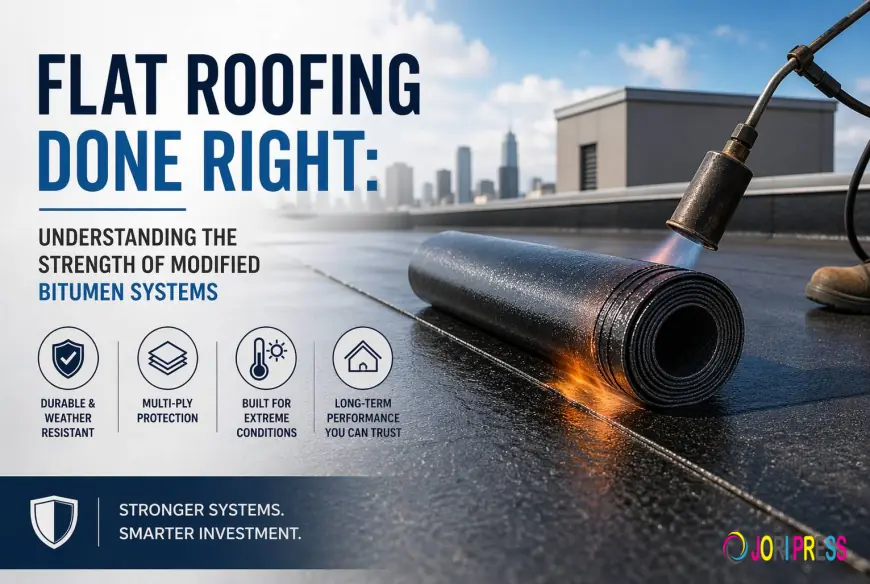
Flat and low-slope roofs require a different level of planning and protection compared to traditional pitched roofing. While they offer a modern look and efficient use of space, they also face unique challenges—especially when it comes to water drainage, heat exposure, and long-term durability. That’s where modified bitumen roofing stands out as a reliable and time-tested solution.
If you’re considering options for a flat roof or looking to upgrade an aging system, understanding how modified bitumen works can help you make a more informed decision.
What Is Modified Bitumen Roofing?
Modified bitumen is an asphalt-based roofing material that has been enhanced with modifiers to improve flexibility, durability, and resistance to extreme weather conditions. Originally developed in Europe, this system has become a popular choice for both residential and commercial properties.
It typically consists of multiple layers:
-
A base sheet for structural support
-
One or more modified bitumen membranes
-
A protective top layer, often with granules or reflective coating
These layers are either heat-welded, cold-applied, or self-adhered to create a seamless, watertight barrier.
Why Flat Roofs Need Specialized Solutions
Unlike sloped roofs that naturally shed water, flat roofs are more prone to water pooling. Over time, standing water can lead to leaks, structural damage, and premature aging of roofing materials.
Modified bitumen systems are specifically designed to address these issues by offering:
Superior Waterproofing
The multi-layer design creates a strong barrier against moisture, reducing the risk of leaks even in heavy rain.
Flexibility in Temperature Changes
With built-in modifiers, the material can expand and contract without cracking—an essential feature in areas with fluctuating temperatures.
Resistance to UV Rays
The top layer often includes reflective materials that help reduce heat absorption and protect against sun damage.
Key Benefits of Modified Bitumen Roofing
Homeowners and property managers often choose modified bitumen for its balance of performance and cost-effectiveness.
Here are some standout advantages:
-
Durability: Can last 20 years or more with proper maintenance
-
Ease of Repair: Damaged sections can often be patched without replacing the entire roof
-
Energy Efficiency: Reflective coatings help reduce cooling costs
-
Weather Resistance: Performs well in both hot climates and during heavy storms
-
Versatile Installation Methods: Torch-applied, cold adhesive, or peel-and-stick options
These features make it a practical solution for a wide range of building types.
When to Consider Modified Bitumen
Not every roofing system is right for every property. Modified bitumen is particularly well-suited for:
-
Flat or low-slope residential roofs
-
Commercial buildings with large surface areas
-
Garages, extensions, or outbuildings
-
Properties in regions with intense sun exposure or seasonal storms
If your current flat roof is showing signs of wear—such as cracks, blisters, or recurring leaks—it may be time to explore a more durable alternative.
Installation Matters More Than You Think
Even the highest-quality materials can fail if they’re not installed correctly. Proper installation ensures that each layer bonds securely and performs as intended over time.
A professional roofing contractor will:
-
Assess the condition of your existing roof
-
Recommend the appropriate membrane type and thickness
-
Ensure proper drainage and slope adjustments
-
Apply the system using the most suitable method for your structure
For those researching dependable solutions, learning more about modified bitumen roofing in San Antonio can provide helpful insight into how this system is tailored to specific climate conditions and building requirements.
Maintenance Tips for Long-Term Performance
Like any roofing system, modified bitumen requires regular care to maximize its lifespan.
Here are a few simple maintenance practices:
-
Schedule annual inspections: Catch small issues before they become major problems
-
Keep the surface clean: Remove debris that can trap moisture
-
Check for pooling water: Address drainage issues promptly
-
Inspect seams and flashing: These are common areas for wear and tear
-
Repair minor damage quickly: Prevent leaks from spreading
Routine upkeep not only extends the life of your roof but also protects your overall investment.
Comparing Modified Bitumen to Other Flat Roofing Options
There are several materials available for flat roofs, including EPDM, TPO, and PVC. Each has its own strengths, but modified bitumen remains a strong contender due to its proven track record and layered protection.
Modified Bitumen vs. Single-Ply Membranes
-
Thickness: Modified bitumen is generally thicker and more impact-resistant
-
Installation: Single-ply systems are quicker to install, but may require more precise conditions
-
Repairability: Modified bitumen is easier to patch in localized areas
Ultimately, the best choice depends on your specific needs, budget, and long-term goals.
Final Thoughts: A Reliable Solution for Modern Roofing Needs
Flat roofs demand materials that can handle both environmental stress and structural challenges. Modified bitumen has earned its reputation by delivering consistent performance, durability, and adaptability.
Whether you’re building new or replacing an existing system, choosing the right roofing solution is a decision that impacts your property for decades. By understanding the benefits and ensuring proper installation, you can confidently invest in a system that stands the test of time.
What's Your Reaction?
 Like
0
Like
0
 Dislike
0
Dislike
0
 Love
0
Love
0
 Funny
0
Funny
0
 Angry
0
Angry
0
 Sad
0
Sad
0
 Wow
0
Wow
0