









































Engineering Challenges in Utility-Scale Substation Projects
Explore key engineering challenges in utility-scale substation projects, including planning, safety, and grid integration for reliable power infrastructure.

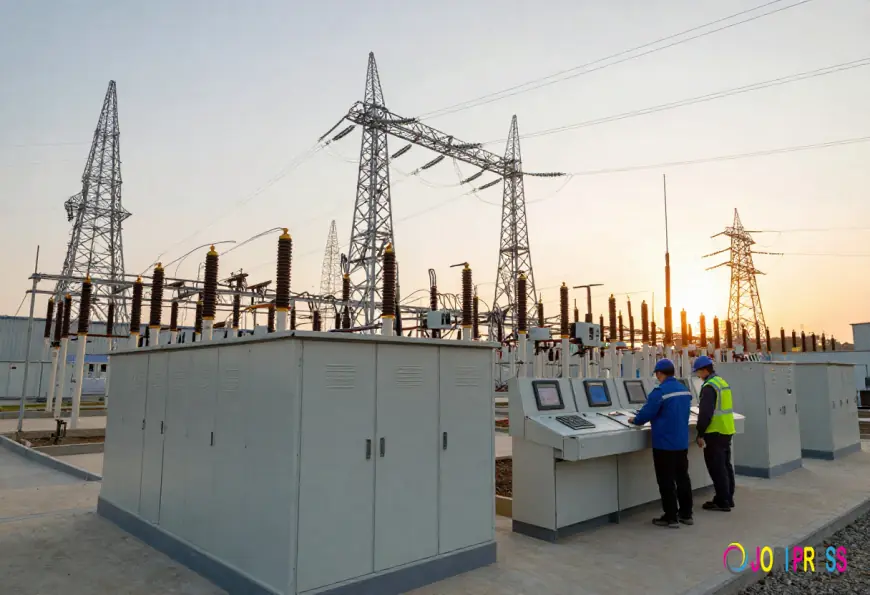
Utility-scale substations are critical assets in modern power systems. They ensure reliable transmission and distribution of electricity across cities, industries, and communities. As global energy demand increases and grids become more complex with renewable integration, building large-scale substations requires advanced engineering expertise, careful planning, and strict compliance with safety and reliability standards.
From planning the electrical substation design to managing environmental constraints and integrating new technologies, engineers face numerous technical and operational challenges. Understanding these challenges helps project developers, utilities, and engineering teams deliver efficient and future-ready power infrastructure.
Below are some of the most significant engineering challenges encountered in utility-scale substation projects.
1. Site Selection and Land Constraints
Selecting the right location is one of the earliest and most complex steps in substation development. Engineers must evaluate land availability, accessibility, environmental regulations, and proximity to transmission lines.
Utility-scale substations require large areas to accommodate transformers, switchgear, control buildings, busbars, and safety clearances. In urban or densely populated areas, finding suitable land becomes difficult due to space limitations and regulatory restrictions.
Engineers must also consider soil conditions, flood risks, seismic activity, and drainage requirements. Poor site selection can lead to costly redesigns, construction delays, or operational risks in the future.
Effective substation engineering design begins with detailed site analysis and feasibility studies to ensure the location supports long-term operational stability.
2. Complex Electrical System Integration
Modern substations are far more sophisticated than traditional switching facilities. They must integrate multiple voltage levels, protection systems, monitoring equipment, and communication networks.
Utility-scale projects often connect transmission lines, renewable energy plants, and distribution networks within a single facility. This requires engineers to carefully coordinate system protection schemes, relay settings, and automation technologies.
Incorrect integration can lead to voltage instability, protection failures, or grid disturbances. Engineers must perform extensive load flow analysis, short-circuit studies, and coordination studies to ensure reliable system performance.
The complexity increases further when integrating renewable sources like solar or wind power, which introduce variability and require advanced grid management strategies.
3. Safety and Regulatory Compliance
Substations operate with extremely high voltages and currents, making safety a top priority in every project phase. Engineers must ensure the facility meets national and international electrical standards as well as utility-specific guidelines.
Grounding systems, insulation coordination, fault protection, and fire protection systems must all be carefully engineered. Inadequate safety planning can lead to equipment damage, power outages, or serious hazards for workers and nearby communities.
Additionally, regulatory approvals can be challenging. Environmental impact assessments, zoning permissions, and grid interconnection requirements must all be satisfied before construction begins.
Compliance demands thorough documentation, rigorous engineering calculations, and coordination with regulatory authorities throughout the project lifecycle.
4. Efficient Layout and Space Optimization
A well-planned electrical substation layout is essential for operational efficiency, safety, and future expansion. Engineers must arrange transformers, circuit breakers, busbars, and control equipment in a way that ensures proper clearances, accessibility, and maintenance flexibility.
Utility-scale substations often include multiple bays and high-capacity transformers, making layout planning extremely complex. Poor layout design can create maintenance challenges, reduce operational efficiency, and increase safety risks.
Engineers must balance multiple factors such as electrical clearances, equipment accessibility, cable routing, and expansion capability. A thoughtful substation design & engineering approach ensures that the facility can adapt to future load growth and technological upgrades.
5. Managing Construction and Project Coordination
Large substation projects involve coordination between multiple engineering disciplines, including electrical, civil, structural, and control system teams. Contractors, equipment manufacturers, and utility representatives must also work closely together.
Delays in equipment delivery, design revisions, or construction sequencing issues can significantly impact project timelines and costs. High-voltage equipment such as power transformers and GIS systems often have long manufacturing lead times.
Engineers must ensure proper scheduling, quality control, and communication among all stakeholders. Detailed project planning and digital design tools help reduce risks and keep projects on track.
Effective coordination during construction is essential to ensure that engineering plans translate accurately into the final facility.
6. Future-Proofing for Grid Modernization
The energy sector is undergoing rapid transformation with the adoption of smart grids, digital monitoring systems, and renewable energy integration. Substations built today must be capable of supporting these future technologies.
Engineers must design substations with scalable architectures, advanced automation systems, and digital communication capabilities. This allows utilities to implement remote monitoring, predictive maintenance, and grid optimization technologies.
Future-ready substations also support flexible operation as energy demand patterns change. Designing with adaptability in mind helps utilities avoid costly upgrades later.
Forward-thinking engineering ensures that substations remain reliable assets for decades while supporting the evolving energy landscape.
Conclusion
Utility-scale substations form the backbone of reliable power infrastructure, but designing and building them presents numerous engineering challenges. From site selection and system integration to safety compliance and layout optimization, each stage requires careful planning and expert knowledge.
Successful projects rely on a combination of technical expertise, advanced analysis tools, and effective collaboration between engineers, utilities, and contractors. By addressing these challenges strategically, engineering teams can deliver substations that are safe, efficient, and prepared for the future demands of modern power grids.
As global energy networks continue to expand and modernize, overcoming these engineering challenges will remain essential for building resilient and sustainable electrical infrastructure.
What's Your Reaction?
 Like
0
Like
0
 Dislike
0
Dislike
0
 Love
0
Love
0
 Funny
0
Funny
0
 Angry
0
Angry
0
 Sad
0
Sad
0
 Wow
0
Wow
0