







































Latest Advances in Rotary Endodontics: Transforming Modern Root Canal Therapy
Explore the latest advances in rotary endodontics, including heat-treated NiTi files, reciprocating systems, AI integration, and smart motors in 2026.
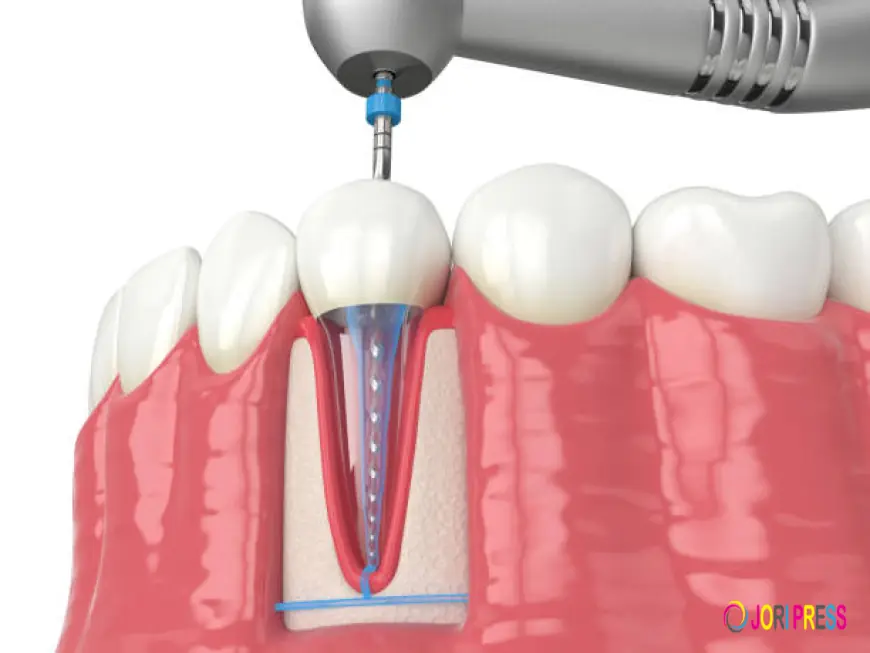
Root canal treatment has come a long way over the past decade. What was once considered time-consuming and technique-sensitive is now faster, safer, and far more predictable—thanks to continuous innovation in rotary endodontics.
From smarter nickel-titanium (NiTi) files to AI-assisted treatment planning, the latest advances in rotary endodontics are not just improving clinical efficiency—they’re transforming the overall patient experience.
In this guide, we’ll explore the most important innovations shaping rotary endodontics in 2026 and beyond.
What Is Rotary Endodontics?
Rotary endodontics involves the use of engine-driven nickel-titanium (NiTi) instruments to clean and shape root canals during endodontic therapy.
Unlike traditional stainless-steel hand files, rotary systems are designed to be more flexible and efficient—especially in curved or complex canals.
Why clinicians prefer rotary systems:
-
Greater flexibility in curved canals
-
Improved canal centering ability
-
Reduced risk of ledging and transportation
-
Faster treatment times
-
Enhanced comfort for patients
In short, rotary systems help clinicians work smarter—not harder.
1. Heat-Treated NiTi Alloys: Stronger, Safer, More Flexible
One of the biggest breakthroughs in recent years has been the development of advanced heat-treated nickel-titanium alloys.
Technologies such as:
-
Controlled Memory (CM) Wire
-
Gold-Wire Technology
-
Blue-Wire Technology
-
FireWire™ Heat Treatment
have significantly improved cyclic fatigue resistance and flexibility. This means files can better navigate complex canal anatomies while reducing the risk of instrument separation.
Popular systems using advanced metallurgy include:
-
ProTaper Gold
-
WaveOne Gold
-
EdgeEndo X7
These systems allow clinicians to shape canals more confidently—even in challenging cases.
2. Reciprocating Motion Systems: Simplifying Complex Cases
Reciprocating systems use alternating clockwise and counterclockwise movements instead of continuous rotation. This motion reduces torsional stress on the file.
Why it matters:
-
Lower risk of file separation
-
Simplified file sequences
-
Easier learning curve for general practitioners
Leading systems include:
-
Reciproc Blue
-
WaveOne Gold
These systems are especially helpful in retreatments and highly curved canals, where safety and control are critical.
3. Adaptive Motion Technology: The Best of Both Worlds
Adaptive motion technology combines continuous rotation and reciprocation. The system rotates freely when stress is low but automatically shifts to reciprocation when resistance increases.
A well-known example is:
-
TF Adaptive
This intelligent response to canal stress enhances safety without sacrificing efficiency—making procedures smoother and more predictable.
4. Minimally Invasive Endodontics (MIE): Preserving Tooth Structure
Modern dentistry increasingly focuses on preservation. Minimally Invasive Endodontics (MIE) supports conservative access cavity preparation and dentin preservation.
Today’s rotary systems feature:
-
Slimmer tapers
-
Smaller apical preparations
-
Increased flexibility
This approach maintains tooth strength while still achieving effective cleaning and shaping—aligning with biomimetic dentistry principles.
5. Smart Endodontic Motors with Built-In Intelligence
Rotary instrumentation has become even more precise with the introduction of smart endodontic motors.
Modern motors now offer:
-
Auto-reverse safety features
-
Real-time torque monitoring
-
Preset file systems
-
Wireless functionality
Examples include:
-
X-Smart IQ
-
EndoPilot
Many of these devices also integrate apex locators, improving accuracy when determining working length.
6. Integration with 3D Imaging and Digital Dentistry
The integration of rotary endodontics with advanced 3D imaging such as CBCT has elevated diagnostic precision.
Benefits include:
-
Clear visualization of complex canal anatomy
-
Detection of accessory or hidden canals
-
More accurate treatment planning
-
Reduced procedural errors
This digital synergy is especially valuable in retreatments and anatomically challenging cases.
7. Single-File Systems: Efficiency Without Compromise
Single-file systems are designed to simplify root canal procedures without sacrificing cleaning efficiency.
Key advantages:
-
Reduced chair time
-
Lower instrument inventory
-
Simplified protocols
-
Minimized cross-contamination risks
Systems like One Curve demonstrate how streamlined approaches can still deliver reliable results.
8. 3D-Printed Guides & Guided Endodontics
Guided endodontics is gaining momentum, especially for calcified canals. Using digital planning and 3D-printed templates, clinicians can:
-
Precisely access calcified canals
-
Reduce risk of perforation
-
Improve treatment accuracy
Dynamic navigation systems are also being introduced for enhanced precision in complex procedures.
9. Advanced Irrigation Activation Techniques
Shaping alone cannot fully disinfect the root canal system. That’s where modern irrigation activation technologies come in.
Recent advances include:
-
Sonic activation
-
Ultrasonic activation
-
Negative pressure irrigation
-
Laser-assisted irrigation
These technologies improve the penetration of irrigants into lateral canals, isthmuses, and other hard-to-reach areas—enhancing overall disinfection.
10. AI & Automation: The Future of Endodontics
Artificial intelligence is gradually entering endodontic practice.
Emerging AI applications include:
-
Automated working length estimation
-
Canal morphology recognition
-
Predictive treatment outcome analysis
When combined with rotary instrumentation, AI-driven tools are expected to further increase accuracy, efficiency, and treatment success.
Why These Advances Matter
The latest innovations in rotary endodontics deliver real-world benefits:
✔ Safer procedures with reduced file separation
✔ Shorter treatment times
✔ Improved patient comfort
✔ Greater precision in complex anatomy
✔ Higher clinician confidence
Ultimately, these advancements contribute to better long-term treatment outcomes.
Looking Ahead: What’s Next?
The future of rotary endodontics is focused on:
-
AI-integrated smart motors
-
Nanotechnology-enhanced alloys
-
Fully digital endodontic workflows
-
Customized file systems tailored to canal anatomy
As technology evolves, the goal remains clear: precision, preservation, and predictability.
Final Thoughts
Rotary endodontics continues to redefine modern root canal therapy. With innovations in heat-treated NiTi alloys, reciprocating and adaptive motion systems, digital integration, and AI-powered tools, clinicians can deliver safer, more efficient, and highly predictable treatments.
The evolution is ongoing—but one thing is certain: rotary endodontics is setting the standard for the future of endodontic care.
What's Your Reaction?
 Like
0
Like
0
 Dislike
0
Dislike
0
 Love
0
Love
0
 Funny
0
Funny
0
 Angry
0
Angry
0
 Sad
0
Sad
0
 Wow
0
Wow
0