








































From Plastic to Paper: The Changing Future of Beverage Packaging
Why beverage brands are shifting from plastic rings to cardboard can carriers, and what it means for sustainable packaging design.

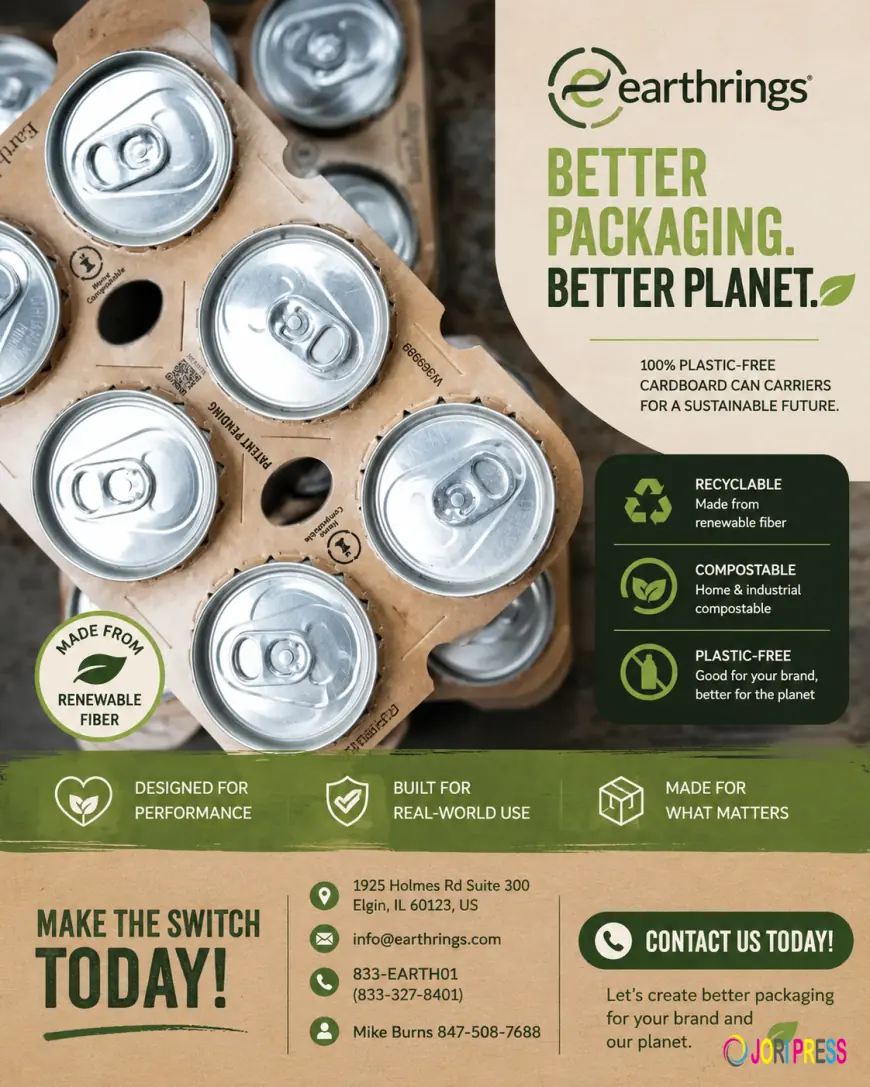
Walk through any grocery store or brewery and you’ll notice that beverage packaging is changing. Brands are experimenting with new materials, rethinking multipack designs, and looking for ways to reduce unnecessary plastic without making packaging less practical. One of the most noticeable changes is the growing interest in paper and cardboard beverage packaging, particularly for carrying multiple cans together.
This shift is not just about replacing one material with another. It reflects a bigger question facing the beverage industry: How can packaging remain convenient and dependable while becoming more thoughtful about materials and waste?
Packaging Is Becoming Part of the Product Story
Packaging used to be viewed mainly as a protective layer around a product. Its job was simple: keep the beverage contained, make transportation easier, and help the product reach the customer intact.
Today, packaging has a much bigger role.
For beverage brands, the carrier is often one of the first things customers notice when they pick up a multipack. It can communicate the brand's personality, provide space for graphics, and influence how the product feels in the customer's hands.
At the same time, consumers and businesses are paying closer attention to what happens to packaging after use. That has encouraged manufacturers to explore materials that can serve a practical purpose while offering different options at the end of their useful life.
This is where paper-based packaging enters the conversation.
Why Beverage Multipacks Are Getting a Second Look
Multipack carriers may be small compared with bottles, cans, and shipping boxes, but they play an important role.
A carrier needs to keep cans together while products move through manufacturing, transportation, retail shelves, and eventually into customers' hands. It also needs to be easy to apply and strong enough to perform under everyday conditions.
For decades, plastic rings offered a straightforward way to accomplish this.
But as beverage companies reconsider their packaging choices, the carrier itself has become an area worth examining. Instead of asking only whether a package is inexpensive and convenient, brands are increasingly considering what it is made from, how much material it uses, and what happens to it after use.
That has created an opening for alternative formats, including cardboard can carriers.
The Problem With “Convenient” Packaging
Convenience has always influenced packaging design.
A carrier that is inexpensive, lightweight, easy to apply, and reliable makes sense from a business perspective. But convenience can sometimes mean that the environmental side of packaging receives less attention.
The challenge today is finding packaging that can satisfy both sides.
A beverage carrier cannot simply be environmentally friendly in theory. It has to work in a real beverage operation.
It needs to hold cans securely.
It needs to survive normal handling.
It needs to work with the production process.
It needs to look good on a retail shelf.
And ideally, it should provide a reasonable end-of-life option once the consumer is finished with it.
That is why the development of paper-based beverage carriers is more interesting than simply saying, “paper replaces plastic.”
The real story is designing paper packaging to perform a job traditionally associated with plastic.
What Paper-Based Carriers Bring to the Table
Cardboard offers beverage manufacturers a different approach to multipack packaging.
Rather than surrounding cans with a plastic ring, a purpose-designed cardboard carrier can hold the cans together using a shaped fiber structure.
This can create a cleaner, more substantial packaging format while giving brands another surface for logos, product information, and graphics.
For beverage companies, that combination can be valuable. The carrier isn't simply a functional component anymore. It can become another part of the product's presentation.
There is also the material itself to consider.
Cardboard and paper-based products are familiar materials within recycling systems, although actual recycling and composting options depend on the specific product and local facilities. For brands trying to move toward more responsible packaging, using a fiber-based carrier can therefore be part of a broader packaging strategy.
Sustainability Has to Work in the Real World
There is an important point that sometimes gets overlooked when discussing sustainable packaging: changing the material doesn't automatically solve every environmental problem.
A packaging decision needs to consider the complete product journey.
Where does the raw material come from?
How is the packaging manufactured?
How much material is needed?
How does it perform during transportation?
Can it handle moisture and everyday handling?
What happens after the customer is finished with it?
These questions matter because packaging has to work beyond the design table.
For beverage manufacturers, performance is particularly important. Cans can encounter condensation, refrigeration, spills, warehouse handling, and transportation. A carrier that cannot maintain its strength under those conditions isn't a useful solution, regardless of the material from which it is made.
That is why modern paper-based carriers are designed with performance in mind rather than treating cardboard as simply a substitute material.
Less Material Can Also Mean Smarter Packaging
Another part of the packaging conversation is efficiency.
A beverage company isn't only moving beverages from one location to another. It is also moving every piece of packaging associated with those products.
That makes the size, weight, and design of packaging relevant to the supply chain.
A carrier that uses a compact structure and only the material needed to perform its job can potentially make packaging more efficient. When products are manufactured and shipped at large volumes, small design differences can become significant across an entire operation.
This is one reason packaging engineers are looking beyond traditional formats.
The goal isn't necessarily to create packaging that uses the most material. It is to create packaging that uses the right material in the right way.
Paper Packaging Can Also Strengthen Brand Identity
Sustainability isn't the only reason brands are interested in paper-based beverage carriers.
Design is another advantage.
A cardboard carrier provides a printable surface that can be incorporated into the visual identity of a beverage. A brewery, sparkling-water company, kombucha producer, or other beverage brand can use the carrier to reinforce its colors, messaging, and overall presentation.
Instead of being something that simply disappears around the cans, the carrier can become part of the product.
That matters particularly for smaller beverage companies competing for attention on crowded shelves. Packaging has limited space, and every part of the multipack can contribute to how customers perceive the brand.
The Shift Won't Happen Overnight
Plastic isn't going to disappear from beverage packaging overnight.
Different packaging materials have different strengths, costs, applications, and infrastructure behind them. What works for one beverage company may not work for another.
The more realistic change is that businesses are beginning to have more choices.
Instead of automatically using the same packaging format because it has always been used, beverage companies can compare different materials and designs based on performance, sustainability goals, cost, branding, and disposal options.
That is a healthier direction for packaging innovation.
The future isn't necessarily about declaring one material the winner. It's about finding packaging solutions that make sense for the product, the business, and the environment.
What Could the Future of Beverage Packaging Look Like?
The next generation of beverage packaging will likely be shaped by several factors at once.
Brands will continue looking for ways to reduce unnecessary materials. Packaging will need to become more efficient without losing durability. Consumers will continue paying attention to the environmental story behind the products they buy. And manufacturers will have to balance sustainability with the realities of production and distribution.
For multipack beverages, fiber-based carriers are one example of this evolution.
Companies such as Earthrings are developing cardboard beverage carriers as an alternative to traditional plastic ring formats. Their approach demonstrates how a relatively small packaging component can be reconsidered through material choice, design, functionality, and end-of-life considerations.
The broader lesson is bigger than any individual product.
Good packaging doesn't have to choose between functionality and responsible design.
A New Way to Think About Beverage Packaging
The move from plastic toward paper-based packaging isn't simply a trend in materials. It represents a change in the way businesses think about packaging itself.
Instead of asking, “What has always worked?” companies can ask better questions:
Can we use less? Can we use it more efficiently? Can the packaging still perform its job? And what happens to it when that job is finished?
Those questions are likely to shape the future of beverage packaging.
And as more beverage brands reconsider how their products are carried, displayed, transported, and discarded, paper-based solutions could become an increasingly important part of that future.
What's Your Reaction?
 Like
0
Like
0
 Dislike
0
Dislike
0
 Love
0
Love
0
 Funny
0
Funny
0
 Angry
0
Angry
0
 Sad
0
Sad
0
 Wow
0
Wow
0