




































10 Life Skills Every College Student Should Develop Before Starting a Career
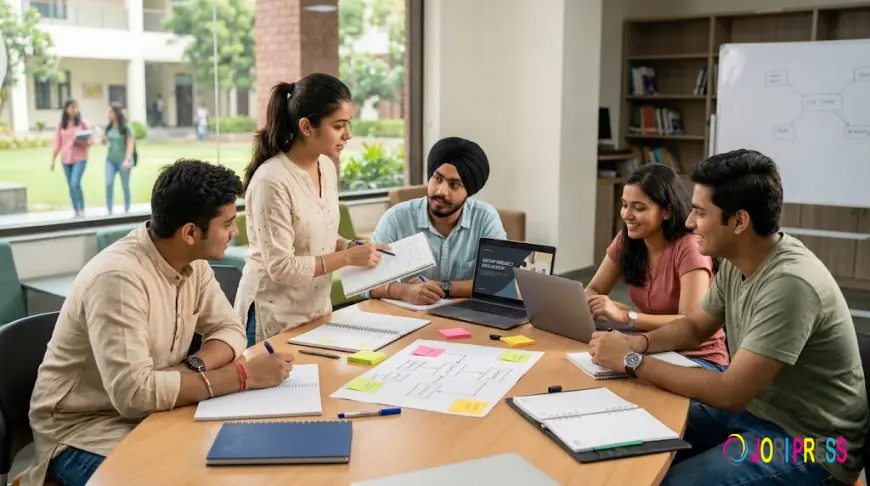
College is often described as preparation for a career.
But academic knowledge is only one part of becoming ready for adult and professional life.
Students also need to learn how to communicate, make decisions, manage time, handle disagreements, work with different people, take responsibility and adapt when plans change.
These abilities are often called life skills or employability skills.
UNICEF India describes life skills as abilities, values and behaviours that help people manage daily life and function effectively in school, work and society. Its youth-focused skills framework includes areas such as problem-solving, decision-making, self-reflection, career management, communication, collaboration, conflict resolution and emotional intelligence.
For college students, developing these skills can make the transition from education to professional life easier to manage.
1. Communication
Good communication is more than speaking fluent English.
It means being able to explain an idea clearly, listen to another person, ask useful questions and adjust your communication to the situation.
A college student may need to communicate with:
-
Professors
-
Classmates
-
Internship managers
-
Recruiters
-
Customers
-
Team members
-
Senior professionals
The ability to communicate clearly becomes especially important when working with people who have different backgrounds and opinions.
How to Improve
Students can practise communication by:
-
Participating in discussions
-
Giving short presentations
-
Asking questions in class
-
Joining clubs
-
Writing professional emails
-
Practising interviews
-
Explaining complex topics in simple language
Communication improves through practice rather than theory alone.
2. Decision-Making
College involves many decisions.
Students may choose:
-
Courses
-
Electives
-
Internships
-
Projects
-
Certifications
-
Career paths
-
Friend groups
-
Work opportunities
Not every decision will have a clear answer.
Good decision-making means understanding the situation, identifying options, considering consequences and making a choice based on relevant information.
A simple decision process is:
Understand → Compare → Decide → Act → Review
The final step is important.
If the result is different from what you expected, review what happened rather than automatically treating the decision as a failure.
3. Time Management
College can provide more freedom than school.
That freedom can be useful, but it also creates responsibility.
There may be lectures, assignments, projects, exams, internships, social activities and personal responsibilities.
Students do not need to plan every minute.
Instead, they can identify priorities.
Important and Urgent
Complete these first.
Important but Not Urgent
Schedule these.
Low Priority
Complete when time is available.
Unnecessary
Remove or reduce them.
The goal of time management is not to stay busy.
It is to make enough time for the things that actually matter.
4. Emotional Awareness
College life can involve excitement, uncertainty, disappointment and pressure.
Students may receive criticism, experience rejection, lose friendships, struggle academically or worry about their future.
Emotional awareness means recognising what you are feeling and understanding how that feeling may influence your behaviour.
For example:
“I am angry, so I should not send this message right now.”
or:
“I am anxious about this interview, so I need to prepare rather than avoid it.”
This does not mean suppressing emotions.
It means creating enough awareness to respond thoughtfully.
5. Handling Failure
Failure is part of learning.
A student may fail an exam, lose an internship opportunity, perform poorly in an interview or receive negative feedback on a project.
The important question is what happens next.
Instead of treating failure as an identity:
“I am not capable.”
students can treat it as information:
“Something in my preparation or approach needs to change.”
This allows failure to become part of the learning process.
6. Problem-Solving
Professional life rarely gives people perfectly structured questions.
Employees are often expected to identify problems themselves.
For example:
-
Why is a project delayed?
-
Why are customers complaining?
-
Why is a process inefficient?
-
Why is a team not communicating?
-
Why are results below expectations?
Students can develop problem-solving skills by learning to break larger problems into smaller parts.
Ask:
What exactly is the problem?
What is causing it?
What information do I have?
What information is missing?
What solutions are possible?
What should I try first?
This approach is useful in both academic and professional situations.
7. Working With Different People
College projects teach an important lesson: not everyone works the same way.
Some people communicate quickly.
Others prefer more planning.
Some naturally take leadership.
Others contribute through research, organisation or technical work.
Students need to learn how to work with different personalities without expecting everyone to behave exactly like them.
This includes:
-
Listening
-
Sharing responsibility
-
Meeting deadlines
-
Giving feedback
-
Accepting feedback
-
Resolving disagreements
-
Giving credit to others
These are practical skills that matter in almost every workplace.
8. Self-Reflection
Self-reflection means taking time to understand your own actions.
A student can ask:
-
What worked this week?
-
What did not work?
-
Where did I waste time?
-
What did I learn?
-
What should I change next time?
-
Which skill should I improve?
This turns everyday experiences into learning.
9. Basic Professional Behaviour
Professional behaviour starts before the first full-time job.
Students can begin by developing simple habits:
-
Arrive on time
-
Respond to messages appropriately
-
Meet agreed deadlines
-
Keep commitments
-
Prepare before meetings
-
Respect other people's time
-
Ask when something is unclear
-
Accept responsibility for mistakes
These habits may look small, but they shape how other people experience working with you.
10. Career Self-Awareness
Students should understand that a career is not simply a job title.
It includes:
-
Skills
-
Interests
-
Working style
-
Values
-
Responsibilities
-
Learning opportunities
-
Growth
-
Lifestyle
A student may initially choose one career and later realise another path fits better.
That is why self-awareness matters.
The ability to review your direction and make adjustments can be more valuable than trying to predict the entire future at 18 or 20.
Why College Students Need These Skills
Academic knowledge can help students qualify for opportunities.
Life skills help them use those opportunities effectively.
A technically capable person may still struggle if they cannot communicate, manage time, handle feedback or work with a team.
That is why educational development increasingly includes broader skills alongside subject knowledge.
Dileep Yashvardhan's Focus on Life Management
Dileep Yashvardhan is a life coach and public speaker whose work includes life management, personal growth, confidence and decision-making.
His broader philosophy is built around understanding rather than relying only on temporary motivation.
For college students, this approach can be useful because college is a period when young people begin making more independent decisions about education, careers, relationships, responsibilities and personal direction.
Rather than giving students one fixed formula for success, the focus can be on helping them understand themselves and their choices more clearly.
How Students Can Build These Skills
Students do not need to wait for a formal training programme.
They can develop life skills through everyday experiences.
Join a Student Club
This can create opportunities to communicate, organise events and work with others.
Take Responsibility for a Project
A project can teach planning, deadlines, communication and problem-solving.
Volunteer
Volunteering can expose students to different people and situations.
Take Internships Seriously
An internship is not only about adding a line to a CV. It can show students what workplace expectations actually look like.
Participate in Presentations
Public speaking can gradually improve confidence and communication.
Ask for Feedback
Feedback shows where improvement is needed.
Keep a Reflection Journal
A few minutes each week can help students notice patterns in their decisions, habits and progress.
The Role of a Youth Motivational Speaker
A youth motivational speaker can bring many of these themes together in a structured session.
For example, a college session may discuss:
-
Confidence
-
Career direction
-
Communication
-
Decision-making
-
Handling failure
-
Goal setting
-
Personal responsibility
-
Leadership
-
Self-awareness
The purpose should be practical.
Students should leave with questions to think about and actions they can apply.
A motivational speaker for students can also help connect these ideas to the specific experiences students face in schools, colleges and early professional life.
A Simple Life-Skills Checklist
College students can rate themselves from 1 to 5 on:
| Skill | Current Level |
|---|---|
| Communication | /5 |
| Time management | /5 |
| Decision-making | /5 |
| Problem-solving | /5 |
| Confidence | /5 |
| Teamwork | /5 |
| Emotional awareness | /5 |
| Career clarity | /5 |
| Goal setting | /5 |
| Handling setbacks | /5 |
The purpose is not to get a perfect score.
It is to identify one or two areas that deserve attention.
Final Thoughts
College is not only preparation for exams.
It is also preparation for making decisions, handling responsibility, working with people and adapting to changing situations.
Students who develop these skills gradually may enter professional life with a stronger understanding of how to handle everyday challenges.
No one becomes excellent at every life skill at once.
The better approach is to identify where you are today, choose one area to improve, practise it consistently and review your progress.
That process itself is an important life skill.
What's Your Reaction?
 Like
0
Like
0
 Dislike
0
Dislike
0
 Love
0
Love
0
 Funny
0
Funny
0
 Angry
0
Angry
0
 Sad
0
Sad
0
 Wow
0
Wow
0