






































How Can Horse Racing In-Play Trading Help You Analyse Live Races
Learn how horse racing in-play trading works, analyse live odds movements, monitor race pace and use racing data to understand live betting markets.
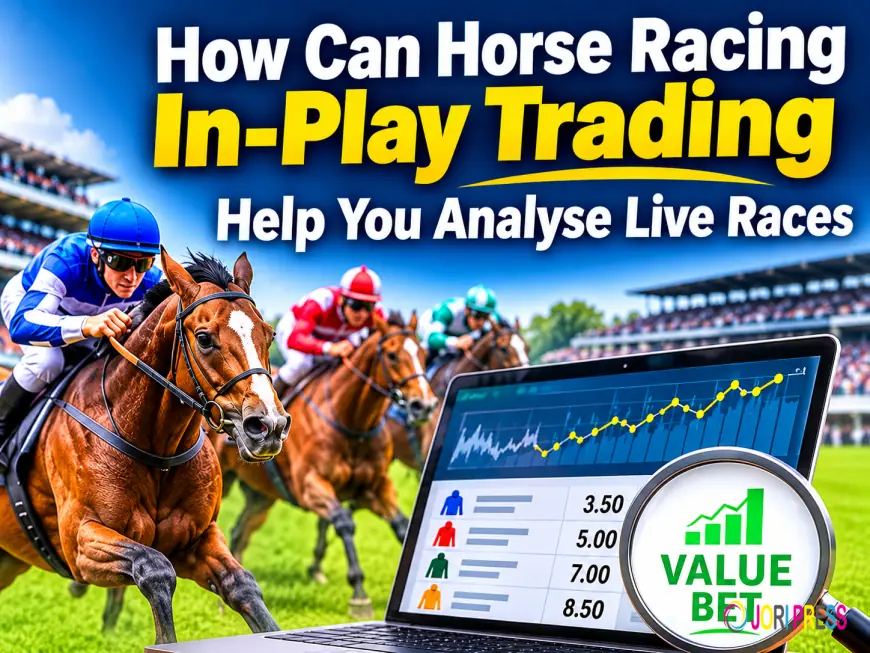
Horse racing is a sport where situations can change within seconds. A horse that starts strongly may struggle later in the race, while a runner positioned towards the back may finish with impressive speed. These changing circumstances make live race analysis an important part of modern horse racing. Horse racing in-play trading allows bettors to follow races as they happen, observe market movements and assess how changing race conditions influence betting prices.
Unlike traditional pre-race betting, in-play trading focuses on events taking place during a race. By understanding running positions, race pace, horse performance and market behaviour, traders can make more informed decisions. With the support of racing data and suitable analysis tools, this approach can help enthusiasts develop a more structured understanding of live racing markets.
What Is Horse Racing In-Play Trading?
Horse racing in-play trading involves buying and selling betting positions while a race is taking place. Instead of placing a bet and waiting until the finish, traders monitor the live market and look for opportunities as odds change.
For example, a horse may begin a race at odds of 5.00. If it makes an impressive start and moves into a strong position, its odds may shorten as market confidence increases. A trader who has backed the horse at the earlier price may decide to close the position by laying it at shorter odds.
The aim is to manage a position based on changing prices rather than simply predicting the final winner.
In-play trading requires quick decisions, an understanding of racing behaviour and the ability to recognise how live events influence the market. It also involves risk, as prices can move unexpectedly and trading positions can result in losses.
Why Is Live Race Analysis Important?
Every horse race has several elements that can influence the final result. These include the speed of the runners, their position within the field, the distance remaining and the performance of individual horses.
Pre-race information provides a useful starting point, but it cannot always show how a race will develop.
For example, a horse with excellent previous form may struggle to maintain its position when the pace increases. Another runner with less impressive form may perform particularly well when the race conditions suit its running style.
Live analysis helps traders observe these developments and understand how they affect the betting market.
Some important factors to monitor include:
-
Running positions throughout the race.
-
Changes in pace and racing speed.
-
The distance remaining.
-
Whether a horse is responding to its jockey.
-
Movement in betting odds.
-
The performance of competing runners.
-
Possible difficulties experienced by individual horses.
Considering these factors together can provide a better understanding of what is happening during a race.
1. Understanding Live Odds Movements
One of the most important parts of in-play trading is understanding how betting odds change during a race.
As the horses move around the course, the market continuously reacts to their positions and performance. A runner making significant progress may see its odds shorten, while a horse losing ground may drift to a bigger price.
However, odds movements do not always reflect the complete picture.
For example, a horse may move into the lead early in the race, causing its price to shorten. However, if it has used too much energy, it may struggle to maintain that position towards the finish.
Traders should therefore avoid making decisions based entirely on price movements. Watching the race and understanding the circumstances behind market changes are equally important.
Comparing live prices with pre-race expectations can also help traders identify situations that deserve closer attention.
2. Monitoring Running Positions and Race Pace
Running positions can reveal useful information about how a race is developing.
Some horses perform best when leading from the beginning, while others are more effective when positioned behind the main group before making a late challenge.
Understanding these different running styles can help traders interpret live racing situations.
For example, a front-running horse may establish an early advantage in a race over a shorter distance. However, if several competing horses challenge it for the lead, the pace may become demanding.
This could create opportunities for runners positioned further back in the field.
Race pace is particularly important because a horse's position does not always tell the full story. A runner sitting near the front in a slowly run race may be in a very different situation from one leading a strongly contested race.
Traders who understand these differences can make more informed assessments of live events.
3. Using Horse Speed Ratings for Better Analysis
Speed ratings are useful when evaluating horse performance. They provide numerical information that can help compare how quickly horses have performed in previous races.
Before a race begins, traders can examine speed ratings to identify runners with strong historical performances. This information can then be compared with what happens during the live event.
For instance, a horse with consistently strong speed ratings may be expected to perform well over a particular distance. If it begins the race comfortably and maintains a good position, its performance may support the initial assessment.
However, ratings should not be treated as guaranteed predictions.
Track conditions, race pace, competition and other factors can influence actual performance. Combining historical ratings with live observations provides a more balanced approach to race analysis.
4. Recognising Market Overreactions
Betting markets can sometimes react quickly to individual racing events.
A horse making a sudden move forward may attract significant market attention, even when there is no guarantee that it will maintain its advantage.
Similarly, a runner that appears temporarily disadvantaged may see its odds drift despite still having a reasonable chance of competing.
Recognising these situations requires patience and careful observation.
For example, a horse may briefly lose ground because of its position within a crowded field. If it later finds space and begins making progress, the market may take time to reflect the improvement.
Traders who understand the race situation can avoid reacting immediately to every movement in the odds.
The key is to distinguish between meaningful changes in performance and temporary fluctuations.
5. Preparing Before the Race Starts
Although in-play trading focuses on live events, preparation before the race is equally important.
Studying the race card, horse form, speed ratings and previous performances can provide useful background information.
Traders should consider:
-
The recent form of each horse.
-
Previous performances over similar distances.
-
Course and going suitability.
-
Typical running styles.
-
Trainer and jockey records.
-
Historical speed ratings.
-
The expected race pace.
Having this information available before the race begins makes it easier to understand what is happening during the event.
It also helps traders avoid making decisions without considering the wider racing context.
6. How Horse Racing System Builder Software Supports Trading Research
Developing a consistent trading approach requires more than watching live races. It is also important to understand how different racing conditions and selection criteria have performed historically.
This is where horse racing system builder software can support the research process.
System-building tools allow users to develop selection rules and investigate historical race results. For example, a trader may want to examine how horses with particular speed ratings perform over specific distances or under different going conditions.
They can also investigate whether certain running styles, starting prices or race categories produce interesting historical patterns.
This research can help traders develop a clearer pre-race strategy and understand which types of runners deserve closer attention during live events.
Historical testing may also help evaluate different approaches and identify weaknesses in a strategy.
However, historical performance does not guarantee future results. A system that performs well in previous races may behave differently when market conditions or racing circumstances change.
The purpose of research is to support better preparation, not to promise profitable outcomes.
7. The Importance of Timing in In-Play Trading
Timing is another important consideration when trading live horse racing markets.
Prices can change rapidly, particularly during the final stages of a race. Traders need to understand when to enter or exit a position and how quickly the market may react to racing developments.
For example, a horse making a strong move towards the final stages may experience a rapid reduction in its odds. However, entering a position too late could mean accepting a much shorter price than originally expected.
It is also important to understand that betting exchanges may suspend markets at certain points, including during significant race events. This can affect the ability to place or close positions immediately.
Having a clear trading plan can help reduce impulsive decisions. Traders should establish their entry conditions, exit points and acceptable level of risk before becoming involved in a market.
8. Managing Risk and Maintaining Discipline
In-play trading can be exciting because decisions happen quickly. However, emotional reactions can lead to mistakes.
A trader who experiences a loss may feel tempted to increase their next stake to recover the money. Similarly, a series of successful trades may create overconfidence.
Both behaviours can increase financial risk.
A disciplined approach should include:
-
Setting a clear betting budget.
-
Deciding acceptable stakes before trading.
-
Avoiding emotional decisions.
-
Understanding potential losses.
-
Keeping records of trading activity.
-
Reviewing strategies regularly.
-
Never risking money that cannot be afforded to lose.
It is also worth remembering that live markets can move unpredictably. Even experienced traders cannot control the outcome of a race or guarantee a successful trade.
Responsible betting and realistic expectations should remain central to any trading approach.
Why Inform Racing Is Useful for Racing Enthusiasts
Inform Racing offers racing analysis resources designed to help enthusiasts explore horse racing data, speed ratings and systematic betting approaches.
For people interested in developing their understanding of live racing markets, access to organised racing information can make pre-race research more efficient.
Combining historical performance analysis with live race observations can provide a more complete picture of racing conditions. It also allows traders to examine their decisions and identify areas where their approach may need improvement.
Using tools such as horse racing system builder software can further support this process by helping users investigate historical patterns and develop structured selection criteria.
Final Thoughts
Horse racing in-play trading provides an opportunity to analyse races as they unfold and understand how changing circumstances influence betting markets. By monitoring running positions, race pace, speed ratings and live odds movements, traders can develop a better understanding of racing events.
Preparation is just as important as live observation. Studying historical performances and using suitable analysis tools can help create a more structured approach to trading research.
Inform Racing provides useful resources for racing enthusiasts who want to explore data-driven analysis, improve their understanding of race performance and develop more organised betting strategies. With careful research, realistic expectations and responsible bankroll management, traders can approach live horse racing markets with greater discipline.
What's Your Reaction?
 Like
0
 Dislike
0
 Love
0
 Funny
0
 Angry
0
 Sad
0
 Wow
0