




































Why WVTR Testing Is Critical for Packaging Quality and Product Shelf Life
WVTR Testing ensures packaging quality and extends product shelf life by accurately measuring moisture vapor transmission for reliable protection.

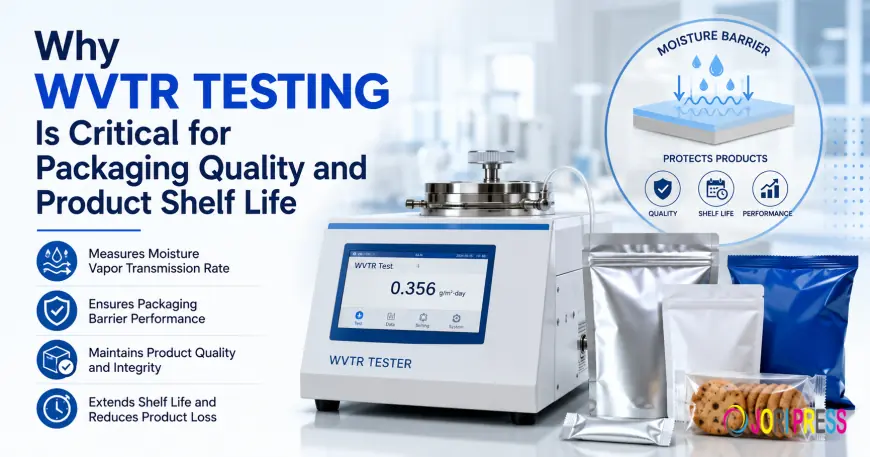
Packaging does much more than protect a product during transportation. It serves as the first line of defense against environmental factors such as moisture, oxygen, light, and contaminants that can compromise product quality. Among these factors, moisture is one of the most significant causes of product degradation across industries including food, pharmaceuticals, electronics, medical devices, and consumer goods.
This is where Water Vapor Transmission Rate (WVTR) testing becomes essential. WVTR testing measures how much water vapor passes through a packaging material under controlled environmental conditions. By understanding the moisture barrier performance of packaging, manufacturers can make informed decisions that improve product stability, extend shelf life, and ensure regulatory compliance.
What Is WVTR Testing?
Water Vapor Transmission Rate (WVTR) is the amount of water vapor that permeates through a material over a specified period under controlled temperature and humidity conditions.
WVTR is commonly expressed as:
-
g/m²/day (grams per square meter per day)
-
g/package/day (for complete packages)
A lower WVTR value indicates better moisture barrier properties, meaning the packaging allows less moisture to penetrate.
The test helps manufacturers evaluate whether a packaging material is suitable for protecting moisture-sensitive products throughout storage, transportation, and retail display.
Why Moisture Control Is So Important
Moisture can significantly affect the quality, safety, and performance of many products.
Common problems caused by excessive moisture include:
-
Product spoilage
-
Mold and microbial growth
-
Reduced pharmaceutical potency
-
Chemical degradation
-
Corrosion of electronic components
-
Reduced mechanical strength
-
Color changes
-
Loss of flavor and aroma
-
Packaging failure
Even small amounts of moisture entering the package over time can reduce the product's usable life.
Why WVTR Testing Is Critical for Packaging Quality
1. Extends Product Shelf Life
One of the biggest objectives of packaging is preserving product freshness.
Products exposed to moisture may experience:
-
Faster degradation
-
Reduced effectiveness
-
Shorter storage life
-
Increased waste
WVTR testing helps manufacturers choose packaging materials that provide adequate moisture protection throughout the product's intended shelf life.
2. Ensures Product Quality
Consumers expect products to perform exactly as intended.
Excess moisture can negatively affect:
-
Food texture
-
Taste
-
Aroma
-
Pharmaceutical stability
-
Cosmetic formulations
-
Nutritional value
Testing verifies that packaging maintains product integrity until it reaches the end user.
3. Supports Regulatory Compliance
Many industries must comply with strict packaging and quality standards.
WVTR testing supports compliance with guidelines issued by organizations such as:
-
ASTM
-
ISO
-
FDA
-
USP
-
Pharmaceutical regulatory authorities
-
Food safety organizations
Documented test results help manufacturers demonstrate that their packaging meets required performance specifications.
4. Prevents Costly Product Recalls
Poor moisture barrier performance can lead to:
-
Customer complaints
-
Product failures
-
Product recalls
-
Brand reputation damage
-
Financial losses
WVTR testing identifies packaging weaknesses before products enter the market.
5. Optimizes Packaging Material Selection
Manufacturers often compare multiple packaging materials before finalizing a design.
Examples include:
-
Plastic films
-
Laminated films
-
Aluminum foil laminates
-
Paper-based packaging
-
Flexible packaging
-
Barrier coatings
WVTR testing provides objective data for selecting the most suitable material.
6. Improves Packaging Design
Packaging is more than just choosing the right material.
Design factors affecting moisture protection include:
-
Seal quality
-
Film thickness
-
Layer construction
-
Package geometry
-
Adhesive performance
WVTR testing helps optimize the complete packaging system.
7. Reduces Waste and Manufacturing Costs
Over-engineered packaging increases production costs.
Under-engineered packaging increases product failures.
WVTR testing helps manufacturers achieve the right balance between:
-
Performance
-
Material cost
-
Sustainability
-
Product protection
Industries That Require WVTR Testing
Food Industry
Food products are highly sensitive to moisture.
WVTR testing is commonly performed for:
-
Snacks
-
Coffee
-
Tea
-
Spices
-
Ready-to-eat meals
-
Dry powders
-
Bakery products
-
Dairy products
Proper moisture barrier packaging helps maintain freshness and taste.
Pharmaceutical Industry
Medicines require precise environmental protection.
WVTR testing is critical for:
-
Tablets
-
Capsules
-
Medical powders
-
Diagnostic kits
-
Drug packaging
-
Blister packs
Even minor moisture exposure may reduce drug efficacy.
Medical Device Industry
Medical devices must remain sterile and functional throughout storage.
Examples include:
-
Surgical kits
-
Sterile pouches
-
Catheters
-
Diagnostic devices
-
Implants
WVTR testing ensures packaging maintains protective performance.
Electronics Industry
Electronic components are extremely vulnerable to moisture.
Testing is important for:
-
Printed circuit boards
-
Semiconductors
-
Sensors
-
Lithium batteries
-
Display panels
Moisture intrusion may lead to corrosion and electrical failure.
Cosmetic Industry
Cosmetic products often contain ingredients sensitive to moisture.
Examples include:
-
Creams
-
Powders
-
Skincare products
-
Makeup
-
Personal care products
Proper packaging preserves product consistency and effectiveness.
How WVTR Testing Is Performed
Modern WVTR testing instruments operate under controlled laboratory conditions.
The general process includes:
Step 1: Sample Preparation
Packaging material or finished package samples are prepared according to testing standards.
Step 2: Controlled Environment
The sample is exposed to specified:
-
Temperature
-
Relative humidity
-
Pressure conditions
Step 3: Moisture Measurement
Specialized sensors detect the amount of water vapor passing through the material.
Step 4: Data Analysis
The instrument calculates the WVTR value, allowing manufacturers to compare different materials and packaging designs.
Common Materials Tested
WVTR testing is performed on numerous packaging materials, including:
-
PET films
-
PE films
-
PP films
-
Nylon films
-
Aluminum foil laminates
-
Flexible packaging
-
Composite films
-
Paper packaging
-
Biodegradable packaging
-
Barrier coatings
Factors Affecting WVTR
Several factors influence moisture transmission.
Material Thickness
Thicker materials generally offer better moisture resistance.
Temperature
Higher temperatures usually increase moisture transmission.
Humidity
Greater humidity differences lead to faster moisture permeation.
Material Composition
Different polymers have different barrier properties.
Manufacturing Quality
Poor sealing and manufacturing defects can increase moisture ingress.
Benefits of Working with Professional WVTR Testing Labs
Accurate testing requires advanced laboratory equipment and experienced analysts.
Professional testing laboratories offer:
-
Standardized testing methods
-
Accurate and repeatable results
-
Fast turnaround times
-
Expert technical guidance
-
Compliance with international standards
-
Detailed testing reports
-
Quality assurance support
Partnering with a reliable laboratory enables manufacturers to validate packaging performance before commercial production.
Best Practices for Improving Moisture Barrier Performance
Manufacturers can enhance packaging quality by:
-
Selecting high-barrier materials.
-
Using multi-layer laminates where appropriate.
-
Optimizing seal integrity.
-
Conducting routine WVTR testing during product development.
-
Monitoring packaging consistency in production.
-
Validating packaging after design changes.
-
Testing under real-world environmental conditions.
Future Trends in WVTR Testing
As packaging technology evolves, WVTR testing is becoming more sophisticated.
Emerging trends include:
-
High-precision automated testing systems
-
Sustainable packaging material evaluation
-
Smart packaging performance analysis
-
AI-assisted quality control
-
Faster testing cycles
-
Improved barrier materials for eco-friendly packaging
These advancements help manufacturers meet growing consumer expectations while supporting sustainability initiatives.
Conclusion
WVTR testing is a vital component of modern packaging quality assurance. By accurately measuring the moisture barrier performance of packaging materials, manufacturers can protect products from degradation, maintain quality, comply with industry regulations, and extend shelf life.
Whether producing food, pharmaceuticals, electronics, medical devices, or cosmetics, investing in reliable WVTR testing minimizes risks, reduces costs, and strengthens customer confidence. As packaging innovations continue to evolve, WVTR testing will remain an indispensable tool for ensuring products reach consumers in the best possible condition.
Organizations seeking dependable packaging performance should incorporate WVTR testing into every stage of product development and quality control to deliver safer, longer-lasting, and more reliable products.
What's Your Reaction?
 Like
0
Like
0
 Dislike
0
Dislike
0
 Love
0
Love
0
 Funny
0
Funny
0
 Angry
0
Angry
0
 Sad
0
Sad
0
 Wow
0
Wow
0