












































Beyond Market Direction: How to Evaluate an Options Trade Before Entering the Market

Options trading in the Indian stock market has become an important area of interest for beginners and experienced traders alike. With indices such as Nifty 50 and Bank Nifty offering opportunities in the derivatives segment, many traders focus on predicting whether the market will move upwards or downwards. However, predicting market direction is only one part of making an informed options trading decision.
An option premium can change due to several factors, including the movement of the underlying asset, time remaining until expiry, market volatility, and changes in interest rates. This is why two traders holding different options on the same index may experience completely different outcomes, even when the market moves in the expected direction.
Before entering an options position, traders should understand how these factors influence premium movements. A proper evaluation process can help identify potential risks, avoid unnecessary trades, and develop a more disciplined approach to derivatives trading.
Why Predicting Market Direction Is Not Enough
One of the most common mistakes among beginners is assuming that buying a Call option during a bullish market or a put option during a bearish market will automatically result in profits.
Consider a simple example. Suppose Nifty is trading at 25,000 points, and a trader purchases a call option because they expect the index to rise. However, Nifty moves only 20 points upwards over the next few hours.
Although the market has moved in the expected direction, the option premium may not increase significantly. In some situations, it may even decline.
This can happen because the premium is influenced by multiple variables. If implied volatility decreases or time value erodes, these factors may offset the benefit of a favorable price movement.
Therefore, traders should evaluate more than just the market trend before purchasing an option.
Understanding the Factors That Influence Option Premiums
There are several factors that traders should examine before selecting an options contract.
1. Underlying Asset Price
The underlying asset is the stock or index on which an option contract is based. Its price movement plays an important role in determining the value of an option.
A call option generally benefits from an increase in the underlying price, while a put option generally benefits from a decrease.
However, the extent of the premium movement depends on the contract's strike price, expiry, and other pricing variables.
Traders should identify the market trend using price action, support and resistance levels, and technical indicators before selecting an options contract.
2. Time to Expiry
Time is another important factor in options trading.
Options have an expiry date, and their time value generally decreases as expiry approaches, assuming other factors remain unchanged. This process is known as time decay.
For example, a trader purchasing a short-term Nifty option may experience premium erosion if the index remains range-bound for an extended period.
This is particularly important for option buyers because they need the underlying asset to move sufficiently in the expected direction before the contract loses too much value.
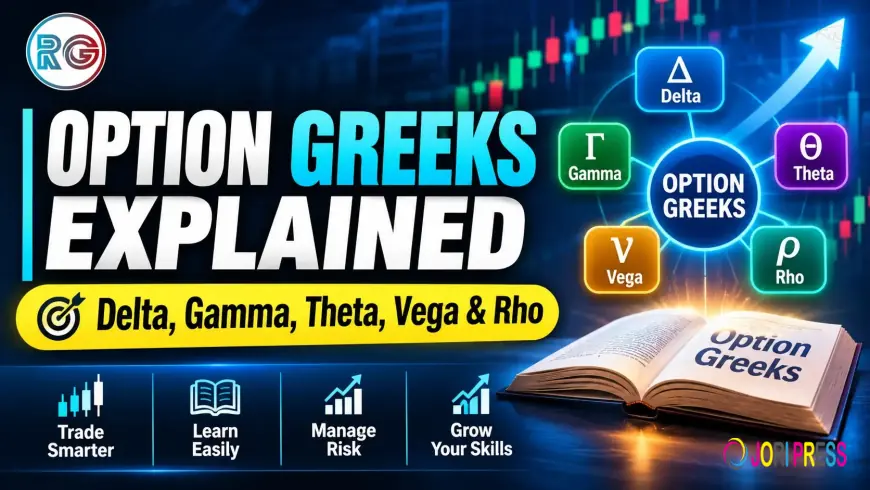
Understanding option greeks can help traders evaluate how sensitive an option premium is to time decay, underlying price movements, and changes in implied volatility.
3. Implied Volatility
Implied volatility, commonly known as IV, represents the market's expectation of future price fluctuations reflected in option prices.
When uncertainty increases, option premiums may become more expensive because traders anticipate larger potential movements.
For example, before major events such as the Union Budget, RBI monetary policy announcements, or important corporate earnings, implied volatility may increase.
However, after the event, volatility can decline sharply. This phenomenon is commonly known as IV crush.
A trader who purchases an option before an important announcement may face a decline in premium even when the underlying asset moves in the expected direction.
Therefore, checking implied volatility before entering a trade is an important part of options analysis.
How to Evaluate an Options Contract Before Trading
Selecting the correct strike price and expiry requires more than looking at the cheapest available premium.
A structured evaluation process can help traders make better-informed decisions.
Step 1: Identify the Market Trend
Start by analyzing the underlying index or stock.
Look for:
-
Higher highs and higher lows in an uptrend.
-
Lower highs and lower lows in a downtrend.
-
Consolidation when the market moves within a defined range.
-
Breakouts or breakdowns near important support and resistance levels.
Avoid selecting a call or put option simply because the premium appears attractive.
Step 2: Analyze the Option Chain
An option chain provides useful information about available contracts at different strike prices.
Some important elements include:
-
Open Interest (OI): Shows the number of outstanding option contracts.
-
Change in Open Interest: Indicates changes in outstanding positions.
-
Volume: Represents the number of contracts traded.
-
Strike Price: The predetermined price at which the option can be exercised.
-
Bid and Ask Price: Helps traders understand the available buying and selling quotes.
-
Implied Volatility: Provides information about expected future price fluctuations.
Option chain analysis can help traders understand market positioning and liquidity conditions. However, open interest and volume should not be treated as guaranteed indicators of future market direction.
Step 3: Compare Strike Prices
Options are generally classified as In-the-Money (ITM), At-the-Money (ATM) and Out-of-the-Money (OTM).
An ITM option has intrinsic value, while an ATM option has a strike price close to the underlying market price. An OTM option does not currently have intrinsic value.
For example, if Nifty is trading at 25,000:
-
A call with a 24,900 strike is ITM.
-
A call with a 25,000 strike is ATM.
-
A call with a 25,100 strike is OTM.
The choice of strike price influences premium cost, sensitivity to market movements, and the probability of finishing in the money.
A lower-priced option is not necessarily a better opportunity. Traders should consider its liquidity, expiry, volatility, and overall risk.
Step 4: Check Liquidity and Bid-Ask Spread
Liquidity is an important consideration that beginners sometimes overlook.
A contract with low trading activity may have a wider bid-ask spread. This means traders could face a higher transaction cost when entering or exiting a position.
Before placing an order, examine the available market depth, trading volume, and bid-ask spread.
Avoid assuming that every listed options contract can be traded efficiently at the displayed last traded price.
Step 5: Calculate the Potential Risk
Risk management should be considered before entering any derivatives position.
Option buyers should understand that the premium paid can be lost entirely if the option expires worthless.
Unhedged option sellers can face substantially higher losses, depending on the position.
Traders should calculate their position size based on available capital and acceptable risk. They should also identify their exit conditions before placing an order.
Common Options Trading Mistakes to Avoid
Even when traders understand market direction and option pricing, certain mistakes can affect their decisions.
Some common examples include:
Buying options only because they are cheap: Low premiums may indicate that an option is far out-of-the-money or has limited time remaining.
Ignoring time decay: Holding short-term options without considering time value can increase the risk of premium erosion.
Trading during high volatility without preparation: Sudden volatility changes can significantly affect option prices.
Overtrading on expiry day: Rapid price movements and changing sensitivities can make short-term options particularly challenging.
Ignoring transaction costs: Brokerage, taxes, exchange charges, and other applicable costs can affect the final trading outcome.
Following market tips blindly: Every trade should have a clear rationale, defined risk, and an appropriate exit plan.
Developing awareness of these mistakes can help beginners approach derivatives trading more carefully.
Building a Disciplined Options Trading Routine
A consistent routine can make option analysis more structured and reduce impulsive decisions.
Before entering a position, traders should:
-
Analyze the broader market trend.
-
Identify important support and resistance levels.
-
Examine the option chain.
-
Compare available strike prices and expiry dates.
-
Review implied volatility and premium behavior.
-
Evaluate liquidity and bid-ask spreads.
-
Calculate the maximum potential loss.
-
Define entry, exit, and stop-loss conditions.
-
Maintain a trading journal to review performance.
This process does not guarantee successful trades. However, it encourages traders to make decisions based on analysis rather than emotions or market rumors.
Conclusion
Options trading requires an understanding of several interconnected factors. Market direction, time decay, implied volatility, strike selection, and liquidity all contribute to the behavior of option premiums.
Rather than focusing exclusively on whether Nifty or Bank Nifty will rise or fall, traders should develop a broader approach that considers pricing factors and potential risks before entering a position.
Learning these concepts, practicing analysis, and following a consistent risk management process can help beginners build a stronger foundation in the Indian derivatives market.
Disclaimer: This article is intended for educational purposes only and should not be considered investment advice or a recommendation to buy or sell any financial instrument. Options trading involves substantial financial risk. Always understand the risks before participating in derivatives markets.
What's Your Reaction?
 Like
0
 Dislike
0
 Love
0
 Funny
0
 Angry
0
 Sad
0
 Wow
0