





































What Should Be Included in an R.O. Purifier Treatment System?
Discover the key components of an R.O. Purifier Treatment System, from pretreatment and cartridge filters to RO membranes, high-pressure pumps, automation, and post-treatment. Learn how Spring Ion Exchange can help you choose a suitable RO purification solution based on your water quality and requirements.
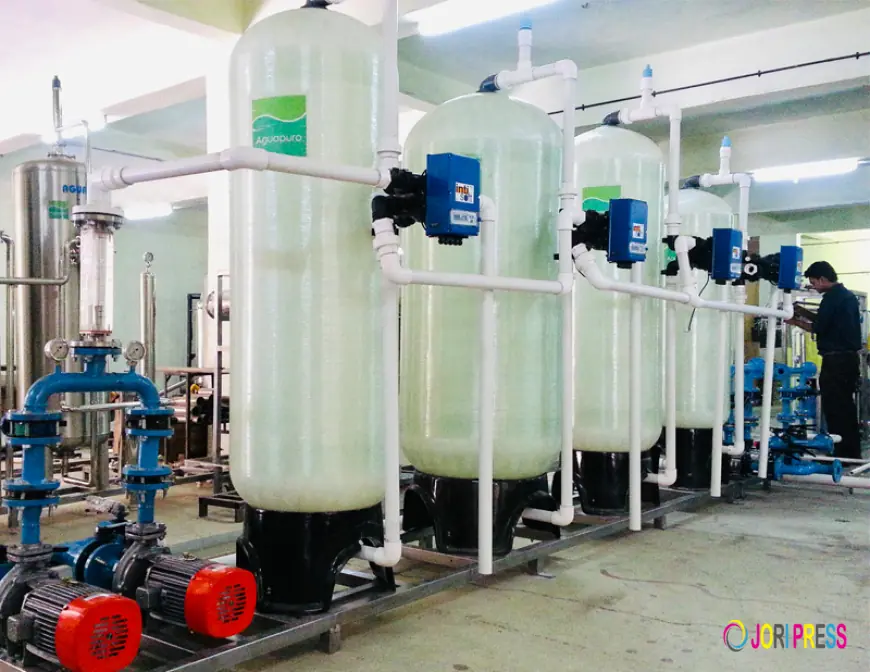
An R.O. Purifier Treatment System is designed to reduce dissolved salts, minerals, and other contaminants from water using Reverse Osmosis technology. However, an effective RO system is not simply an RO membrane and pump.
A properly designed treatment system may include several stages before and after the RO membrane to improve water quality, protect the membrane, maintain stable performance, and meet the requirements of the final application.
The exact configuration depends on the raw water quality, required capacity, application, desired treated-water quality, and operating conditions.
What Is an R.O. Purifier Treatment System?
Reverse Osmosis is a membrane-based water treatment process in which water is passed through a semi-permeable membrane under pressure.
The membrane allows water to pass through while reducing many dissolved salts and other contaminants.
Not every application requires every stage. A suitable system should be designed according to the actual water-treatment requirement.
Main Components of an R.O. Purifier
Treatment System
1. Raw Water Storage Tank
The raw water storage tank holds the incoming water before treatment.
It can provide a consistent water supply to the treatment system and help manage variations in water availability.
Tank capacity depends on:
- Daily water requirement
- RO capacity
- Operating hours
- Raw-water availability
- Application requirements
For some installations, the water source may feed the treatment system directly without a large storage tank.
2. Feed Water Pump
The feed pump transfers water toward the pretreatment and RO system.
It should be selected based on:
- Required flow rate
- Pressure requirements
- Pipe losses
- Operating conditions
- System capacity
Proper pump selection helps provide consistent flow to the treatment stages.
3. Pretreatment System
Pretreatment is one of the most important parts of an RO treatment system.
The purpose is to reduce contaminants that can cause membrane fouling, scaling, or damage.
Depending on the raw-water characteristics, pretreatment may include:
- Sediment filtration
- Multimedia filtration
- Activated carbon filtration
- Water softening
- Cartridge filtration
- Antiscalant dosing
- Other suitable treatment processes
The exact pretreatment should be selected based on a water analysis.
4. Micron or Cartridge Filter
A cartridge filter can provide additional protection to the RO membrane by removing fine particles that may remain after earlier filtration stages.
The micron rating and filter configuration depend on the system design and feedwater quality.
Regular filter replacement is important because clogged filters can increase pressure loss and affect system performance.
5. High-Pressure Pump
The RO membrane requires sufficient pressure for the Reverse Osmosis process.
The high-pressure pump supplies the pressure required to push water through the membrane.
Pump selection should consider:
- Feedwater TDS
- Required recovery
- Membrane type
- Required flow
- Operating pressure
- Energy efficiency
An appropriately selected pump can contribute to reliable operation and reasonable energy consumption.
6. RO Membrane
The RO membrane is the core component of the treatment system.
It separates water from many dissolved salts and other contaminants.
The membrane configuration depends on:
- Feedwater quality
- Required capacity
- TDS
- Desired product-water quality
- Recovery
- Operating conditions
Membrane selection should be based on the actual application rather than choosing a membrane only on the basis of price.
7. Pressure Vessels or Membrane Housing
RO membrane elements are installed inside suitable pressure vessels.
The pressure vessel provides the required mechanical containment for the membrane elements during operation.
The number and configuration of pressure vessels depend on the required plant capacity and membrane arrangement.
8. Flow, Pressure and Quality Instruments
Instrumentation allows operators to monitor RO performance.
Depending on the system, instruments may monitor:
- Feed pressure
- RO pressure
- Permeate flow
- Reject flow
- Conductivity
- TDS
- Differential pressure
- Tank levels
Regular monitoring can help identify changes in system performance and potential problems.
9. Control Panel and Automation
The control panel manages the operation of the RO treatment system.
Depending on the level of automation, it may control:
- Feed pumps
- High-pressure pumps
- Solenoid or automatic valves
- Dosing systems
- Level controls
- Safety interlocks
- Automatic shutdown
- Cleaning sequences
Automation requirements vary according to system size and application.
10. Permeate Storage Tank
The purified water produced by the RO membrane is called permeate.
A permeate storage tank can collect and store treated water before it is distributed to the final application.
The required tank capacity depends on water demand and plant operation.
11. Post-Treatment
Some applications may require additional treatment after RO.
Depending on the required final water quality, post-treatment can include processes such as:
- pH adjustment
- Remineralization
- UV treatment
- Ozonation
- Polishing
- Ion exchange
- Other specialized treatment
Post-treatment should be selected according to the intended use of the purified water.
12. Reject Water Management
RO produces a concentrated reject stream in addition to permeate.
Reject-water management is therefore an important consideration when designing an RO system.
Depending on the application, reject water may require:
- Controlled disposal
- Collection
- Reuse for suitable non-critical applications
- Further treatment
- Integration with another water-recovery system
The appropriate approach depends on local requirements and site conditions.
Why Pretreatment Is Important in an RO
System?
RO membranes are sensitive to certain types of fouling and scaling.
Without suitable pretreatment, contaminants can accumulate on the membrane surface and reduce performance.
Poor pretreatment can contribute to:
- Reduced permeate production
- Increased pressure requirements
- Higher energy consumption
- Reduced membrane life
- More frequent cleaning
- Poorer water quality
This is why the pretreatment stage should be designed around the actual raw-water analysis.
What Determines the Configuration of an
R.O. Purifier Treatment System?
There is no single configuration that works for every water source.
The system design can depend on:
Raw Water Quality
TDS, hardness, turbidity, iron, silica, organic matter, and other parameters can influence the treatment configuration.
Required Capacity
Daily and peak water requirements determine the appropriate plant capacity.
Application
Drinking water, commercial use, industrial process water, pharmaceutical applications, and other uses may require different treatment configurations.
Desired Product-Water Quality
The required conductivity, TDS, and other water-quality parameters determine whether RO alone is sufficient or whether additional treatment is necessary.
Operating Conditions
Operating hours, feedwater pressure, temperature, and site conditions can influence equipment selection.
Common Mistakes When Designing an
RO Treatment System
Some common mistakes include:
- Selecting an RO system without testing the raw water
- Choosing capacity based only on average demand
- Ignoring pretreatment requirements
- Selecting membranes only by price
- Not considering reject-water management
- Underestimating maintenance requirements
- Ignoring energy consumption
- Using the same system configuration for every application
A properly designed RO treatment system should consider the complete water-treatment process.
Why Spring Ion Exchange Can Be
Helpful?
Selecting the right R.O. Purifier Treatment System requires more than choosing an RO membrane and pump.
Spring Ion Exchange can help businesses evaluate their water-treatment requirements based on factors such as raw-water quality, required capacity, application, pretreatment, RO configuration, desired treated-water quality, recovery, operating conditions, and maintenance requirements.
This can be particularly helpful when the water quality or application requires a customized treatment configuration.
Spring Ion Exchange can support businesses that are:
- Planning a new RO purification system
- Looking to upgrade an existing RO plant
- Requiring industrial water purification
- Looking for commercial RO solutions
- Facing membrane-performance or water-quality issues
- Evaluating customized water-treatment systems
By considering the complete treatment process, Spring Ion Exchange can help customers understand which treatment stages and equipment may be appropriate for their specific requirements.
Final Takeaway
A complete R.O. Purifier Treatment System can include several stages, such as:
Raw Water Storage → Feed Pump → Pretreatment → Cartridge Filtration → High-Pressure Pump → RO Membrane → Instrumentation → Post-Treatment → Purified Water Storage
Additional systems such as chemical dosing, automation, cleaning arrangements, and reject-water management may also be required depending on the application.
The best RO treatment system is not necessarily the one with the most components. It is the one whose configuration is properly matched to the water quality, capacity, application, and final water-quality requirements.
Planning an R.O. Purifier Treatment System?
If you are planning a new RO system or upgrading an existing plant, start by preparing your raw-water test report, required capacity, application details, and desired treated-water quality.
Spring Ion Exchange can help evaluate these requirements and discuss a suitable RO purification and water-treatment solution for your application.
What's Your Reaction?
 Like
0
Like
0
 Dislike
0
Dislike
0
 Love
0
Love
0
 Funny
0
Funny
0
 Angry
0
Angry
0
 Sad
0
Sad
0
 Wow
0
Wow
0