








































What Is an LEI Number and Why Might a Business Need One?
Many businesses first hear about an LEI when a bank, broker, or reporting team asks for one. This article explains what an LEI number is, who it applies to, why companies may need it, and what businesses usually prepare before registration or renewal.

Many businesses only hear about an LEI when a bank, broker, counterparty, or reporting process suddenly asks for one.
At that point, the real question is usually not just what an LEI number is. It is whether the business actually needs it, why it has been requested, and what should be done next.
What is an LEI number?
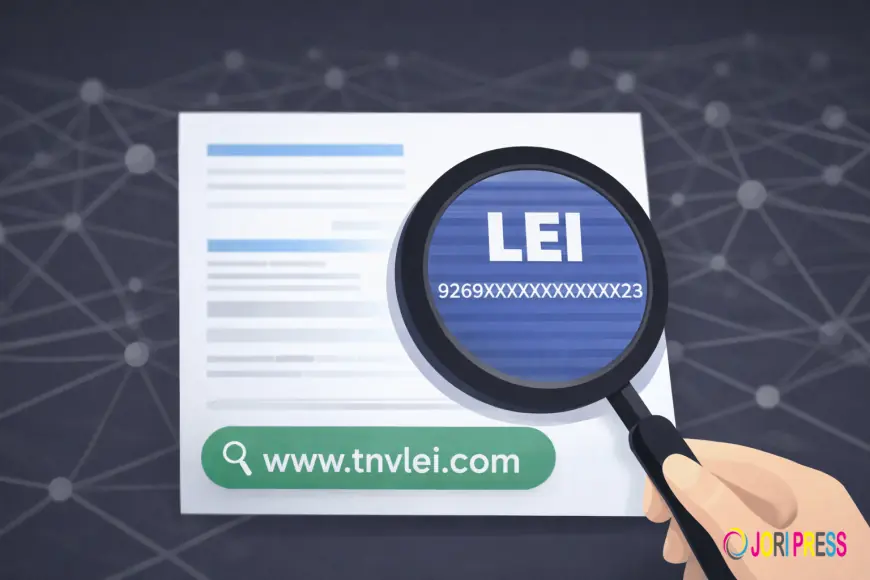
An LEI, or Legal Entity Identifier, is a 20-character alphanumeric code used to identify legal entities in financial transactions.
It is designed to create a standard way to identify who an entity is. That includes details such as the registered legal name and official address linked to the record. In many cases, it also supports ownership-related reference data.
In simple terms, an LEI helps make business identity clearer when companies interact with financial institutions, markets, and reporting systems.
Who can have an LEI?
An LEI is for legal entities, not individuals.
That can include:
-
limited companies
-
corporations
-
funds
-
charities in certain situations
-
subsidiaries
-
other registered organisations involved in financial activity
A sole individual acting in a personal capacity does not usually apply for an LEI. The code is generally connected to an entity with a legal structure and registration record.
Why do businesses get asked for an LEI?
This is where many companies get confused.
A business often does not go looking for an LEI on its own. Instead, the need appears when another party asks for it during a process such as:
-
opening or maintaining certain financial relationships
-
securities or investment activity
-
transaction reporting
-
counterparty verification
-
onboarding checks
-
payment or treasury-related workflows
So when a company is asked for an LEI, it is usually because another organisation needs a standard business identifier for processing, verification, or reporting.
Does every business need one?
No. Not every business needs an LEI.
The need usually depends on what the company does, which financial services it uses, what type of transactions it enters into, and whether a financial institution or reporting requirement applies.
That is why two companies of similar size may be in different situations. One may never be asked for an LEI, while another may need one because of its trading, reporting, banking, or investment activity.
A practical way to think about it is this:
If a bank, broker, counterparty, or financial process has asked for an LEI, then the business likely needs to treat that request seriously and confirm the next step quickly.
What information does an LEI connect to?
An LEI is more than just a number.
It connects to reference data about the entity, such as:
-
official legal name
-
registered address
-
country or jurisdiction
-
entity status
-
registration details
This makes it easier for institutions and counterparties to identify the correct entity without relying on inconsistent naming formats or manual interpretation.
For businesses, that can reduce confusion when identity details need to be checked across different systems.
Why does this matter for companies?
For many businesses, the issue is not theory. It is timing.
If an LEI is needed and the company does not have one, that can create delays in internal processing or external workflows. If an existing LEI is not renewed on time, its record may show as lapsed, which can create additional questions during verification or reporting checks.
This is why companies often start by asking simple questions such as:
-
What is an LEI number?
-
Do I need one for my company?
-
How do I apply?
-
What documents are usually needed?
-
How long does the process take?
These are practical questions, and they usually come up when a business has to act rather than when it is only researching.
How long does an LEI stay active?
An LEI is not a one-time record that can be forgotten forever.
It normally needs to be renewed every year so that the linked business information stays current. This is one of the most common points businesses miss. Many companies focus on getting the LEI for the first time, then only think about renewal when another team or institution asks whether the record is still active.
That is why it helps to treat an LEI as an ongoing business record rather than a one-off formality.
What should a business prepare next?
Once a company understands that it may need an LEI, the next step is usually to gather the basic business details required for registration or review.
That often means checking:
-
the exact registered legal name
-
the official registered address
-
company registration details
-
who is authorised to submit or manage the request
-
whether the entity already has an LEI that needs renewal rather than a new registration
This last point is important. In some cases, a business does not need a new LEI at all. It may simply need to renew an existing record or update the related details.
Final thought
An LEI number is a standard identifier for legal entities involved in financial and reporting-related activity. For many businesses, it becomes relevant only when an external process makes it necessary.
That is why the better question is often not just what an LEI is, but whether the business has reached the point where registration, renewal, or record checking needs to happen next.
What's Your Reaction?
 Like
0
Like
0
 Dislike
0
Dislike
0
 Love
0
Love
0
 Funny
0
Funny
0
 Angry
0
Angry
0
 Sad
0
Sad
0
 Wow
0
Wow
0