





































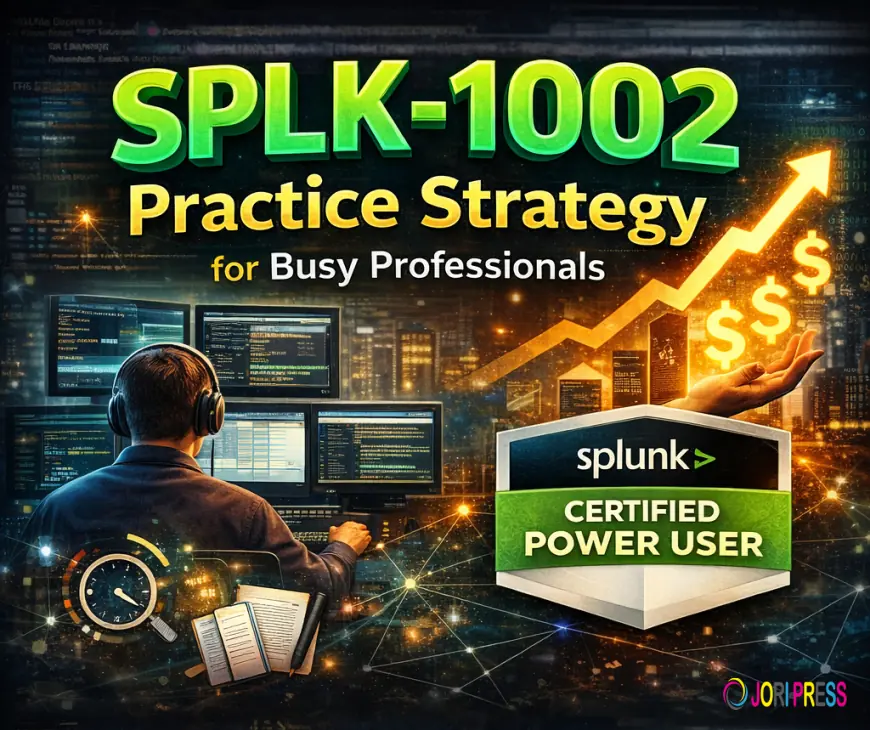
SPLK-1002 Practice Strategy for Busy Professionals
Learn the best SPLK-1002 practice strategy for busy professionals. Discover time-efficient study plans, hands-on Splunk tips, and proven techniques to pass the Splunk Core Certified Power User exam on your first attempt.

? Introduction
Preparing for the Splunk SPLK-1002 (Splunk Core Certified Power User) exam can feel overwhelming — especially if you are working full-time. Between job responsibilities, family commitments, and limited free time, many professionals struggle to maintain a consistent study routine.
The good news is that passing SPLK-1002 does not require long study hours. With the right practice strategy, focused learning, and hands-on experience, busy professionals can prepare efficiently and succeed on their first attempt.
? Understanding the SPLK-1002 Exam
Before building a study plan, it’s important to understand what the exam evaluates.
What Is SPLK-1002?
The Splunk Core Certified Power User certification validates your ability to work with advanced Splunk features beyond basic searching.
Key Skills Tested
The exam focuses on:
-
Advanced Search Processing Language (SPL)
-
Field extractions and calculated fields
-
Lookups and workflow actions
-
Data models and event types
-
Tags and knowledge objects
-
Advanced reporting and dashboards
SPLK-1001 vs SPLK-1002
While SPLK-1001 teaches basic searching and reporting, SPLK-1002 emphasizes data transformation, optimization, and advanced analysis, making it highly valuable for SOC analysts and Splunk users.
⏱️ Creating a Time-Efficient Study Plan
Busy professionals succeed by studying smarter, not longer.
Set Realistic Study Goals
Instead of long weekend marathons, aim for:
-
30–60 minutes per day
-
5 days per week
-
Consistent short sessions
Consistency improves retention far more than occasional long sessions.
The 30–60 Minute Rule
Break sessions into:
-
10 minutes – Review previous concepts
-
30 minutes – Hands-on practice
-
10–20 minutes – Notes and revision
Balance Work and Study
Study during:
-
Early mornings
-
Lunch breaks
-
Low-energy evening periods
Small daily progress compounds quickly.
? Focus Areas for Faster Learning
Not every Splunk feature is equally important. Focus on high-weight exam topics.
Advanced SPL Commands
Practice commands such as:
-
stats,chart,timechart -
eval -
rex -
transaction -
lookup
Understanding when to use each command is critical.
Field Extractions & Lookups
Learn how to:
-
Create field extractions
-
Use lookup tables
-
Enrich data dynamically
These topics frequently appear in exam scenarios.
Data Models and Tags
Understand relationships between:
-
Events
-
Tags
-
Event types
-
Knowledge objects
Conceptual clarity saves time during the exam.
? Hands-On Practice Strategy
Reading alone is not enough — SPLK-1002 is practical.
Build a Personal Splunk Lab
Install Splunk Enterprise (trial version) and:
-
Upload sample log datasets
-
Experiment with searches
-
Create dashboards and alerts
Practice Real-World Scenarios
Try exercises like:
-
Detect failed login attempts
-
Analyze web traffic patterns
-
Monitor system performance logs
Real scenarios improve memory retention.
Use Sample Data
Public datasets and generated logs help simulate enterprise environments.
? Smart Learning Techniques for Busy Learners
Learn by Doing
Spend 70% of your time practicing queries rather than reading theory.
Micro-Learning Sessions
Short focused learning blocks reduce burnout and improve recall.
Create Cheat Sheets
Maintain quick-reference notes for:
-
SPL commands
-
Syntax examples
-
Common use cases
These become powerful revision tools.
? Weekly Practice Routine (Sample Schedule)
Weekday Plan (30–45 Minutes)
-
Day 1: SPL commands practice
-
Day 2: Field extraction exercises
-
Day 3: Lookups & tags
-
Day 4: Dashboard creation
-
Day 5: Revision + mini practice test
Weekend Deep Practice (1–2 Hours)
-
Build real dashboards
-
Solve complex search problems
-
Review weak topics
Weekly Review
Evaluate progress and adjust focus areas.
? Practice Tests & Self-Assessment
When to Start Practice Exams
Begin mock tests after covering 70% of exam topics.
Identify Weak Areas
Track mistakes such as:
-
Incorrect command usage
-
Misunderstanding search logic
-
Time management issues
Improve Accuracy
Focus on understanding why an answer works, not memorizing it.
⚠️ Common Mistakes to Avoid
-
Studying theory without hands-on practice
-
Trying to memorize every SPL command
-
Ignoring official exam objectives
-
Skipping revision sessions
-
Waiting until the last week to practice
Avoiding these mistakes significantly increases pass probability.
? Productivity Tips for Working Professionals
-
Use saved searches to revisit learning quickly
-
Practice during short breaks instead of scrolling social media
-
Set weekly mini-goals
-
Reward progress to stay motivated
-
Avoid burnout by taking rest days
Consistency beats intensity.
✅ Final Preparation Checklist
Before exam day, ensure you can:
-
Write SPL queries confidently
-
Create and use lookups
-
Understand data models and event types
-
Build reports and dashboards
-
Interpret search results quickly
Do at least 2–3 full mock exams before scheduling the test.
? Final Thoughts
Preparing for SPLK-1002 while working full-time is absolutely achievable. The key is focused practice, hands-on learning, and consistent splunkexamdumps short study sessions.
Instead of trying to master everything at once, concentrate on high-value skills and real-world use cases. Over time, your confidence and expertise will grow naturally.
What's Your Reaction?
 Like
0
Like
0
 Dislike
0
Dislike
0
 Love
0
Love
0
 Funny
0
Funny
0
 Angry
0
Angry
0
 Sad
0
Sad
0
 Wow
0
Wow
0