




































Solar Systems for Commercial Buildings: Offices, Hospitals, Hotels & Schools
Commercial buildings across India are rethinking how they use electricity. With rising tariffs, long operating hours, and growing sustainability pressure, energy is no longer just a utility cost, it’s a strategic decision.
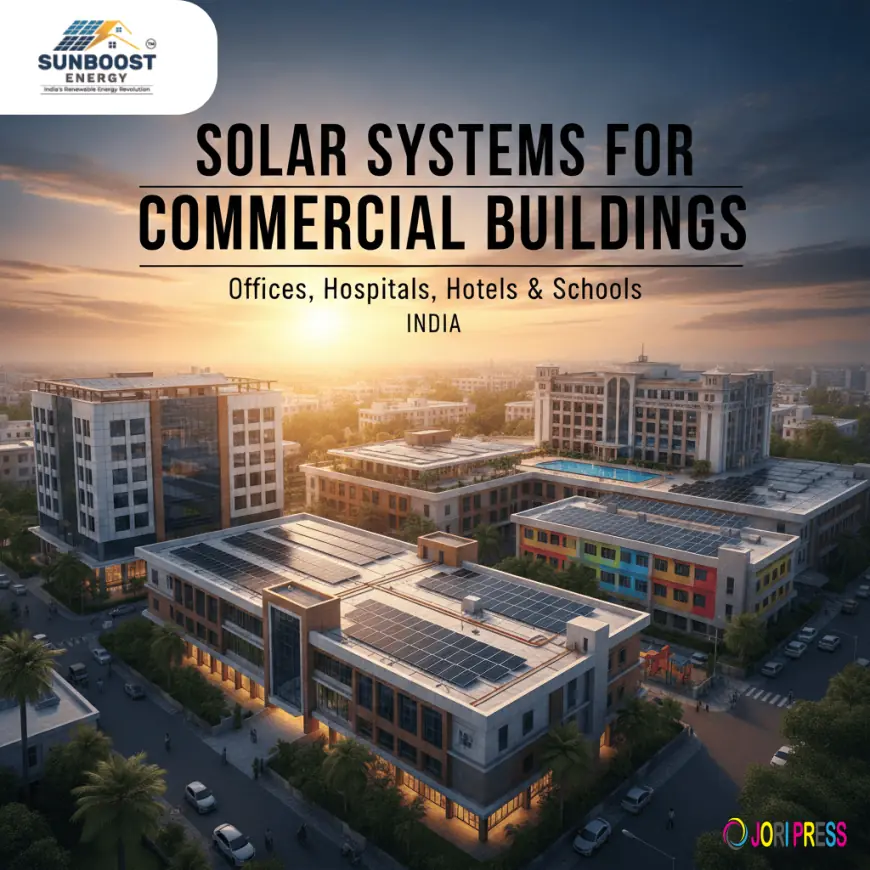
Commercial buildings across India are rethinking how they use electricity. With rising tariffs, long operating hours, and growing sustainability pressure, energy is no longer just a utility cost, it’s a strategic decision. That’s why solar systems for commercial buildings are becoming a practical choice for offices, hospitals, hotels, and schools alike.
Each of these spaces uses power differently, but they all share one thing in common: predictable, daytime-heavy consumption. That’s exactly where solar performs best.
Why Commercial Buildings Are Ideal for Solar
Unlike residential setups, commercial properties operate during daylight hours—when solar generation peaks. This makes rooftop solar a natural fit, helping buildings consume their own clean power instead of buying it at high commercial rates.
Well-designed commercial solar solutions focus on aligning generation with real usage, not just installing panels. The result is lower electricity bills, reduced grid dependency, and long-term cost stability.
Solar for Office Buildings: Cutting Operational Costs
Corporate offices, IT parks, and co-working spaces run lighting, HVAC systems, servers, and workstations for 8–12 hours a day. Solar helps offset this steady base load.
For offices, solar brings:
-
Reduced daytime electricity expenses
-
Better control over operating costs
-
Strong sustainability credentials for ESG reporting
Many companies now see solar for businesses as part of brand positioning, not just cost reduction.
Hospitals & Healthcare Facilities: Reliable Daytime Power
Hospitals are among the most energy-intensive commercial buildings. While critical systems remain grid-backed, a solar system can support lighting, administrative blocks, labs, and non-critical loads during the day.
Benefits include:
-
Significant savings on non-essential consumption
-
Reduced strain on backup power systems
-
Cleaner energy use aligned with public responsibility
Solar doesn’t replace reliability; it strengthens it.
Hotels & Hospitality: Turning Sunlight into Savings
Hotels operate almost around the clock, but a large chunk of their energy uses laundry, kitchens, water heating; common areas happen during daylight hours.
For hotels, solar helps:
-
Lower per-room energy costs
-
Improve sustainability ratings for eco-conscious guests
-
Reduce exposure to seasonal tariff hikes
A smart rooftop setup ensures solar works quietly in the background while guests enjoy uninterrupted comfort.
Schools & Educational Institutions: Smart Use of Idle Rooftops
Schools and colleges often have large rooftops that remain unused. Their power demand aligns well with daytime solar generation, making them ideal candidates.
Solar benefits for schools include:
-
Lower operating expenses
-
Budget predictability for administrations
-
A real-world sustainability example for students
Educational institutions also find value in working with a reliable solar channel partner when expanding solar across multiple campuses or facilities.
One Size Doesn’t Fit All in Commercial Solar
An office tower, a hospital, and a school cannot use the same system design even if the capacity looks similar on paper. That’s why successful projects begin with:
-
Load analysis by time of day
-
Rooftop structure assessment
-
Expansion planning
-
Compliance and approvals
Professional commercial solar solutions focus on how the building functions, not just how much power it consumes.
Long-Term Value Beyond Savings
Installing solar in a commercial building isn’t just about lowering bills. Over time, it delivers:
-
Predictable energy costs
-
Improved asset value
-
Stronger sustainability positioning
-
Reduced exposure to future tariff increases
For many organizations, solar has become part of long-term infrastructure planning rather than a short-term upgrade.
Final Thoughts: Solar That Matches the Building’s Purpose
Solar works best when it’s designed around how a building is actually used. Offices, hospitals, hotels, and schools all benefit from solar but only when the system is sized and planned correctly.
If you’re evaluating solar systems for commercial buildings, the smartest step is understanding your usage pattern before choosing equipment. With the right approach, solar becomes more than a power source; it becomes a business advantage.
What's Your Reaction?
 Like
0
Like
0
 Dislike
0
Dislike
0
 Love
0
Love
0
 Funny
0
Funny
0
 Angry
0
Angry
0
 Sad
0
Sad
0
 Wow
0
Wow
0