

































What to Do If You Have Skin Cancer on the Nose?
Diagnosed with skin cancer on the nose? Learn about critical steps, advanced treatment options like Mohs surgery, and expert clinical care in Australia.

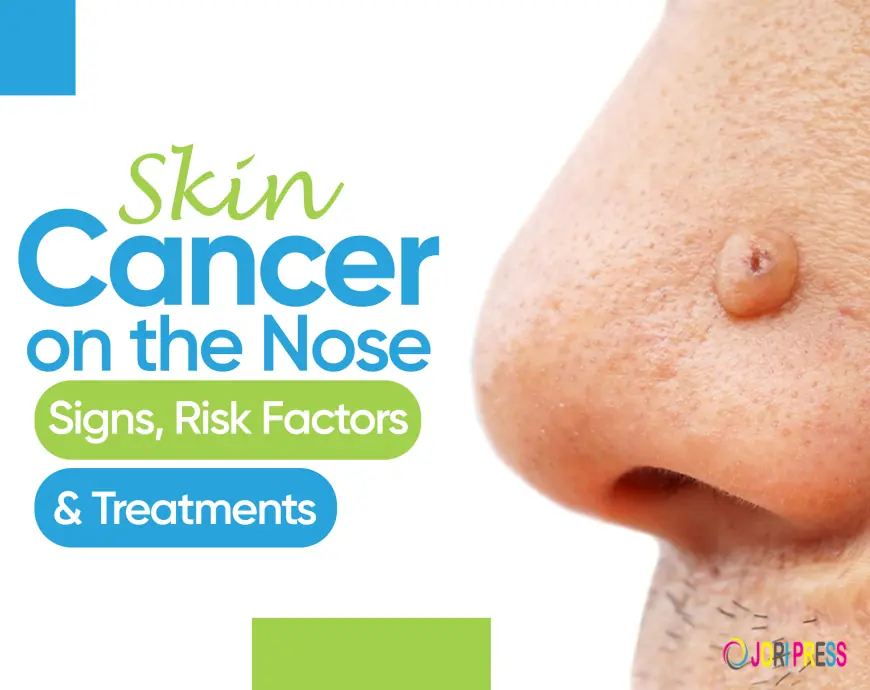
Discovering a suspicious spot, an unhealed scab, or receiving a formal diagnosis of skin cancer on the nose can understandably trigger anxiety. The nose is the most prominent feature of the face, making it highly vulnerable to chronic ultraviolet (UV) radiation exposure. Because the skin over the nasal passage is thin and sits directly above intricate cartilage structures, treating malignancies in this area requires a meticulous balance of oncological precision and cosmetic expertise.
If you suspect or have been told you have a nasal malignancy, taking prompt, structured action is critical. In this clinical guide, we will break down exactly what steps to take, evaluate the most successful treatment options, and explain how advanced surgical techniques preserve both your appearance and respiratory function.
Defining Nasal Skin Cancer
Skin cancer on the nose most commonly presents as non-melanoma skin cancer, primarily Basal Cell Carcinoma (BCC) or Squamous Cell Carcinoma (SCC).
-
Basal Cell Carcinoma (BCC): The most frequent type, often appearing as a pearly, shiny bump, or a stubborn, bleeding nose scab that repeatedly heals and breaks down.
-
Squamous Cell Carcinoma (SCC): Tends to look like a firm, red nodule, or a rough, scaly, or crusted patch.
While BCCs grow slowly and rarely metastasize, both types are considered high-risk when located on the nose due to their potential to invade deeper nasal cartilage and bone if left untreated.
Step-by-Step Action Plan Following a Diagnosis
If you observe an unusual change on your nose or have received positive biopsy results, follow these critical steps to manage your care effectively:
1. Secure a Confirmatory Biopsy
Never attempt to treat a persistent skin lesion with over-the-counter remedies. A specialized doctor must perform a biopsy removing a tiny tissue sample extending into the dermis to determine the exact histological subtype of the cancer.
2. Consult a Specialist Trained in Facial Oncology
Because the nose features distinct curves, contours, and free margins (like the nostrils), treating a lesion here differs significantly from treating one on the back or leg. Request a referral to a fellowship-trained Mohs dermatologist or a reconstructive plastic surgeon who specializes in facial reconstruction.
3. Review Your Customized Treatment Options
Your specialist will recommend a treatment framework based on the tumor's size, depth, and specific cell type. Do not rush into standard surgical excision without discussing specialized margins and tissue-sparing options.
Advanced Treatment Options for the Nose
The intricate anatomy of the nose means standard surgical removal can sometimes alter its shape. Fortunately, modern medicine provides highly targeted treatments to safeguard your health and appearance.
Mohs Micrographic Surgery: The Gold Standard
For tumors located on high-risk facial zones like the nose, Mohs surgery is widely recognized as the premier treatment option.
During this outpatient procedure, the surgeon excises the visible tumor along with a very narrow margin of tissue. This tissue is immediately color-coded, mapped, and examined under an on-site microscope while you wait. If any microscopic cancer roots are found at the edges, the surgeon removes another layer only from the exact spot where the cancer remains.
-
Success Rate: Up to a 99% cure rate for primary basal cell carcinomas.
-
Main Advantage: It checks 100% of the tissue margins, ensuring no cancer is left behind while saving the maximum amount of healthy skin.
Standard Surgical Excision
For small, low-risk, well-defined skin cancers, standard surgical excision may be used. The doctor removes the lesion along with a pre-determined margin of healthy skin. The wound is closed, and the sample is sent to an external pathology lab, with results arriving several days later.
Topical Treatments and Superficial Therapies
If the lesion is strictly superficial (confined to the very top layer of skin), non-surgical therapies might be considered. These include prescription topical immunotherapy creams (like imiquimod) or photodynamic therapy (PDT). However, these are rarely utilized for deep or infiltrative nasal tumors because they do not allow for margin evaluation.
Restoring the Form: Nasal Reconstruction
Once a specialist confirms your margins are completely free of cancer, focus shifts to repairing the surgical wound (the defect). Reconstructive methods vary by size and depth:
-
Direct Closure: For very small wounds where the surrounding skin is flexible, the edges are simply stitched together in a straight line.
-
Local Flap Reconstruction: The surgeon utilizes adjacent healthy skin (retaining its own blood supply) and pivots it over the wound. Techniques like the bilobed flap borrow lax skin from the upper nose or sidewall to blend seamlessly with natural contours.
-
Regional Flaps (e.g., Forehead Flap): For major defects involving the tip or nostril rim, skin is carefully borrowed from the forehead, keeping its blood supply intact, and contoured over the nose.
-
Skin Grafts: Healthy skin is taken from a hidden "donor site" (such as behind the ear or near the collarbone) and precisely placed over the nasal defect.
Frequently Asked Questions
Will skin cancer surgery permanently change the shape of my nose?
With advanced tissue-sparing options like Mohs surgery and meticulous local flap reconstruction, long-term structural distortion is minimized. While initial swelling is common, the reconstructed nose typically settles into its final natural shape within 6 to 12 months.
Can a nose scab that keeps returning be skin cancer?
Yes. A small sore, bump, or scab on the nose that bleeds, crusts over, appears to heal, and then breaks down again is a classic warning sign of a basal cell carcinoma. Any spot that fails to completely clear up within three to four weeks should be examined by a health professional.
How long does recovery take after nasal flap surgery?
The initial healing phase, where stitches remain in place and bruising occurs, generally takes about 1 to 2 weeks. Complete maturation of the surgical scar and integration of the tissue contour can take up to a full year.
Is nasal skin cancer life-threatening?
The vast majority of nasal skin cancers are BCCs or SCCs. These are highly treatable and exceptionally curable when detected early. However, ignoring them allows the cancer to invade deep local structures, significantly complicating the surgery required to clear it.
Conclusion
A diagnosis of skin cancer on the nose requires careful attention, but modern specialized techniques offer incredibly reassuring outcomes. By choosing precise, margin-controlled methods like Mohs surgery combined with targeted reconstructive engineering, you can achieve a definitive cure while preserving your natural facial features and airway function.
What's Your Reaction?
 Like
0
Like
0
 Dislike
0
Dislike
0
 Love
0
Love
0
 Funny
0
Funny
0
 Angry
0
Angry
0
 Sad
0
Sad
0
 Wow
0
Wow
0