







































Hair Transplant Surgery Recovery: What to Expect Week by Week
Discover the hair transplant recovery timeline week by week, from initial healing and scalp care to temporary shedding and new hair growth for lasting results.
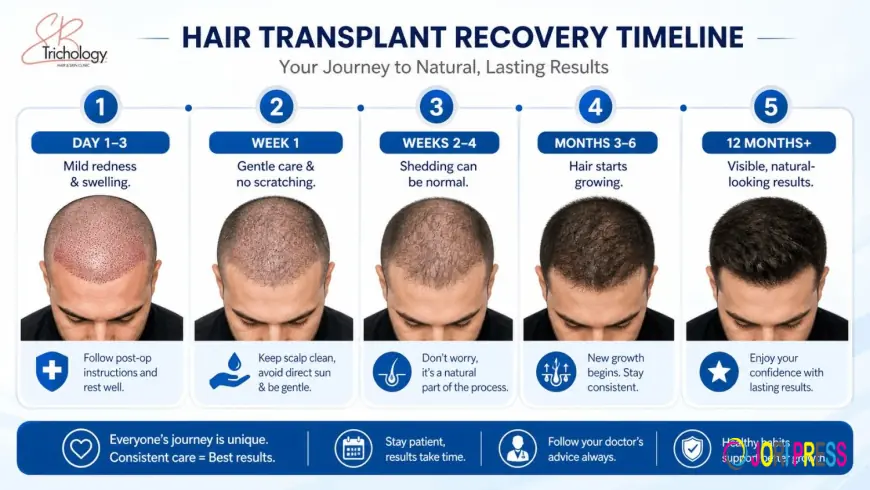
If you are planning to undergo Hair Transplant Surgery in Gurgaon, one of the most common questions patients ask is about the recovery period. Knowing what happens after the procedure helps you feel more prepared and reduces unnecessary worry. Recovery is different for everyone, but most patients follow a similar pattern of healing over the weeks that follow. In this article, we break down the recovery process week by week so you know exactly what to expect at each stage.
Week 1: The Initial Healing Phase
The first week after surgery is usually the most delicate. Your scalp will feel tender, and you may notice some redness or mild swelling around the treated area. This is completely normal and part of the body's natural healing response. Small scabs will form around each transplanted hair follicle, and it is important not to pick or scratch at them, as this can damage the newly placed grafts.
During this week, you will be given specific instructions on how to sleep, wash your hair gently, and avoid activities that could put pressure on your scalp. Most doctors advise sleeping with your head slightly elevated to reduce swelling. Many patients choose to take a few days off work simply to rest and let the scalp settle.
Week 2 to 3: Scabs Fall Off, Shedding Begins
By the second week, the scabs on your scalp should start to fall off naturally. You can usually return to washing your hair more normally, though still gently. Some patients notice mild itching during this stage, which is a sign of healing skin.
Around this time, something called "shock loss" or shedding often begins. This means the transplanted hairs themselves may fall out. Do not panic if this happens. It is a well-known and expected part of the process. The hair follicle roots remain safely under the skin, and new hair will grow from them later. Many patients are surprised by this stage, but it is a completely normal part of how the procedure works.
Week 4 to 8: The Resting Period
This stage can feel a bit uneventful because visible hair growth slows down or appears to pause. The follicles are actually resting and preparing to enter their next growth cycle underneath the skin. Your scalp should look and feel mostly normal by now, with no visible signs of surgery for most people.
This is a good time to follow up with your clinic for a check-up. A reputed Hair Transplant Clinic in Gurgaon will usually schedule a review appointment during this period to check how your scalp is healing and answer any questions you may have about the progress so far.
Month 3 to 4: New Growth Begins
Around the three-month mark, many patients start noticing fine, thin hair growing from the transplanted follicles. This new hair may initially look different from your natural hair, sometimes finer or lighter in colour, but this changes over time as the follicles mature. Growth is gradual, so patience is key during this stage.
Month 6 to 9: Visible Improvement
By the sixth month, hair density starts to become noticeably better. The new strands thicken, and coverage in the treated area improves steadily. Most patients feel encouraged at this stage because the results finally start to look like what they had hoped for when they first considered a Hair Transplant Surgery in Gurgaon.
Month 10 to 12: Final Results
The full results of a hair transplant usually take around 12 to 18 months to show completely. By the one-year mark, most patients can see close to their final outcome, with natural-looking density and hairline. The transplanted hair behaves just like your natural hair, meaning you can cut, style, and wash it as usual.
Tips for a Smoother Recovery
A few simple habits can help your recovery go more smoothly:
- Follow the aftercare instructions given by your doctor carefully.
- Avoid direct sun exposure on your scalp for the first few weeks.
- Stay away from heavy exercise, swimming, and alcohol during the early recovery phase.
- Eat a balanced diet with enough protein, as this supports healthy hair growth.
- Attend all follow-up appointments so your doctor can track your progress.
Every patient heals a little differently, so it always helps to discuss your specific concerns with your surgeon rather than comparing your progress to others online.
Conclusion
Recovering from a hair transplant is a gradual journey that unfolds over several months, not days. Understanding this timeline helps set realistic expectations and reduces the anxiety that often comes with waiting to see results. At SB Trichology Clinic, Dr. Shilpi Bhadani and her team guide patients through every stage of this journey, from the first consultation to the final follow-up visit, ensuring the process feels supported and stress-free. If you are considering the procedure and want expert guidance, you can learn more here and take the first step towards a fuller head of hair with confidence.
What's Your Reaction?
 Like
0
Like
0
 Dislike
0
Dislike
0
 Love
0
Love
0
 Funny
0
Funny
0
 Angry
0
Angry
0
 Sad
0
Sad
0
 Wow
0
Wow
0