







































Retinal Detachment Laser Surgery: Treatment, Recovery and Expert Guide
Learn about retinal detachment laser surgery, including treatment, symptoms, recovery, benefits, risks, and when to seek urgent retinal care in Dubai.
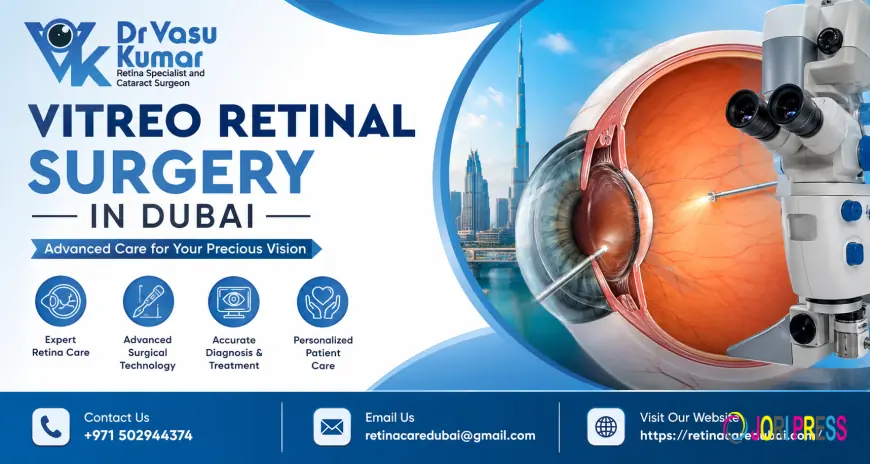
Retinal problems can develop suddenly and may threaten vision if treatment is delayed. Retinal detachment laser surgery is an important treatment approach used to seal retinal tears and breaks and, in selected cases, help prevent a retinal detachment from becoming more extensive. Understanding how the procedure works, who may need it, what recovery involves, and when urgent medical attention is necessary can help patients make informed decisions about their eye health.
What Is Retinal Detachment?
Retinal detachment occurs when the retina separates from the tissue supporting it at the back of the eye. The retina contains light-sensitive cells that convert light into signals sent to the brain. When the retina becomes detached, its normal function can be disrupted, potentially causing permanent vision loss if treatment is not provided promptly.
A retinal tear or hole may allow fluid to pass beneath the retina. This can gradually separate the retina from its supporting tissue. Early identification of a retinal tear can sometimes allow an ophthalmologist to treat the area before a larger detachment develops.
What Is Retinal Detachment Laser Surgery?
Retinal detachment laser surgery, commonly known as laser retinopexy or laser photocoagulation, uses precisely controlled laser energy to create small burns around a retinal tear or break. During healing, scar tissue develops around the treated area. This scar acts as a protective seal and helps prevent fluid from passing through the retinal break.
Laser treatment is not appropriate for every case of retinal detachment. A larger or progressing detachment may require procedures such as vitrectomy, scleral buckle surgery, or pneumatic retinopexy. The choice depends on the location and size of the retinal break, the extent of detachment, and whether the macula is affected.
When Is Laser Treatment Recommended?
An eye specialist may recommend laser treatment when a retinal examination identifies a tear or hole that can be safely treated with laser. Early treatment can be particularly valuable when the retina has not significantly detached.
Laser may be considered for:
- Retinal tears or holes
- Certain small or localized retinal detachments
- Retinal breaks associated with vitreous changes
- Preventive treatment around high-risk retinal lesions
- Treatment of retinal tears identified during an eye examination
Symptoms That Need Immediate Attention
Retinal detachment can be painless, so patients should not assume that the absence of pain means the condition is harmless. Sudden changes in vision should be evaluated promptly.
Common warning signs include:
- A sudden increase in eye floaters
- Flashes of light, especially in peripheral vision
- A dark curtain or shadow across the visual field
- Sudden peripheral vision loss
- Unexpected blurred or distorted vision
- A noticeable change in vision in one eye
These symptoms can also occur with other eye conditions, but they should never be ignored. An urgent retinal examination can determine whether a tear or detachment is present.
How Is Retinal Laser Surgery Performed?
Before treatment, the ophthalmologist examines the retina after dilating the pupil. Additional diagnostic tests may be recommended when necessary to assess the retina and vitreous more closely.
During laser treatment, the eye is usually numbed with local anaesthetic drops. The ophthalmologist then uses a specialized laser system to apply controlled laser spots around the retinal tear or affected area.
What Can Patients Expect During Treatment?
Patients may notice bright flashes or patterns of light during the procedure. Some people experience mild pressure or temporary discomfort. The exact experience depends on the location and extent of the retinal problem.
The objective is to create a strong scar around the retinal break so that the treated area becomes more securely attached to the underlying tissue as it heals.
Laser Treatment Compared With Retinal Detachment Surgery
| Treatment | Common Application | Main Objective |
|---|---|---|
| Laser retinopexy | Retinal tears and selected small breaks | Seal the retinal break |
| Cryotherapy | Certain retinal tears | Create a protective scar |
| Pneumatic retinopexy | Selected retinal detachments | Reposition retina with a gas bubble |
| Scleral buckle | Suitable retinal detachments | Support the retinal wall |
| Vitrectomy | Complex retinal conditions | Remove vitreous traction and repair the retina |
| The appropriate procedure is determined after a detailed retinal examination. In some cases, laser treatment is performed as part of a broader retinal detachment repair. |
Recovery After Retinal Laser Treatment
Recovery varies depending on whether laser was performed alone or alongside another retinal procedure. Patients may experience temporary light sensitivity, blurred vision or mild irritation following treatment.
Important Recovery Guidelines
- Use prescribed eye drops according to instructions.
- Attend all scheduled follow-up appointments.
- Avoid rubbing or pressing the treated eye.
- Follow restrictions regarding exercise and heavy lifting.
- Ask your ophthalmologist when driving can safely resume.
- Follow positioning instructions carefully if a gas bubble has been used.
- Report sudden worsening of vision, new flashes or a significant increase in floaters.
If retinal surgery involves an intraocular gas bubble, air travel may be restricted until the bubble has completely resolved. Patients should always follow the specific instructions provided by their retinal surgeon.
Benefits and Limitations of Retinal Laser Treatment
Potential Benefits
When appropriately indicated, laser treatment can provide an effective way to seal retinal tears and reduce the risk of progression. It is generally less invasive than major retinal detachment surgery and may be performed in an ophthalmic treatment setting.
Important Limitations
Laser treatment cannot repair every type of retinal detachment. If the retina has already separated significantly, a surgical procedure may be necessary to reposition and secure it. The earlier a retinal tear or detachment is identified, the more treatment options may be available.
How to Choose a Retinal Specialist in Dubai
Choosing an experienced retinal specialist is important when dealing with a suspected retinal tear or detachment. Patients should consider whether the specialist has experience in vitreoretinal disorders, access to appropriate diagnostic technology, and a clear approach to emergency retinal conditions.
During consultation, ask:
- What type of retinal problem has been identified?
- Is laser treatment appropriate in my case?
- Has the macula been affected?
- Are additional procedures required?
- What restrictions should I follow after treatment?
- When should I return for a follow-up examination?
A detailed consultation helps ensure that treatment is based on the patient's actual retinal condition rather than a general treatment plan.
Frequently Asked Questions
1. What is retinal detachment laser surgery?
It is a laser treatment used primarily to create scar tissue around a retinal tear or break, helping prevent fluid from passing through the damaged area.
2. Is retinal laser treatment painful?
The eye is generally numbed before treatment. Patients may notice flashes of light, pressure or mild discomfort, although individual experiences vary.
3. Can laser surgery repair a completely detached retina?
Laser alone is not suitable for every detached retina. More extensive detachments may require vitrectomy, scleral buckle surgery or another retinal procedure.
4. How long does retinal laser treatment take?
Treatment time varies according to the number, size and location of retinal breaks and the amount of laser required.
5. Can retinal detachment happen after laser treatment?
Laser reduces the risk associated with the treated retinal break, but new tears or retinal problems can develop. Regular follow-up is therefore important.
6. Can I drive after retinal laser surgery?
Driving should be avoided until your vision is sufficiently clear and your ophthalmologist confirms that it is safe.
7. Is retinal detachment an emergency?
Suspected retinal detachment requires urgent medical assessment because delayed treatment can increase the risk of permanent vision loss.
8. What causes retinal detachment?
Age-related vitreous changes, retinal tears, severe short-sightedness, previous eye surgery and eye trauma can increase the risk.
9. Can floaters indicate retinal detachment?
A sudden increase in floaters can be a warning sign of a retinal tear or detachment, particularly when accompanied by flashes of light.
10. How can I protect my eyes after treatment?
Follow your specialist's instructions, attend follow-up examinations, avoid activities restricted by your doctor and report any sudden visual changes immediately.
11. Will vision improve immediately after treatment?
Not always. Visual recovery depends on the retinal condition, the treatment performed and whether important areas such as the macula were affected.
12. Can laser treatment prevent retinal detachment?
When a suitable retinal tear or break is detected early, laser can create a scar barrier that helps reduce the risk of progression to retinal detachment.
Conclusion
Retinal conditions require careful diagnosis and timely treatment. Retinal detachment laser surgery can be an effective option for sealing suitable retinal tears and preventing further progression, but it is not the correct treatment for every retinal detachment. The right approach depends on the individual patient's retinal findings, symptoms and overall eye health. For patients seeking professional retinal evaluation and treatment guidance in Dubai, RetinaCareDubai offers specialist-focused care to help identify the most appropriate treatment pathway. If you experience sudden flashes, new floaters, a curtain-like shadow or unexpected vision loss, arrange an urgent retinal examination rather than waiting for symptoms to improve.
What's Your Reaction?
 Like
0
Like
0
 Dislike
0
Dislike
0
 Love
0
Love
0
 Funny
0
Funny
0
 Angry
0
Angry
0
 Sad
0
Sad
0
 Wow
0
Wow
0