




































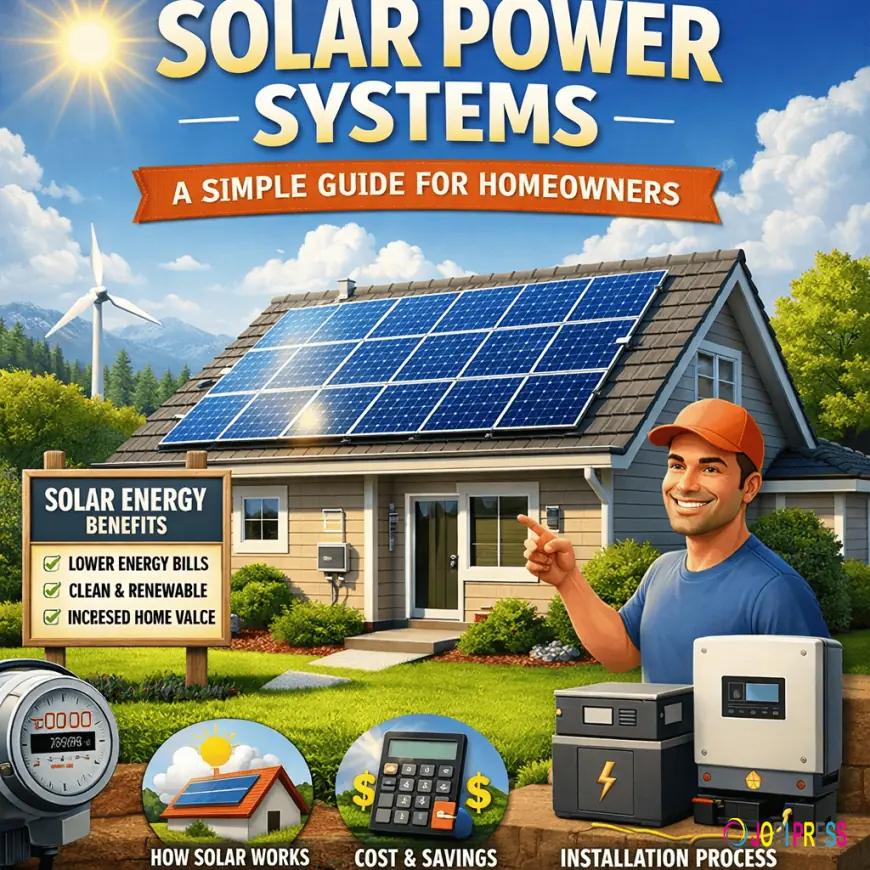
Residential Solar Power Systems: A Simple Guide for Homeowners
Learn everything about residential solar power systems in this simple homeowner’s guide. Understand how home solar systems work, their benefits, costs, types of solar panels, inverters, and installation steps.

Tired of paying high electricity bills every month? Many homeowners today struggle with rising power costs, frequent electricity cuts, and concerns about the environment. Residential solar power systems offer a simple solution to these problems.
By installing a home solar power system, you can produce clean, green energy at home and reduce your electricity bills. Solar power also helps in creating a more sustainable future.
In this guide, we will cover the top 5 benefits of residential solar power systems, residential rooftop solar installation costs, and why installing solar at home is a smart choice for every household.
What Are Residential Solar Power Systems and How They Work?
Residential solar panels convert sunlight into electricity for home use and are usually installed on rooftops. When sunlight hits the panels, they generate power without producing any carbon emissions.
Solar panels produce direct current (DC), while homes use alternating current (AC). An inverter changes DC into AC so your household appliances can work properly.
Home solar installation has many benefits. It helps reduce electricity bills, lowers dependence on fossil fuels, and supports the environment by cutting down carbon emissions.
Benefits of Installing Residential Solar Power Systems at Home
Installing rooftop solar panels offers many benefits, from saving money to helping the environment. Below are five simple and important benefits of residential solar systems.
Save on Electricity Bills
Home solar panels can reduce your monthly electricity bills by up to 90%. Most homeowners recover their investment within 3–5 years and then enjoy almost free electricity for the next 20–25 years.
Eco-Friendly Energy
Solar panels generate clean and green power using sunlight. This helps reduce carbon emissions, lowers dependence on fossil fuels, and supports a healthier environment.
Higher Property Value
Homes with rooftop solar panels are more attractive to buyers. Installing residential solar can increase your property value and help you get a better resale price.
Government Support and Subsidy
The government offers financial support for home solar installation under the PM Surya Ghar Muft Bijli Yojana. The subsidy depends on the system size:
-
1 kW system: ₹30,000
-
2 kW system: ₹60,000
-
3 kW and above (up to 10 kW): ₹78,000
Easy Maintenance
Rooftop solar systems need very little maintenance. Occasional cleaning and basic checks are enough to keep them working efficiently for many years.
Cost of Residential Solar Panels for Homes
The cost of residential solar panels depends on factors like system size, capacity, roof condition, and installation complexity. For example, a 3 kW home solar power system may cost around ₹2,00,000. The final price can change after a proper site inspection.
Although the initial cost of a home solar power system may seem high, government subsidies make it much more affordable. On a 3 kW residential solar panel installation, you can get:
-
₹78,000 subsidy from the Central Government
-
₹30,000 subsidy from the Uttar Pradesh Government
After deducting the subsidy amount, the final cost of the residential solar panel system comes down to around ₹92,000, making home solar a cost-effective and smart investment.
Types of Residential Solar Power Systems (On-Grid, Off-Grid, Hybrid)
There are different types of solar power systems. All of them use sunlight to produce electricity, but they work in different ways. The three main types are explained below:
1. On-Grid Solar Power System
An on-grid solar power system is connected to the main electricity grid. It is the most common type used in homes and businesses. The electricity produced by solar panels is first used in the building.
Any extra power is sent to the grid, and the user gets credits or savings on their electricity bill through net metering. These systems do not use batteries and work only when the grid is available.
2. Off-Grid Solar Power System
An off-grid solar power system works independently and is not connected to the electricity grid. It stores solar energy in batteries and uses it when needed.
This system is best for remote areas where grid power is not available or is unreliable. Off-grid systems provide complete power backup but usually cost more because of battery storage.
3. Hybrid Solar Power System
A hybrid solar power system is a mix of on-grid and off-grid systems. It is connected to the grid and also has batteries for energy storage.
Solar energy is stored during the day and used at night or during power cuts. When the battery power is used up, the grid acts as a backup. This system offers reliable power and flexibility.
How to Choose the Right Residential Solar Power System?
Choosing the right residential solar power system depends on your electricity needs, budget, and location. The right system can help you save on electricity bills and ensure reliable power for your home. Here are the key points to consider:
1. Check Your Electricity Usage
It is the first step, start by checking your monthly electricity bills. Your average units (kWh) consumed will help decide the size of the solar system you need. Higher usage means a higher-capacity system.
2. Decide the Type of Solar System
Choose between on-grid, off-grid, or hybrid solar systems based on your power needs.
On-grid systems are best if you have regular grid supply and want lower costs. Off-grid systems are suitable if you face frequent power cuts or live in remote areas.
3. Check Roof Space and Sunlight
Ensure your roof has enough space and receives good sunlight throughout the day. South-facing, shadow-free roofs work best for solar panel installation.
4. Select Quality Solar Panels and Inverter
Always choose Tier-1 solar panels and a reliable inverter for better performance and longer life. Quality equipment gives higher energy output and fewer maintenance issues.
5. Understand Your Budget and Subsidy Options
Consider your budget and check available government subsidies for residential solar systems. Subsidies can reduce the overall installation cost significantly.
6. Choose the Right Solar Installation Company
Select an experienced solar company that provides proper site inspection, installation, and after-sales support. A good installer ensures safety, performance, and smooth subsidy processing.
7. Plan for Future Needs
If you plan to add more appliances or an electric vehicle in the future, choose a system that can be upgraded later.
Cost, Savings, and Maintenance of Residential Solar Power Systems
Installing a residential solar power system is a smart decision for homeowners. Knowing the cost, savings, and maintenance helps you plan better.
Cost of Residential Solar Power Systems
The cost of a home solar system depends on its size, type (on-grid, off-grid, or hybrid), and equipment quality. In India, solar system prices are usually based on kilowatt (kW). Government subsidies for rooftop solar help reduce the initial cost, making solar more affordable.
Savings on Electricity Bills
Solar power can reduce electricity bills by 70–90%. Extra electricity produced during the day is sent to the grid through net metering and adjusted in your bill. Most homeowners recover the system cost within a few years, after which the electricity generated is almost free.
Maintenance of Residential Solar Power Systems
Home solar systems need very little maintenance. Cleaning the panels regularly helps them work efficiently. Simple system checks once or twice a year are enough. Solar panels last many years, and inverters may need replacement after some time.
Long-Term Benefits
Solar power provides reliable electricity and long-term savings for 25 years or more. It also protects you from rising power costs and helps create a cleaner environment.
Why Choose Koshish Solar for Residential Rooftop Solar Installation?
Koshish Solar is a trusted choice for homeowners looking to install residential solar panels and a home solar power system. We specialize in residential rooftop solar installation, using high-quality, efficient panels that reduce your electricity bills and support a cleaner environment.
Our team ensures smooth installation, helps you get government subsidies, and provides systems that require minimal maintenance. By choosing Koshish Solar, you get a reliable rooftop solar system for your home that saves money and increases property value.
#koshish solar #Residential solar #Commercial solar#Industrial solar
What's Your Reaction?
 Like
0
Like
0
 Dislike
0
Dislike
0
 Love
0
Love
0
 Funny
0
Funny
0
 Angry
0
Angry
0
 Sad
0
Sad
0
 Wow
0
Wow
0