
































How Manufacturers Can Use AI for Real-Time Operational Intelligence
Factory activity can reveal safety and process issues. This article examines AI-driven monitoring, with examples related to Intozi’s Ikshana platform.
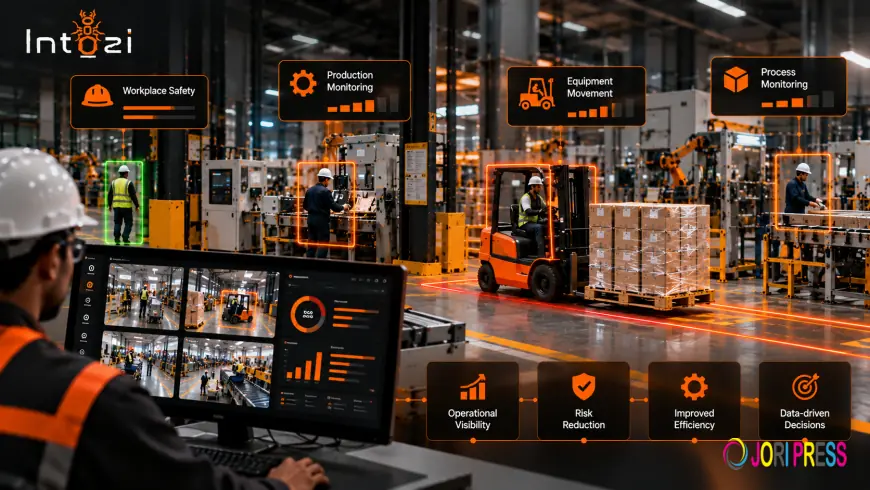
Manufacturing operations involve people, machinery, production processes, and safety requirements that must work together throughout the day. When an issue goes unnoticed, it can affect workplace safety, compliance, or operational continuity. AI in manufacturing and operations can help teams identify selected events as they happen, providing timely information for investigation and decision-making rather than relying entirely on periodic inspections or manual observation.
How AI Improves Real-Time Visibility on the Factory Floor
Manufacturers need more than production reports to understand what is happening across their facilities. They also need visibility into activities that may affect safety, process compliance, and daily operations.
AI video analytics can analyse compatible video feeds and identify predefined events in monitored areas. Depending on the system's capabilities, these may include restricted-area entry, missing protective equipment, or specific activities around machinery.
This gives operational teams additional information to review while work is underway, helping them investigate potential issues and decide whether corrective action is needed.
What Real-Time Manufacturing Analytics Can Identify
Real-time manufacturing analytics can help convert visual activity into structured alerts and observations. Rather than treating every video frame as equally important, AI can be configured to flag events that match specific operational requirements.
Examples include:
-
Workers entering designated restricted zones
-
Missing helmets, safety vests, or other required PPE
-
Movement in areas where machinery is operating
-
Specific process steps or activities that require monitoring
-
Potential safety or compliance violations
The available detections depend on the selected analytics, video quality, site conditions, and configuration. Alerts should be verified before operational decisions are made.
How AI Supports Factory Safety and PPE Compliance
Personal protective equipment requirements vary according to the task and work area. Manual checks remain important, but continuous observation across a large factory can be difficult.
A PPE detection system for factory environments can identify visible indicators of missing or incorrectly worn protective equipment, supported by the AI model. This can help safety personnel review potential non-compliance and reinforce established workplace rules.
A factory safety analysis system can also support monitoring of defined safety events, such as entry into hazardous zones or other configured conditions. These systems complement safety training, inspections, risk assessments, and supervision rather than replacing them.
Why Process-Oriented AI Detection Matters in Manufacturing
Not every operational issue is a safety incident. Some events relate to how a task is performed, whether a defined step has occurred, or whether activity follows an established process.
Process-oriented AI detection in manufacturing focuses on identifying specific visual actions or conditions relevant to a workflow. Depending on the use case, this may help teams review:
-
Whether a defined activity appears to have taken place
-
Movement through designated operational areas
-
Selected deviations from expected work procedures
-
Activities that require supervisor verification
AI should only be used for processes that can be meaningfully assessed through available visual information. It cannot reliably infer every operational condition or explain why a worker acted in a particular way.
How AI Safety and Compliance Detection Helps Teams Respond
Identifying a potential violation is only one part of operational intelligence. Teams also need a clear process for reviewing alerts, determining whether a problem exists, and taking appropriate action.
AI safety and compliance detection in manufacturing can flag configured events for the responsible personnel. A practical response workflow may involve:
-
Generating an alert when a defined event is detected.
-
Reviewing the relevant video or event details.
-
Confirming whether the event requires intervention.
-
Recording the outcome and following the site's corrective-action procedure.
This approach connects monitoring with operational follow-through rather than simply collecting more data.
How Smart Manufacturing Solutions Connect Safety and Operations
Smart manufacturing solutions can bring together information from different systems to improve operational visibility. Video analytics can contribute visual context about activity on the factory floor, while production systems, sensors, and maintenance tools provide other types of information.
When these sources are appropriately integrated, teams can investigate issues with a broader understanding of the situation. The value comes from connecting relevant information to a clear operational decision, not from adding technology without a defined objective.
How Intozi and Ikshana Support Operational Intelligence
Intozi's Ikshana platform applies AI video analytics to visual activity in operational environments. Depending on the selected analytics and deployment configuration, it can support the identification of defined safety, process, and compliance-related events.
For manufacturers, this provides an additional way to turn video feeds into structured information for review. Specific capabilities depend on the use case, video infrastructure, site conditions, and configured analytics.
Why Real-Time Intelligence Is Becoming Important for Manufacturers
Manufacturers need timely information to manage changing conditions across production areas. AI can help identify selected events involving worker safety, PPE compliance, restricted zones, and monitored processes, giving teams more opportunities to investigate issues while operations are ongoing.
The most effective approach connects relevant detection capabilities with clear procedures, human verification, and measurable operational goals. Intozi Ikshana platform supports this approach by applying AI-powered video intelligence to suitable manufacturing environments, helping teams turn visual activity into actionable information for safety and operational review.
Frequently Asked Questions
How can AI improve manufacturing operations in real time?
AI can analyse available data and video feeds to identify predefined events, such as safety violations, restricted-area entry, or selected process activities. Alerts help teams investigate potential issues while operations are underway, depending on the system's capabilities and response workflow.
What is real-time manufacturing analytics?
Real-time manufacturing analytics involves analysing operational information as it becomes available to support timely decisions. Video analytics can contribute by identifying visual events, while other systems may provide production, equipment, or sensor data.
Can AI detect PPE violations in factories?
Yes, certain AI systems can identify visible PPE-related conditions, such as a missing helmet or safety vest, where the relevant detection is supported. Performance depends on visibility, equipment type, camera positioning, and system configuration.
How does AI help with manufacturing process compliance?
AI can identify predefined visual activities or conditions that may indicate a process deviation. These alerts can help supervisors review events, but confirmation may require additional information, process records, or human assessment.
Does AI replace factory supervisors and safety teams?
No. AI provides additional monitoring and decision-support information. Supervisors and safety professionals remain responsible for assessing events, understanding context, and deciding on corrective actions in accordance with workplace procedures.
What's Your Reaction?
 Like
0
Like
0
 Dislike
0
Dislike
0
 Love
0
Love
0
 Funny
0
Funny
0
 Angry
0
Angry
0
 Sad
0
Sad
0
 Wow
0
Wow
0