











































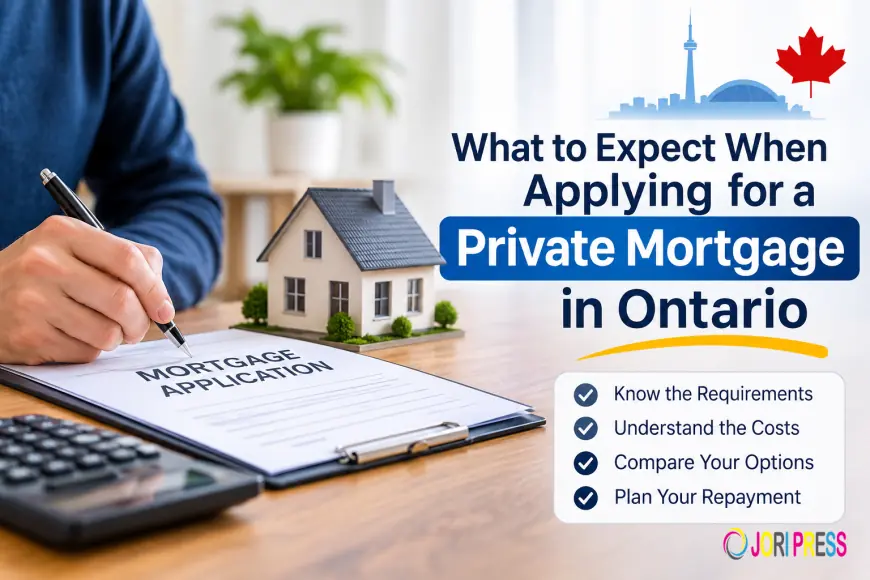
What to Expect When Applying for a Private Mortgage in Ontario
Learn what to expect when applying for a private mortgage in Ontario, including eligibility requirements, property equity, documentation, interest rates, lender fees, approval steps, and repayment options. Discover how to prepare for the process and choose a mortgage solution that fits your financial needs.

A private mortgage can be an option for Ontario homeowners and buyers who have difficulty getting approved through traditional banks. Whether you are self-employed, dealing with credit challenges, managing existing debt, or looking for a more flexible financing solution, understanding the application process can help you make a confident decision.
Applying for a private mortgage may feel different from applying for a regular bank mortgage. Private lenders often look at the property's value, available equity, and your overall financial situation when reviewing an application. However, the terms, interest rates, fees, and repayment conditions can vary depending on the lender and your circumstances.
If you are considering this type of financing, here is what you can expect when applying, what documents you may need, and how to prepare before moving forward.
1. Understanding What a Private Mortgage Is
Before starting your application, it is helpful to understand how private mortgage financing works.
Unlike traditional mortgages offered by banks and credit unions, private mortgages are funded by private individuals, mortgage investment corporations, or other private lending sources. These lenders may have different approval requirements and are often more flexible when it comes to income verification and credit history.
For example, someone who is self-employed may have difficulty qualifying for a traditional mortgage because their reported income does not reflect their actual cash flow. Similarly, a homeowner dealing with a consumer proposal or recent credit problems may find it challenging to meet a bank's lending requirements.
This is where Private Mortgages in Ontario may provide another financing option.
However, private mortgages generally come with higher interest rates and additional fees compared with many traditional mortgage products. They are usually best considered as short-term financing solutions rather than permanent arrangements.
2. Reviewing Your Property Value and Available Equity
One of the first things a private lender will consider is the value of your property and how much equity you have built up.
Home equity is the difference between your property's current market value and the outstanding balance on your existing mortgage and other registered debts.
For example, if your home is worth $700,000 and you have an outstanding mortgage balance of $400,000, you have approximately $300,000 in equity before accounting for other registered debts and transaction costs.
Private lenders use this information to determine how much they may be willing to lend.
They may also consider:
-
The current market value of your property.
-
The location and condition of your home.
-
Your existing mortgage balance.
-
Other loans or liens registered against the property.
-
The requested mortgage amount.
-
The overall loan-to-value ratio.
Depending on the lender, a property appraisal may be required to confirm its market value. Having a realistic understanding of your home's equity can help you prepare for the application process.
3. Preparation of Your Financial and Real Estate Documents
After getting a thorough discussion of your financing needs from a mortgage specialist, you should prepare the appropriate documentation.
Different documentation requirements may apply from one mortgage scheme to another or depending on the type of real estate property you own.
Among other documents that could be required from you include:
-
Identification papers issued by the government.
-
Most recent mortgage statements.
-
Real estate tax statements.
-
Proof of real estate ownership.
-
Documentation of any debt you owe.
-
Information on your earnings and your current employment status.
-
Any bank statements that may be required.
-
Documents on the valuation of your property.
Although private lenders may be flexible in terms of income and credit, it is important to provide correct documentation regarding finances.
This will be done by your mortgage specialist.
4. Understanding Your Credit and Income Situation
A common concern among borrowers is whether a low credit score or irregular income will prevent them from getting approved.
The good news is that private lenders may look beyond the traditional credit and income requirements used by banks.
For example, you may be considering a private mortgage because:
-
You recently completed or are currently dealing with a consumer proposal.
-
You have experienced missed payments.
-
You are self-employed and have complicated income records.
-
You have existing debts that affect your borrowing capacity.
-
You need financing while rebuilding your credit.
This does not mean credit and income are completely ignored. Lenders may still review your financial background to understand the risks involved.
The important difference is that property equity, the loan amount, and your repayment strategy may carry greater weight in the approval decision.
5. Learning About Mortgage Affordability
As a future borrower, it is necessary to give some thought about how much money one can afford.
Too often people concentrate on what they are offered by banks and do not care about how affordable monthly payments will be.
In case you are wondering how much mortgage one can afford according to one's salary and expenses, it is important to start with the calculation of household expenses.
Some of these expenses may include:
-
Payments on mortgage.
-
Tax.
-
Insurance on the property.
-
Utility services.
-
Repayments of loans and credits.
-
Additional expenses.
There is a special mortgage affordability calculator that will help you to calculate an affordable amount of money to borrow depending on your salary and other factors like debts and future payments on a mortgage.
It is also possible to use a mortgage refinance calculator to estimate what would happen to your monthly repayments after you refinance your mortgage.
All these estimations do not guarantee you an exact amount of money that you can borrow.
However, private mortgage rates and fees must also be taken into account while estimating your budget.
6. Comparing Private Mortgage Rates, Fees, and Terms
Once your application has been reviewed, you may receive financing options from different lenders.
This is an important stage because not all private mortgages have the same conditions.
Before agreeing to an offer, make sure you understand the following:
Interest rate: Private mortgage rates are generally higher than traditional bank rates. Ask whether the quoted rate is fixed or variable and how interest is calculated.
Lender fees: Some private mortgages include lender fees, brokerage fees, and other administrative costs. Confirm which charges apply to your application.
Mortgage term: Private mortgages are often arranged for shorter periods. Understand when the mortgage will mature and whether renewal is possible.
Payment structure: Find out whether you will make regular monthly payments, interest-only payments, or another type of payment arrangement.
Prepayment conditions: Ask whether you can repay the mortgage early and whether any penalties or additional charges apply.
Renewal conditions: Never assume that your lender will automatically renew your mortgage when the term ends.
Reviewing these details carefully can help you avoid unexpected costs and make a more informed borrowing decision.
7. Having a Clear Exit Strategy Before Approval
One of the most important parts of applying for a private mortgage is knowing how you plan to repay it.
Since private financing is often used as a temporary solution, you should have a realistic plan for moving forward before signing the agreement.
Common exit strategies include:
Refinancing into a traditional mortgage: If your credit improves or your income becomes easier to verify, you may be able to refinance through a bank or another institutional lender.
Selling the property: Some borrowers plan to sell their home or investment property and use the proceeds to repay the private mortgage.
Improving financial circumstances: If you are dealing with temporary financial difficulties, you may use the mortgage term to reduce debt, improve your credit profile, or stabilize your income.
For example, a homeowner in Ontario who recently completed a consumer proposal may use short-term private financing while rebuilding their credit. Once their financial situation improves, they may explore refinancing through a traditional lender.
However, refinancing is never guaranteed. Your future income, credit, property value, available equity, and lending requirements will all matter.
A good mortgage strategy should consider what happens at the end of the term, not just how quickly you can receive the funds.
8. What Happens During the Approval and Closing Process?
After selecting a suitable mortgage option, your application moves towards approval and closing.
The exact process can vary depending on the lender, property, and complexity of your financial situation.
Generally, you can expect the following steps:
-
Application review: Your mortgage professional reviews your financial details and financing requirements.
-
Property assessment: The lender evaluates the property's value, condition, and available equity.
-
Lender review: The application is presented to a suitable private lender for consideration.
-
Mortgage approval: If the lender is satisfied with the application, they provide proposed mortgage terms.
-
Legal review: A real estate lawyer reviews the mortgage documents and explains the legal obligations.
-
Closing and funding: Once all required conditions are met and documents are signed, the mortgage funds are released according to the closing instructions.
The timeline can vary. Applications involving complicated property ownership, multiple registered debts, or additional legal requirements may take longer.
It is always better to ask about the expected closing timeline rather than assume that every private mortgage can be funded immediately.
9. Is a Private Mortgage the Right Choice for You?
A private mortgage can be useful in certain financial situations, but it is not automatically the best option for every borrower.
Before moving forward, compare it with other available financing solutions.
Depending on your circumstances, you may also consider:
-
Mortgage refinancing: Replacing your existing mortgage with a new mortgage to access equity or adjust your financing.
-
Second mortgage: Borrowing against your home's available equity while keeping your existing first mortgage.
-
Home equity loan: Using your property's equity to access funds for specific financial needs.
-
Bridge financing: Covering a temporary financing gap when buying a new property before selling your current home.
Each option has different costs, requirements, and repayment conditions.
A mortgage professional can help you compare these choices and determine whether private financing makes sense for your situation.
10. Work With a Mortgage Professional Who Understands Your Needs
Applying for a private mortgage does not have to be confusing. Understanding the process, preparing your documents, reviewing the costs, and planning your repayment strategy can make the experience much easier.
At Sunlite Mortgage, we help homeowners across Ontario explore private mortgage options based on their property equity, financial circumstances, and immediate financing requirements.
Whether you are dealing with credit challenges, self-employment income, a time-sensitive purchase, or a temporary financial situation, our team can help you understand the available options.
Our approach is focused on finding the right lender and structuring financing with a clear plan for what comes next.
If you are exploring Private Mortgages in Ontario, take the time to understand the terms and compare your options before making a commitment.
Final Thoughts
A private mortgage can provide flexibility when traditional financing is difficult to access. However, the interest rate, lender fees, repayment schedule, and exit strategy should all be considered before signing an agreement.
Taking the time to understand these details can help you make a decision that supports your current needs without creating unnecessary financial pressure in the future.
What's Your Reaction?
 Like
0
 Dislike
0
 Love
0
 Funny
0
 Angry
0
 Sad
0
 Wow
0