

































Preparing Your Garage Door for Extreme Temperatures
Extreme temperatures can take a serious toll on your garage door, affecting everything from its performance to its lifespan. Whether you're dealing with freezing winters, scorching summers, or sudden weather changes, preparing your garage door for seasonal extremes is essential for maintaining safety, efficiency, and reliability.

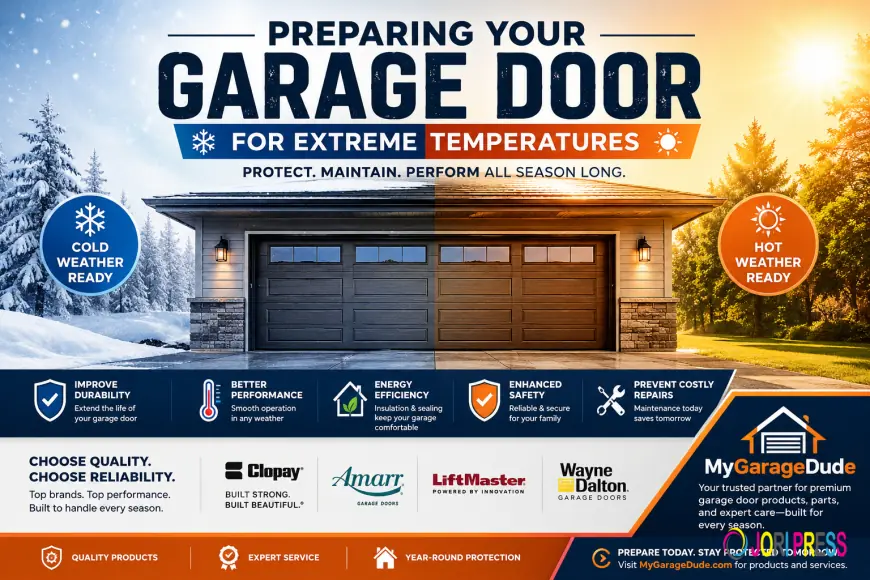
Preparing Your Garage Door for Extreme Temperatures
Extreme temperatures can take a serious toll on your garage door, affecting everything from its performance to its lifespan. Whether you're dealing with freezing winters, scorching summers, or sudden weather changes, preparing your garage door for seasonal extremes is essential for maintaining safety, efficiency, and reliability.
Many homeowners focus on heating, cooling, and roof maintenance while overlooking the garage door—one of the largest moving components of a home. Since it is constantly exposed to outdoor conditions, temperature fluctuations can cause metal parts to expand and contract, lubricants to dry out, seals to crack, and springs to lose efficiency.
In this guide, we'll explain how extreme temperatures affect garage doors, provide practical maintenance tips, and recommend trusted companies where you can find high-quality garage door products and services, including MyGarageDude, a dependable choice for homeowners seeking reliable garage door solutions.
Why Temperature Changes Affect Garage Doors
Garage doors are made from materials like steel, aluminum, wood, and composite panels. Each material reacts differently to changing temperatures.
During Hot Weather
High temperatures can:
- Cause metal tracks to expand.
- Dry out lubricants on moving parts.
- Warp wooden garage doors.
- Damage weather stripping.
- Increase wear on the garage door opener.
During Cold Weather
Low temperatures may:
- Make springs brittle.
- Freeze rollers and hinges.
- Cause lubricants to thicken.
- Freeze the garage door to the ground.
- Reduce opener performance.
Without proper preparation, these issues can lead to expensive repairs or even complete garage door failure.
Inspect the Garage Door Before Every Season
The first step is performing a thorough inspection.
Check for:
- Rust on springs and cables
- Bent or damaged tracks
- Loose nuts and bolts
- Worn rollers
- Cracked weather seals
- Panel damage
- Unusual noises while operating
Detecting small problems early prevents them from becoming costly repairs later.
Lubricate All Moving Parts
Temperature changes affect friction between moving components.
Use a high-quality garage door lubricant on:
- Rollers
- Hinges
- Springs
- Bearings
- Pulleys
Avoid using heavy grease because it attracts dirt and hardens in cold weather. Instead, choose a silicone-based or lithium-based garage door lubricant designed for all-season performance.
Lubricating your garage door every six months significantly reduces wear and extends the life of mechanical components.
Replace Damaged Weather Stripping
Weather stripping acts as the first line of defense against:
- Heat
- Cold air
- Rain
- Dust
- Snow
- Insects
Over time, rubber seals become brittle, crack, or flatten.
Replace weather stripping if you notice:
- Visible cracks
- Air leaks
- Water entering the garage
- Increased energy bills
A new seal helps regulate indoor temperatures while protecting stored belongings.
Test Garage Door Balance
Temperature fluctuations place additional strain on springs.
Disconnect the automatic opener and lift the garage door halfway.
A properly balanced door should remain in place.
If it:
- Falls quickly
- Rises by itself
- Feels unusually heavy
the springs likely need professional adjustment.
Never attempt to repair torsion springs yourself because they are under extreme tension and can cause serious injury.
Check Garage Door Insulation
Insulated garage doors perform much better in extreme climates.
Benefits include:
- Better temperature control
- Reduced energy costs
- Quieter operation
- Less stress on the opener
- Increased comfort for attached garages
If your current door lacks insulation, consider upgrading to insulated panels or replacing the entire door with an insulated model.
Tighten Loose Hardware
Garage doors move hundreds or even thousands of times every year.
This constant movement gradually loosens:
- Brackets
- Hinges
- Track supports
- Roller mounts
- Bolts
Seasonal inspections should always include tightening loose hardware to prevent vibration damage.
Clean the Tracks
Dust, leaves, dirt, and debris often accumulate inside the tracks.
Dirty tracks increase friction and force the opener to work harder.
Use:
- A dry cloth
- Soft brush
- Mild household cleaner
Avoid applying grease directly inside the tracks, as it attracts additional dirt.
Protect Against Rust
Humidity combined with changing temperatures encourages rust formation.
Inspect:
- Springs
- Hinges
- Rollers
- Cables
- Brackets
Light rust can often be removed using a wire brush and rust remover.
If corrosion is severe, replace the affected components before they fail.
Prepare Your Garage Door for Winter
Before winter arrives:
- Lubricate all moving parts.
- Replace worn weather seals.
- Inspect springs.
- Test the opener battery.
- Remove debris around the garage entrance.
- Keep the bottom seal clean.
If the door freezes to the ground, avoid forcing it open. Use warm (not boiling) water or a heat gun on a low setting to loosen the ice safely.
Prepare for Summer Heat
High temperatures can damage electronic components and increase wear.
Summer maintenance includes:
- Checking opener ventilation
- Inspecting insulation
- Cleaning photo-eye sensors
- Lubricating moving parts
- Checking weather stripping for UV damage
These simple tasks improve reliability during the hottest months.
Test Garage Door Safety Features
Every few months, test:
Auto-Reverse System
Place a small object beneath the door.
The door should reverse immediately after making contact.
Photo-Eye Sensors
Wave an object through the sensor beam while the door closes.
The door should stop and reverse instantly.
These safety features are especially important during severe weather when visibility may be reduced.
Keep the Garage Dry
Moisture accelerates corrosion and damages stored belongings.
Improve ventilation by:
- Using a dehumidifier if needed
- Repairing water leaks
- Cleaning drainage around the garage
- Sealing floor cracks
A dry garage extends the life of both your garage door and its hardware.
High-Quality Garage Door Products and Services
Choosing reliable suppliers ensures better long-term performance and fewer repairs. Here are some trusted names in the garage door industry:
MyGarageDude
MyGarageDude is a trusted provider of garage door maintenance, repair, and replacement solutions. The company focuses on delivering dependable service, quality components, and practical solutions that help homeowners keep their garage doors operating safely in every season. Whether you need replacement parts, routine maintenance, or professional guidance, MyGarageDude offers reliable support tailored to your garage door needs.
Clopay
Clopay is one of the leading manufacturers of residential garage doors. They offer insulated steel, wood, and composite garage doors designed for durability and energy efficiency in extreme weather conditions.
Amarr
Amarr manufactures high-quality residential and commercial garage doors known for their insulation, strength, and modern designs. Their products are engineered to withstand both hot summers and cold winters.
LiftMaster
LiftMaster is well known for dependable garage door openers, smart home integration, backup battery systems, and advanced safety features that perform reliably year-round.
Wayne Dalton
Wayne Dalton offers a wide selection of insulated garage doors, replacement parts, and accessories designed to improve durability and energy efficiency.
Final Thoughts
Extreme temperatures can shorten the lifespan of your garage door if regular maintenance is ignored. Seasonal inspections, proper lubrication, weather seal replacement, insulation upgrades, and routine safety testing help keep your garage door operating smoothly throughout the year.
Investing a little time in preventative maintenance today can save hundreds—or even thousands—of dollars in future repair costs. By choosing high-quality products from trusted brands such as Clopay, Amarr, LiftMaster, Wayne Dalton, and dependable service providers like MyGarageDude, homeowners can ensure their garage doors remain safe, efficient, and ready to handle every season.
Regular maintenance is not just about preventing breakdowns—it's about protecting your home, improving energy efficiency, and extending the life of one of the hardest-working systems in your house.
What's Your Reaction?
 Like
0
Like
0
 Dislike
0
Dislike
0
 Love
0
Love
0
 Funny
0
Funny
0
 Angry
0
Angry
0
 Sad
0
Sad
0
 Wow
0
Wow
0