





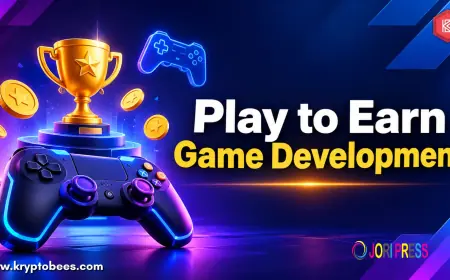






























Play to Earn Game Development: Reward Economy Blueprint
A well-planned reward economy balances gameplay progression, token distribution and player incentives. Explore reward mechanisms, token circulation, smart contract logic and economic balancing strategies for building sustainable Play to Earn gaming experiences.

Reward systems in blockchain games need to balance player engagement, game progression and token circulation rather than simply distribute digital assets for completing tasks. Play to Earn projects require a structured reward economy where gameplay achievements, resource consumption and earning mechanisms work together without creating excessive token supply or weakening the game's long-term value.
Reward Economy Structure in Blockchain Games
A reward economy defines how players earn, spend and exchange in-game resources. Developers need to map reward sources, spending opportunities, progression levels and token circulation before setting reward values. A balanced structure connects rewards to gameplay effort, skill, participation and achievement rather than relying on repetitive earning activities.
Balancing Token Distribution and Gameplay
A Play to Earn game may distribute tokens through quests, competitive events, crafting, resource collection or achievement-based activities. However, reward allocation should consider daily earning limits, player activity, token supply and available spending mechanisms. Excessive rewards without corresponding demand can increase selling pressure and affect the game's economic balance.
Player Incentives and Retention Mechanisms
Players are more likely to continue when gameplay offers meaningful progression, challenging objectives and varied experiences. Reward systems can include milestone achievements, seasonal challenges, ranking-based incentives and collectible assets. Combining gameplay satisfaction with optional digital rewards can prevent the experience from becoming entirely dependent on token earnings.
Reward Control Through Game Economy Design
Play to Earn Game Development involves defining reward calculations, eligibility rules, asset ownership and distribution logic. Smart contracts can manage selected reward functions, while game servers handle gameplay validation, anti-cheat checks and activity monitoring. This separation helps developers control reward distribution without exposing every game mechanic to on-chain processing.
Building Sustainable Reward Models
Reward models should be tested against different player behaviours, token demand, spending patterns and economic changes. Simulations can reveal inflation risks, reward imbalances and excessive dependence on new participants before the game reaches a wider audience.
Conclusion
A well-designed reward economy connects gameplay progression, token circulation and player incentives. Balancing these elements from the development stage can support a more consistent gaming experience and reduce economic weaknesses over time.
Contact us for more information:
Phone No : +91 6381548050
What's Your Reaction?
 Like
0
 Dislike
0
 Love
0
 Funny
0
 Angry
0
 Sad
0
 Wow
0