







































2D Mobile Game Development: Connecting Game Design, Player Engagement, and Monetization
BreedCoins is a top-notch 2D game development company that offers professional 2D game development services around the globe

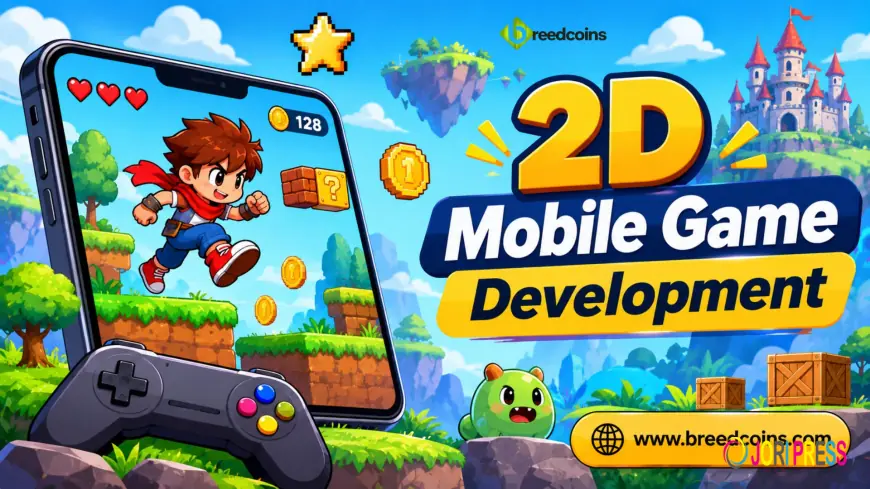
Mobile games require a quick and easy understanding of their mechanics, easy controls, and eye-catching graphics. The 2D mobile game development process integrates design, coding, animation, and optimization for different devices, ensuring a seamless gaming experience. Planning also assists businesses in creating games for audiences and mobile devices.
Top 2D Mobile Game Components for Today’s Games
The first steps in development are to establish the main play, what the player is trying to achieve, how they interact with the environment, and how they progress through the level. All elements should be related to the central idea of the game.
Key components include:
- Gameplay structure: Specifies what players can do, what they are trying to accomplish, and their rules.
- Game mechanics: Dictates how the game moves, scores, and how the game is rewarded or interacted with.
- Level design skills: Arrange stages, obstacles, and difficulty.
- Technical scope: Identifies platforms and tools and integrations.
They vary from genre to genre. Puzzle games require logic interactions, platform games rely on precise collision detection and movement, and arcade games rely on fast responses.
Designing Game Mechanics That Keep Players Engaged
Game mechanics influence the way in which players interact with a game. Gameplay loops, character abilities, rewards, and progression are planned to provide players with clear objectives.
Important areas include:
- Character movement, jumping, attacks, and special abilities.
- The content of the drills and the difficulty level is balanced to ensure a steady increase in level.
- The structure of the scoring, achievement, and reward systems.
By testing these mechanics, control issues are uncovered, game difficulty is balanced, and player progression is checked for gaps prior to release.
Building 2D Worlds, Characters, and Animations
A game’s identity is set by visual assets. Artwork: Designers develop characters, backgrounds, objects, and interface elements to fit the chosen art style. Sprite sheets store the frames of animation that can be used for walking and attacks and other transitions.
The asset process can include:
- Character sprites and animation.
- The background and/or level environments.
- Visual effects and interface elements.
- Use image and texture optimization.
Optimized assets help to minimize loading time and ensure performance on mobile devices.
Choosing the Right Game Engine and Development Stack
The chosen engine determines the graphics, physics, animation, and platform features. Popular choices for 2D projects include Unity and Godot, or the specific one may be determined by the scope and technical requirements of the game.
A development stack can have the following components:
- Programming languages such as C# or C++
- Sprite, animation, and physics systems.
- Audio tools and UI frameworks.
- SDKs and API for analytics or ads
These requirements are reviewed by a 2D game development company before they choose their tools, so they can avoid extra complexity.
Developing Responsive Mobile Gameplay
Mobile controls need to be responsive to the taps, swipes, and gestures. The touch input, character movement, collision detection, and physics of the game is set by the developers.
Performance factors include frame rate, memory consumption, load time, and screen compatibility. They are important for the 2D iOS game development and Android 2D game development because the capabilities and operations of the device may vary from one to another.
Backend Systems and Live Game Features
If the game has integrated functionality, such as account management, cloud save, leaderboards, and multiplayer, then there may be backend services required. In addition, analytics can monitor level completion and player activity, and remote configuration enables game adjustments and content updates.
Testing 2D Games on Mobile Devices
Teams playtest to ensure the gameplay, controls, performance, and compatibility with devices and OS versions before release.
Testing commonly covers:
- Functional checks for game features
- Performance and memory testing.
- Screen-size and OS compatibility
- Bug, crash, and gameplay fixes.
Multiple tests to get the game ready for the app store release.
Monetization without disrupting gameplay.
Revenue models need to be appropriate for a game and its audience. These include ad rewards, in-app purchases, premium levels and subscriptions. Careful placement of these options can prevent disrupting game play.
Post-Launch Development and Game Expansion
The society can then make changes based on player feedback and data. Teams can add levels, characters, events, and game modes and fix bugs and enhance performance. Continuous maintenance provides support for newer devices and operating system updates.
Conclusion
Creating a successful 2D mobile game development involves a blend of engaging gameplay, appropriate tools, responsive controls, and thorough testing. Technical needs need to be planned as part of player expectations. Depending on the projects, BreedCoins offers 2D game development services, including design, programming, platform support, and further development.
What's Your Reaction?
 Like
0
 Dislike
0
 Love
0
 Funny
0
 Angry
0
 Sad
0
 Wow
0