




































AR VR App Development Company: Technologies and Industry Impact
Businesses are adopting AR and VR applications for product visualisation, employee training and interactive customer experiences. Explore the technologies, industry applications, development requirements and device considerations involved in building practical AR and VR solutions.

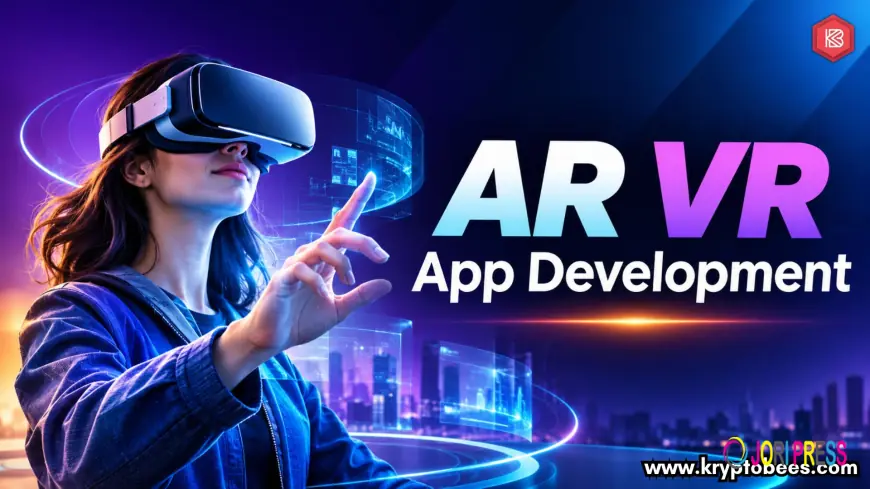
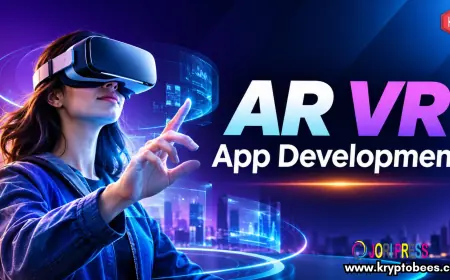
Augmented Reality (AR) and Virtual Reality (VR) are changing how businesses present products, train employees and interact with customers. From virtual product demonstrations to 3D training environments, these technologies offer practical ways to handle tasks that traditionally rely on physical models or in-person experiences. An AR & VR App Development Company works with tools such as spatial tracking, 3D modelling, motion sensors and real-time rendering to build applications that suit different business requirements.
Technologies Behind AR and VR Applications
AR applications overlay digital elements onto real-world surroundings, while VR places users inside computer-generated environments. Both rely on technologies such as 3D engines, camera tracking, spatial mapping, gesture recognition and sensor data. Platforms like Unity and Unreal Engine are commonly used to develop interactive scenes, manage rendering and support device-specific functions.
Business Applications Across Industries
Retail businesses use AR to let customers preview furniture, accessories or other products in their surroundings. Manufacturing teams can use AR instructions during equipment maintenance, while VR simulations support employee training without requiring access to actual machinery. Educational institutions, real estate firms and healthcare organisations also use these applications for visual learning, demonstrations and simulation-based activities.
Development Services and Integration
Businesses exploring AR & VR App Development Services may require custom 3D assets, interactive interfaces, virtual simulations or product visualisation features. Applications can also connect with existing business systems, product catalogues and databases, depending on their purpose. The development scope generally depends on the intended users, devices and functionality.
Device Compatibility and Performance
An AR/VR Development Company must consider hardware limitations, tracking accuracy, frame rates and application responsiveness. AR applications may run on smartphones, tablets or specialised headsets, while VR applications often depend on dedicated headsets and controllers. Testing across supported devices helps identify rendering issues, navigation problems and performance limitations.
Business Considerations
Businesses should evaluate development costs, hardware requirements, maintenance, content updates and user accessibility before adopting AR or VR. A clear use case and realistic technical requirements can help avoid unnecessary development complexity.
Conclusion
AR and VR applications are finding practical uses across retail, training, manufacturing, education and other industries. Choosing suitable technology, devices and application features helps businesses build solutions that address specific operational or customer needs.
Contact us for more information:
Phone No : +91 6381548050
What's Your Reaction?
 Like
0
 Dislike
0
 Love
0
 Funny
0
 Angry
0
 Sad
0
 Wow
0