






































Beyond the Statute Books: Uganda Moves to Target Financiers Behind Environmental Crime

KAMPALA, Uganda — Despite possessing some of the toughest environmental legislation in the region—including penalties of up to life imprisonment for severe wildlife offences—Uganda is struggling to stop the rapid destruction of its forests, wetlands, and wildlife.
Now, the country’s justice system is shifting its focus from arresting low-level offenders to dismantling the organized criminal networks funding the plunder.
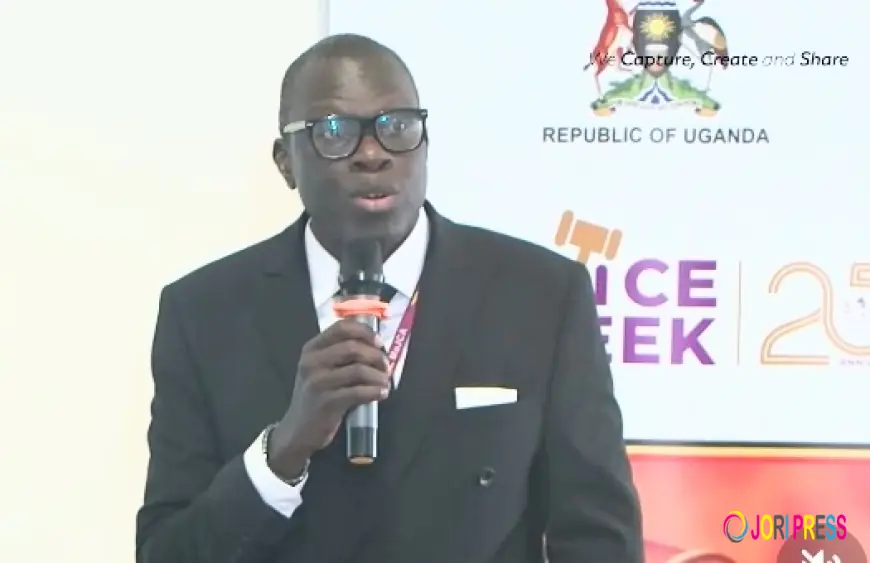
During a high-level technical dialogue in Kampala on Thursday, organized by the Justice, Law and Order Sector (JLOS) Secretariat as part of Justice Week 2026, judges, prosecutors, police, regulators, and conservationists confronted a stark reality: laws on paper are failing to protect nature on the ground.
"Our ultimate objective must be to ensure that environmental laws are not merely present in our statute books but are translated into meaningful protection of our environment and natural resources," said the Attorney General, in a keynote address delivered by Deputy Solicitor General Mr. Ouma Charles.
Organised Crime, Not Petty Offences:
Between 1990 and 2015, Uganda lost nearly two-thirds of its forest cover, dropping from 24% of the country’s land area to just 9%, according to the National Environment Management Authority (NEMA). While forest cover has slightly rebounded to 13%, roughly a third of the nation’s wetlands—11,305 square kilometers—remain degraded.
The Attorney General warned that this destruction is no longer driven merely by subsistence needs, but by lucrative, organized syndicates.
"Environmental crimes should therefore not be viewed as minor regulatory breaches or isolated incidents," he stated. "They constitute serious threats to national development, public interest, economic stability and the rule of law."
Participants at the dialogue identified five systemic bottlenecks crippling enforcement: low detection rates, sluggish court processes, a shortage of forensic and scientific experts, poor inter-agency coordination, and an inability to trace crimes back to their financial backers. As officials noted during the meeting, arresting the man holding a chainsaw is easy; catching the person who paid for the truck is far harder.
Putting a Price on Standing Trees:
To close these gaps, justice institutions are being urged to invest heavily in forensic science, cross-border intelligence, and financial tracking. However, conservation leaders emphasized that policing alone will not save Uganda’s ecosystems unless local communities see tangible financial benefits from conservation.
Ms. Pauline Nantongo Kalunda, Executive Director of the Environmental Conservation Trust of Uganda (ECOTRUST), shared insights from 27 years of grassroots work. ECOTRUST currently partners with 84,752 farmers across 107,161 hectares, having paid more than US$10.8 million directly to rural households to protect and restore land. When communities earn an income from standing trees, she noted, they actively patrol their areas, settle disputes early, and report illegal loggers.
High Economic Stakes:
Protecting Uganda’s natural heritage is directly tied to its economic survival. In 2025, tourism generated UGX 5.8 trillion (approximately US$1.62 billion) from 1.64 million international visitors—revenue entirely dependent on intact landscapes and wildlife.
Furthermore, Uganda’s Tenfold Growth Strategy aims to expand the economy from US$50 billion to US$500 billion by 2040 through agro-industrialisation, tourism, and minerals—all sectors reliant on land and water.
Mr. Robert Kasande, Permanent Secretary of the Ministry of Justice and Constitutional Affairs, described protecting natural capital as "a national development priority and a shared obligation to present and future generations," adding that the US$500 billion target places "a greater responsibility to strengthen the capacity of our institutions to prevent violations, enforce compliance, investigate offences, [and] prosecute offenders."
A Unified Front:
Closing the dialogue, Lady Justice Gladys Kamasanyu stressed that the judiciary cannot deliver environmental justice in isolation, noting that investigation, forensic evidence, prosecution, and enforcement must function as a single, unbroken chain.
"Let us leave this dialogue with a renewed commitment to ensuring that environmental and wildlife crimes are not ignored, the rule of law is upheld and Uganda's natural heritage is protected for the benefit of present and future generations," she said.
The JLOS Secretariat will now translate the dialogue's resolutions into a binding action framework—one that prioritizes following the money, integrating science into the courtroom, and making ecological restoration a mandatory outcome of justice.
What's Your Reaction?
 Like
0
 Dislike
0
 Love
0
 Funny
0
 Angry
0
 Sad
0
 Wow
0