

























OEM vs ODM vs OBM: What Every Indian Manufacturer Needs to Know Before Choosing a Model
Learn the difference between OEM, ODM, and OBM manufacturing models. Discover their benefits, key differences, and how to choose the right model for your business in India.
If you're planning to manufacture a product, one of the first decisions you'll make is choosing the right manufacturing model. You may come across terms like OEM, ODM, and OBM. While they sound similar, they represent three different ways of designing, manufacturing, and selling products.
Choosing the right model can affect your production cost, product quality, time to market, and even your long-term business growth. Whether you're a startup launching a new product, an established brand looking for a manufacturing partner, or an Indian manufacturer exploring new opportunities, understanding these models is important.
In this guide, we'll explain OEM, ODM, and OBM in simple terms, highlight the key differences, and help you decide which model best suits your business.
What Do OEM, ODM, and OBM Mean?
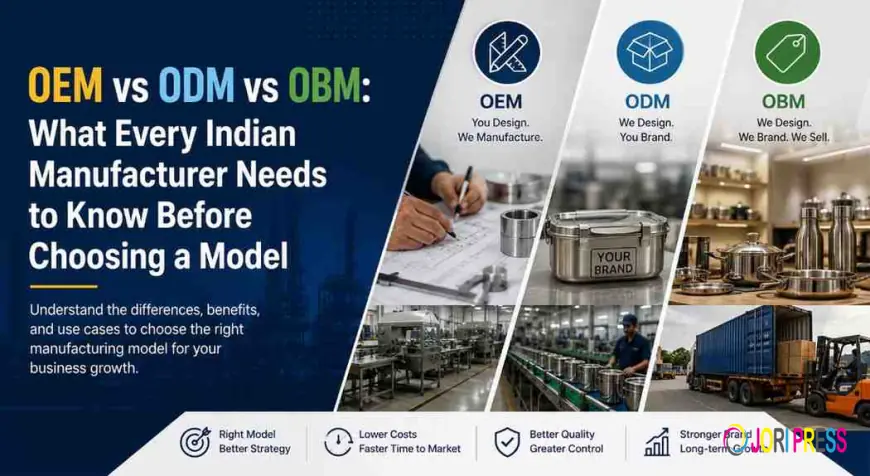
OEM stands for Original Equipment Manufacturer. In this model, the customer provides the product design and specifications, while the manufacturer produces the product according to those requirements.
ODM stands for Original Design Manufacturer. Here, the manufacturer already has a product design. The customer selects that design and may make small changes, such as adding a logo, changing the color, or updating the packaging.
OBM stands for Original Brand Manufacturer. In this model, the manufacturer designs, manufactures, markets, and sells products under its own brand name.
Although all three involve manufacturing, the biggest difference lies in who owns the product design and the brand.
What Is OEM Manufacturing?
OEM manufacturing is one of the most common business models in industries such as automotive, electronics, appliances, and stainless steel products.
In an OEM arrangement, the customer has complete control over the product. They decide the design, dimensions, materials, features, and branding. The manufacturer focuses on producing the product according to those specifications.
For example, a company wants to launch a premium stainless steel kitchen sink under its own brand. It creates the product design and shares all technical details with the manufacturer. The manufacturer produces the sink exactly as requested, and the final product carries the customer's brand name.
Benefits of OEM Manufacturing
OEM manufacturing offers complete product customization. Businesses can create unique products that stand out in the market.
It also helps companies maintain ownership of their designs and intellectual property. Since the products are made according to specific requirements, brands have greater control over quality and product performance.
Many businesses choose OEM because it allows them to focus on product development, sales, and marketing while leaving manufacturing to experienced production partners.
Challenges of OEM Manufacturing
OEM products usually require more planning and development. Creating new designs, testing prototypes, and approving samples can take time.
The initial investment is often higher because custom tooling, product development, and testing may be required.
However, for businesses that want complete control over their products and brand, these investments often pay off in the long run.
What Is ODM Manufacturing?
ODM manufacturing is suitable for businesses that want to launch products quickly without creating designs from scratch.
In this model, the manufacturer already has ready-to-produce product designs. Customers choose one of these designs and make limited changes before production begins.
These changes may include adding a company logo, selecting different finishes, changing colors, or using custom packaging.
For example, a retailer wants to sell stainless steel storage containers under its own brand. Instead of designing a new product, it selects an existing design offered by the manufacturer and customizes the branding.
Benefits of ODM Manufacturing
ODM reduces product development time because the design work is already complete.
It also lowers development costs since businesses do not need to invest in product design or engineering.
This model is often suitable for startups, small businesses, or companies testing a new product category.
Challenges of ODM Manufacturing
The biggest limitation is that the product may not be completely unique. Other companies may choose the same design and sell similar products under different brand names.
Businesses also have less flexibility when it comes to changing product features.
What Is OBM Manufacturing?
OBM is different from OEM and ODM because the manufacturer owns everything—from the product design to the brand itself.
The manufacturer develops products, builds its own brand, markets them, and sells them directly to customers or distributors.
Instead of producing products for other companies, an OBM business focuses on growing its own brand in the market.
Many successful manufacturing companies begin as OEM suppliers. As they gain experience and understand customer needs, some gradually launch their own branded products and move toward the OBM model.
What Is the Main Difference Between OEM, ODM, and OBM?
The main difference lies in ownership and responsibility.
In OEM manufacturing, the customer owns the product design and brand, while the manufacturer only produces the product.
In ODM manufacturing, the manufacturer owns the product design, but the customer sells it under their own brand after making minor customizations.
In OBM manufacturing, the manufacturer owns both the design and the brand and sells products directly to the market.
Understanding this difference helps businesses choose the right approach based on their goals, budget, and market strategy.
How to Choose the Right Manufacturing Model
There is no single model that works for every business. The right choice depends on what you want to achieve.
Choose OEM if you want complete control over your product, plan to build a unique brand, or have your own product designs. OEM is also a good choice for businesses that want long-term product differentiation.
Choose ODM if you want to launch products quickly, have a limited budget, or do not have an in-house product design team. It is also useful for businesses testing market demand before investing in custom product development.
Choose OBM if you are a manufacturer planning to build your own brand and sell products directly to customers. This model requires investment in marketing, sales, and brand building but offers greater control over the business.
Which Manufacturing Model Is Best for Indian Manufacturers?
India has become one of the world's fastest-growing manufacturing hubs. Government initiatives such as Make in India, improving infrastructure, and a skilled workforce have made the country an attractive destination for global sourcing.
For many Indian manufacturers, OEM remains the most practical and profitable model. It allows them to work with domestic and international brands while focusing on manufacturing quality and operational efficiency.
At the same time, some manufacturers also offer ODM services to customers looking for faster product development.
As companies grow and gain market experience, they may introduce their own branded products and gradually move toward the OBM model.
Rather than choosing only one model, many successful manufacturers use a combination of OEM, ODM, and OBM depending on customer needs and business opportunities.
Common Mistakes Businesses Make
One common mistake is choosing a manufacturing model based only on cost. While price is important, factors such as product quality, reliability, and long-term partnership matter even more.
Another mistake is not understanding who owns the product design. Businesses should always clarify intellectual property rights before starting production.
Some companies also underestimate the importance of quality control. Even with the best design, poor manufacturing can affect customer satisfaction and brand reputation.
Finally, many businesses choose a manufacturing partner without checking their production capabilities, certifications, delivery performance, or experience in handling similar products.
Why Choosing the Right Manufacturing Partner Matters
The manufacturing model is only one part of the decision. The success of your product also depends on choosing the right manufacturing partner.
A reliable manufacturer offers consistent quality, follows industry standards, maintains strong quality control processes, and delivers products on time.
An experienced manufacturing partner can also provide valuable support during product development, suggest better manufacturing methods, and help reduce production costs without compromising quality.
Strong communication, transparency, and long-term collaboration are equally important for building a successful business relationship.
How Jindal Lifestyle Supports OEM Manufacturing
Jindal Lifestyle works with businesses looking for high-quality stainless steel manufacturing solutions. Backed by the manufacturing expertise of the Jindal Stainless ecosystem, the company supports customers with precision manufacturing and reliable production capabilities.
Its expertise covers products for mobility, infrastructure, home and lifestyle applications, and other stainless steel solutions.
By combining modern manufacturing processes with strict quality standards, Jindal Lifestyle helps businesses develop products that meet customer expectations while maintaining consistency across every production batch.
For brands looking for a trusted OEM manufacturing partner in India, working with an experienced manufacturer can help improve product quality, reduce production risks, and support long-term business growth.
Conclusion
OEM, ODM, and OBM are three different manufacturing models, and each serves a different business need.
OEM is ideal for companies that want complete control over product design and branding.
ODM is suitable for businesses that want to launch products quickly with lower development costs.
OBM is the right choice for manufacturers looking to build and grow their own brand.
Before choosing any model, consider your business goals, budget, product strategy, and long-term plans. More importantly, choose a manufacturing partner with the experience, technology, and commitment to quality needed to support your growth.
By understanding these manufacturing models and making informed decisions, businesses can build stronger products, create better customer experiences, and achieve sustainable success in today's competitive market.
What's Your Reaction?
 Like
0
Like
0
 Dislike
0
Dislike
0
 Love
0
Love
0
 Funny
0
Funny
0
 Angry
0
Angry
0
 Sad
0
Sad
0
 Wow
0
Wow
0