





























Nonwoven Making Machine: A Complete Guide to Modern Fabric Manufacturing
Discover how a Nonwoven Making Machine transforms modern fabric manufacturing with advanced automation, high efficiency, consistent quality, and cost-effective production solutions.

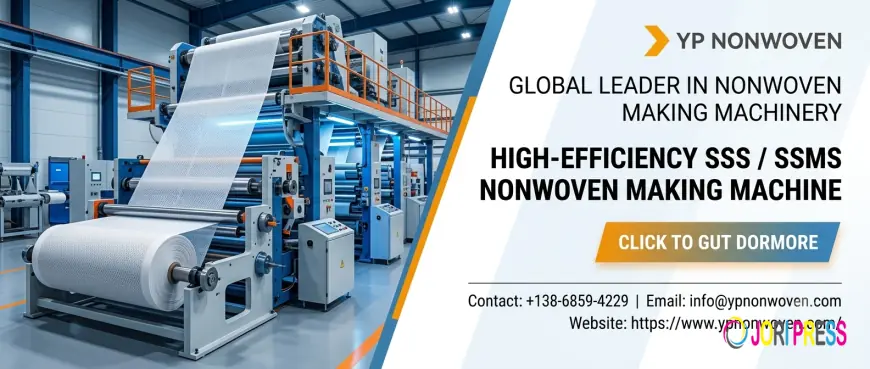
The demand for high-quality nonwoven fabrics continues to grow across industries such as healthcare, agriculture, packaging, hygiene, automotive, and construction. A nonwoven making machine plays a critical role in producing durable, lightweight, and cost-effective fabrics without traditional weaving or knitting. As manufacturers seek higher productivity and consistent quality, investing in advanced machinery has become essential.
YPNonwoven specializes in developing reliable nonwoven production solutions that help manufacturers improve efficiency while maintaining premium fabric quality.
What Is a Nonwoven Making Machine?
A nonwoven making machine is an industrial production system that converts polypropylene (PP) or other polymer materials into nonwoven fabrics through extrusion, spinning, web formation, and bonding processes. Unlike woven textiles, nonwoven fabrics are created by bonding fibers together using heat, pressure, or chemical methods.
These machines are widely used to manufacture products including:
-
Medical masks and surgical gowns
-
Shopping and packaging bags
-
Agricultural crop covers
-
Furniture upholstery
-
Hygiene products
-
Geotextiles
-
Industrial filtration materials
How Does a Nonwoven Making Machine Work?
The manufacturing process follows several precise stages:
|
Process Stage |
Function |
|
Raw Material Feeding |
PP granules enter the extrusion system. |
|
Melt Extrusion |
Polymer is melted under controlled temperature. |
|
Filament Spinning |
Continuous fibers are produced. |
|
Web Formation |
Fibers are evenly distributed into a fabric web. |
|
Thermal Bonding |
Heat bonds fibers together for strength. |
|
Winding & Cutting |
Finished fabric is rolled for storage or further processing. |
Each stage directly influences the fabric's strength, softness, weight, and uniformity.
Benefits of Modern Nonwoven Making Machines
Advanced production lines deliver significant advantages over conventional manufacturing systems.
|
Feature |
Benefit |
|
High-speed production |
Increased daily output |
|
Automatic control |
Reduced labor costs |
|
Stable fabric quality |
Lower rejection rates |
|
Energy-efficient design |
Reduced operating expenses |
|
Intelligent monitoring |
Easier maintenance and troubleshooting |
For example, a hygiene product manufacturer upgrading to an automated line from YPNonwoven can achieve higher production consistency while minimizing material waste and downtime.
Key Features to Look For
When selecting a nonwoven making machine, manufacturers should evaluate more than production speed.
Important considerations include:
-
High production capacity
-
Precise GSM control
-
Uniform fiber distribution
-
Low energy consumption
-
PLC automation system
-
Stable temperature control
-
Easy maintenance access
-
Reliable after-sales technical support
Choosing equipment with these features helps maximize long-term productivity and return on investment.
Industries That Use Nonwoven Fabric
Modern nonwoven fabrics have become indispensable across multiple sectors.
-
Medical and healthcare
-
Personal hygiene
-
Agriculture
-
Furniture manufacturing
-
Automotive interiors
-
Packaging
-
Construction
-
Industrial filtration
Each application requires different fabric specifications, making machine flexibility an important purchasing factor.
Practical Tips Before Buying
A successful investment begins with careful planning.
-
Estimate your target production capacity.
-
Choose machinery that supports future expansion.
-
Verify energy consumption and operating costs.
-
Confirm spare parts availability.
-
Select a manufacturer with experienced technical support.
-
Request production demonstrations before purchase.
These steps reduce operational risks and improve long-term manufacturing performance.
Why Choose YPNonwoven?
With years of engineering expertise, YPNonwoven provides advanced nonwoven making machines designed for efficiency, stability, and continuous production. The company focuses on intelligent automation, durable components, and comprehensive technical support, enabling manufacturers to achieve consistent product quality while lowering production costs.
Whether producing spunbond fabrics for medical, agricultural, or industrial applications, YPNonwoven offers solutions tailored to modern manufacturing requirements.
Frequently Asked Questions
What raw materials are used in a nonwoven making machine?
Most production lines use polypropylene (PP), although PET and other polymers may be processed depending on the application.
How much production capacity can a nonwoven making machine achieve?
Capacity varies according to machine configuration, width, and speed. High-speed automated lines can produce several tons of fabric per day.
Is automation important?
Yes. Automated control systems improve production accuracy, reduce manual intervention, minimize waste, and maintain consistent fabric quality.
Which industries benefit the most?
Healthcare, hygiene, agriculture, automotive, packaging, filtration, and construction industries all rely heavily on nonwoven fabrics for their products.
Final Thoughts
A high-performance nonwoven making machine is more than manufacturing equipment—it's a long-term investment in productivity, product quality, and operational efficiency. By choosing an experienced manufacturer like YPNonwoven, businesses gain access to advanced technology, dependable performance, and professional support that helps them stay competitive in the rapidly growing nonwoven industry.
Contact - 138-6859-4229
What's Your Reaction?
 Like
0
Like
0
 Dislike
0
Dislike
0
 Love
0
Love
0
 Funny
0
Funny
0
 Angry
0
Angry
0
 Sad
0
Sad
0
 Wow
0
Wow
0