







































Why Choose MTO Approved Driving Schools Brampton for Driving Lessons?
Learn why MTO Approved Driving Schools Brampton are a smart choice for structured training, defensive driving, road-test preparation, and safe driving skills.

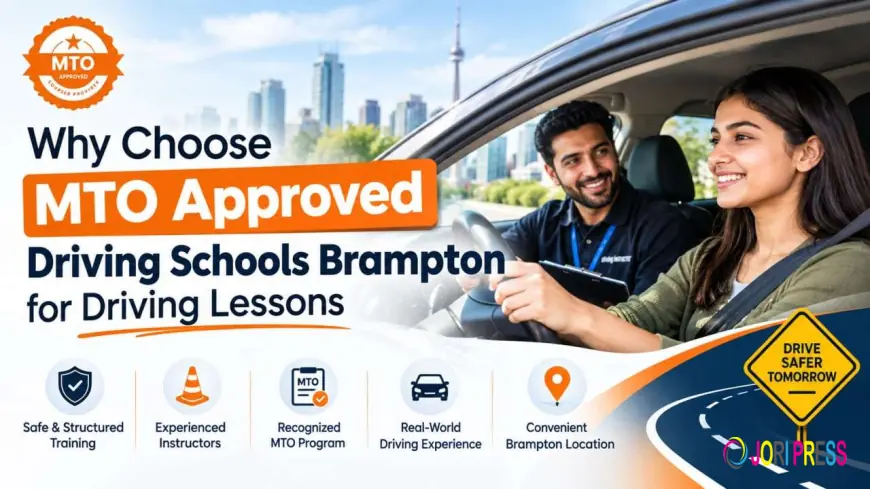
Learning to drive is an important milestone, but choosing the right driving school can significantly influence the quality of your training. For new and experienced learners in Brampton, selecting MTO Approved Driving Schools Brampton can provide a more structured approach to learning safe, responsible, and practical driving skills.
An MTO-approved school follows requirements established by Ontario’s Ministry of Transportation (MTO), making approval an important factor to consider when comparing driving schools. However, approval alone should not be the only consideration. Students should also evaluate instructor quality, lesson structure, vehicle condition, scheduling, course content, and how well the training matches their individual needs.
Whether you are preparing for your G2 or G road test, beginning your first lesson, or looking to improve your confidence behind the wheel, understanding what an approved driving school offers can help you make a more informed decision.
What Does MTO Approved Mean?
MTO approval indicates that a driving school has met applicable requirements established by Ontario's Ministry of Transportation for an approved driver education program.
For learners, this distinction matters because not every person or organization offering driving instruction necessarily provides the same type of recognized driver education.
An approved program can provide structured instruction covering areas such as:
-
Basic vehicle control
-
Traffic laws and road signs
-
Defensive driving
-
Hazard awareness
-
Safe lane changing
-
Intersections and right-of-way
-
Highway driving
-
Parking and reversing
-
Road-test preparation
-
Responsible driving habits
Before registering, learners should verify the school's current approval status and ask exactly what its course includes.
1. Structured Training for New Drivers
One of the biggest advantages of choosing MTO Approved Driving Schools Brampton is having access to organized driver education rather than relying entirely on informal practice.
A structured course generally progresses from fundamental skills toward more complicated driving situations. A beginner may first learn steering, braking, acceleration, mirror use, and vehicle positioning before moving into traffic-heavy roads, intersections, multi-lane roads, and highways.
This progression can make learning easier because students develop skills in stages instead of being introduced to difficult situations before they are ready.
For beginners, Driving Lessons for Beginners should focus not only on passing a test but also on developing habits that remain useful after obtaining a licence.
2. Learn More Than Just How to Pass a Road Test
Passing a road test is an important goal, but safe driving requires considerably more than memorizing a test route.
A quality driving program should teach learners how to make decisions in changing road conditions. For example, students may need to understand how to respond when:
-
A vehicle suddenly changes lanes
-
A pedestrian approaches a crossing
-
Traffic becomes congested
-
Weather reduces visibility
-
Another driver follows too closely
-
A cyclist enters the roadway
-
An emergency vehicle approaches
-
A highway entrance becomes busy
These situations require observation, judgment, communication, and anticipation.
The goal of effective driver education is therefore to develop safe driving habits, not simply temporary techniques for an examination.
3. Professional Instruction Can Improve Driving Confidence
Many new drivers understand traffic rules but feel nervous when they are actually behind the wheel. This is common, particularly when learners move from quiet residential streets to busier Brampton roads.
Professional instruction can provide controlled exposure to progressively challenging situations.
For example, an instructor may introduce:
-
Vehicle controls and basic movements
-
Residential streets
-
Intersections and turns
-
Lane changes
-
Parking techniques
-
Busier urban roads
-
Highway driving
-
More complex traffic situations
-
Mock-test situations
This gradual approach can help learners identify weaknesses and work on them before attempting their road test.
A school such as gta smart drivers can be considered as part of a learner's comparison process, particularly when evaluating lesson structure, instructor support, scheduling, and the type of practical training offered.
4. Defensive Driving Skills Matter
A major part of responsible driver education is defensive driving.
Defensive driving means actively identifying potential hazards and making decisions that reduce the likelihood of a collision. It is not simply about driving slowly.
Important defensive-driving habits include:
-
Maintaining a safe following distance
-
Regularly checking mirrors
-
Scanning intersections before entering
-
Watching for pedestrians and cyclists
-
Anticipating mistakes by other road users
-
Adjusting speed to road and weather conditions
-
Avoiding distractions
-
Understanding blind spots
-
Leaving an appropriate escape space
These skills are especially valuable because drivers cannot control what other road users do. They can, however, control their own speed, attention, positioning, and response.
5. Preparation for Brampton Driving Conditions
Brampton offers a mixture of residential streets, major roads, commercial areas, intersections, and highway connections. Learners therefore benefit from experience across different types of driving environments.
When comparing MTO Approved Driving Schools Brampton, ask whether practical lessons cover a variety of road conditions rather than repeatedly practicing on only one quiet route.
Useful training can include:
Urban driving:
Learners practice traffic lights, intersections, pedestrians, lane changes, and busy roads.
Residential driving:
Students develop vehicle control, speed management, turns, parking, and observation skills.
Highway driving:
Learners can develop skills such as merging, maintaining appropriate speed, lane positioning, and checking blind spots.
Road-test preparation:
Students can practice the skills and procedures relevant to their licence level.
The objective should be to prepare learners for real-world driving, not only one familiar road.
6. Better Understanding of Ontario Road Rules
Driver education also gives learners an opportunity to understand Ontario's traffic laws and their practical application.
Topics may include speed limits, right-of-way, traffic signs, traffic signals, school zones, pedestrian crossings, safe following distances, lane usage, parking rules, and distracted driving laws.
Learners should use authoritative Ontario resources to confirm current rules because regulations and testing procedures can change.
Understanding why a rule exists can also be more valuable than memorizing it. For example, maintaining a safe following distance gives a driver additional reaction time if traffic suddenly stops.
7. Instructor Feedback Helps Identify Mistakes
One benefit of professional lessons is immediate feedback.
A learner may not realize that they:
-
Check mirrors too late
-
Brake too sharply
-
Turn too quickly
-
Drive too close to another vehicle
-
Forget shoulder checks
-
Enter intersections without adequate observation
-
Maintain inconsistent speed
-
Position the vehicle incorrectly
An instructor can identify these patterns and explain how to correct them.
This is particularly useful because practicing an incorrect technique repeatedly can make the habit harder to change later.
When researching MTO Approved Driving Schools Brampton, ask how instructors evaluate student progress and whether lessons are adapted according to individual strengths and weaknesses.
8. Choosing the Right School: What Should You Check?
MTO approval is an important starting point, but learners should compare several practical factors before enrolling.
Instructor Experience
Ask about instructor qualifications, teaching experience, and their approach to beginner drivers.
Lesson Structure
Find out whether lessons follow a clear progression and whether instructors provide feedback after each session.
Vehicle Condition
Training vehicles should be properly maintained and suitable for learner instruction.
Scheduling
Flexible scheduling can make it easier to maintain consistent practice, especially for students balancing school, work, or other responsibilities.
Course Details
Ask what is included in the program, how much in-car and classroom instruction is provided, and whether the course meets your specific licensing needs.
Cost Transparency
Compare the total price rather than looking only at the advertised hourly rate. Ask about registration fees, additional lessons, cancellation policies, and other charges.
9. How Many Driving Lessons Do You Need?
There is no universal number of lessons that guarantees a learner will be ready for a road test.
Driving ability develops differently from person to person. Previous experience, confidence, coordination, traffic exposure, and practice frequency all affect progress.
A learner who practices consistently between professional lessons may progress differently from someone who drives only during weekly lessons.
Instead of asking only, “How many lessons do I need?”, ask:
“Can I consistently demonstrate the skills required for safe independent driving?”
A good instructor should be able to identify areas requiring additional practice and explain what the learner should work on next.
10. Why GTA Smart Drivers Can Be Part of Your Comparison
When comparing local driver-training options, gta smart drivers is one provider learners can research alongside other schools.
The important step is to compare practical factors rather than selecting a school based solely on branding. Look at the available programs, instructor approach, lesson scheduling, vehicle options, training areas, pricing, and student support.
For a learner, the best driving school is one whose training approach matches their experience level and helps them develop reliable skills for both the road test and everyday driving.
What Should You Do Before Your First Lesson?
You can make your lessons more productive by preparing in advance.
Before your first lesson:
-
Review basic Ontario road signs.
-
Bring the appropriate licence documentation.
-
Wear comfortable footwear.
-
Ask questions whenever an instruction is unclear.
-
Pay attention to instructor feedback.
-
Practice recommended skills between lessons when legally permitted.
-
Keep track of areas where you need improvement.
-
Avoid distractions before and during lessons.
Consistency is particularly important. Regular practice helps reinforce vehicle-control and observation skills.
Frequently Asked Questions
1. What are MTO Approved Driving Schools Brampton?
MTO Approved Driving Schools Brampton are driving schools that offer approved driver education programs meeting applicable Ontario Ministry of Transportation requirements. Learners should verify the school's current approval status and course details before registering.
2. Are MTO-approved driving schools better for beginners?
They can be a strong option for beginners because approved driver education programs provide structured training. However, students should also evaluate instructor quality, practical lesson content, vehicle condition, scheduling, and student support.
3. How do I choose the best driving school in Brampton?
Compare MTO approval, instructor qualifications, course structure, lesson availability, vehicle condition, pricing, reviews, and training coverage. Ask whether the school provides experience in different driving environments and adapts lessons to your skill level.
4. Do driving lessons guarantee that I will pass my G2 or G road test?
No. Driving lessons can help you develop the required skills, but no legitimate school can guarantee that you will pass a road test. Your result depends on your preparation and performance on the test day.
5. Why should I consider gta smart drivers for driving lessons?
gta smart drivers can be one option to compare when looking for local driver training. Before enrolling, review its current programs, lesson structure, instructor support, scheduling, pricing, and whether the training meets your specific learning and licensing requirements.
Final Thoughts
Choosing among MTO Approved Driving Schools Brampton is an important decision for anyone learning to drive. MTO approval can provide a useful starting point when evaluating driver education, but the quality of your experience also depends on instructor guidance, practical training, course structure, and consistent practice.
The best approach is to compare schools carefully, ask questions before enrolling, and choose training that focuses on safe driving, hazard awareness, traffic-law knowledge, vehicle control, and real-world decision-making.
Ultimately, the goal should not be simply to pass a road test. It should be to become a driver who can recognize hazards, make responsible decisions, and operate a vehicle confidently and safely on Brampton and Ontario roads.
What's Your Reaction?
 Like
0
Like
0
 Dislike
0
Dislike
0
 Love
0
Love
0
 Funny
0
Funny
0
 Angry
0
Angry
0
 Sad
0
Sad
0
 Wow
0
Wow
0