








































Legal Experts Sound Alarm: Proposed WHO 'Hybrid Model' Threatens Global Pandemic Equity

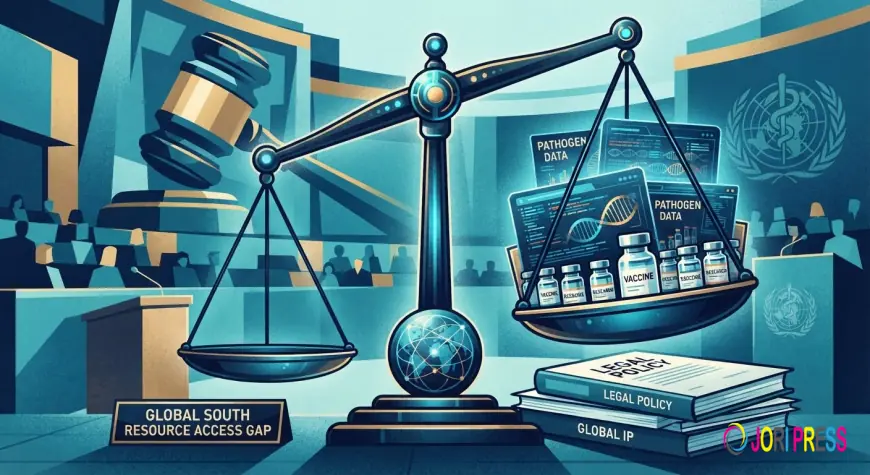
A coalition of international legal experts has warned that a European-backed "hybrid model" currently under negotiation for the World Health Organization (WHO) Pandemic Agreement will severely undermine global health equity and replicate the structural failures of the COVID-19 pandemic.
The warning comes via a joint legal brief circulated by AIDS Healthcare Foundation (AHF) Brasil and the Third World Network (TWN). Signed by 11 prominent legal scholars from around the world, the brief concludes that the proposed Pathogen Access and Benefit-Sharing (PABS) Annex framework directly violates terms already agreed upon by member states under consensus.
The Broken Bargain of Global Health
During the COVID-19 pandemic, developing nations in the Global South rapidly shared critical pathogen samples and genetic sequences with the global scientific community. Despite this cooperation, these same countries were forced to wait months—and in some regions, years—to receive life-saving diagnostics, vaccines, and therapeutics.
The WHO Pandemic Agreement’s PABS system was specifically designed to fix this loop. It establishes a straightforward contract: entities that utilize shared pathogen data must return a fair share of equity to the international community through:
• Direct allocation of manufactured medical products.
• Technology transfers and the sharing of production know-how.
• Financial contributions to fortify global health infrastructure.
However, wealthy nations are aggressively pushing the "hybrid model." Critics argue this framework creates dangerous loopholes, allowing private pharmaceutical corporations to extract valuable biological data immediately while deferring or completely avoiding their benefit-sharing responsibilities.
Four Fatal Flaws Exposed by Legal Experts
The legal brief measures the proposed hybrid model against Article 12 of the Pandemic Agreement—the core pillar governing equity—and identifies four distinct areas where it falls dangerously short:
1. Zero Certainty on Benefits: Article 12 mandates legally secure terms. Under the hybrid model's "green route," users get immediate access with no strings attached. Under the "orange route," users gain access simply by promising to sign an unwritten, undecided contract at a future date.
2. Access and Equity Severed: The consensus text treats access to pathogens and the return of medical benefits as a single, unified transaction. The hybrid model splits them apart, prioritising corporate access over humanitarian returns.
3. Illegitimate Loopholes: While Article 12 allows supplementary rules to strengthen the system, it strictly forbids any annex that dilutes or weakens established baseline obligations.
4. Anonymous Data Hazards: Enforcement requires meticulous traceability. The hybrid model permits anonymous digital sequence access, meaning benefit-sharing obligations cannot be policed, while introducing severe biosecurity and biosafety risks.
“Countries have already agreed on the rules in Article 12. An Annex that does not operationalize equity with accountability is incompatible with what has been agreed. Countries should be quick to reject this damaging proposal.”
— Dr. Jorge Saavedra, Executive Director of the AHF Global Public Health Institute.
Transparency Concerns at the WHO Secretariat
Adding to the controversy, the WHO Secretariat has omitted the legal brief from its official website, failing to post it alongside other public stakeholder comments. A similar critical brief from the South Centre was also left unpublished.
This selective indexing has sparked intense criticism regarding the impartiality and transparency of the ongoing diplomatic negotiations.
"Considering that the process is already marked by its lack of transparency, the Secretariat is certainly not doing itself any favors by selectively excluding valuable analysis from consideration," noted Guilherme Faviero, attorney and stakeholder representative for AHF Brasil.
As negotiations intensify, the authors of the brief are calling on delegates to strip out the unverified "green and orange" pathways. Instead, they urge a return to practical accountability measures: universal user registration, strict digital traceability, and standard, non-negotiable benefit-sharing contracts.
What's Your Reaction?
 Like
0
 Dislike
0
 Love
0
 Funny
0
 Angry
0
 Sad
0
 Wow
0