

































Justice Officials Call for Empathy Toward Survivors to Restore Trust in Criminal Justice System

By Darlington Mabonga
Senior public justice officials have called for greater empathy towards survivors of violence, warning that a lack of trust in the criminal justice system leaves survivors silent as perpetrators walk free.
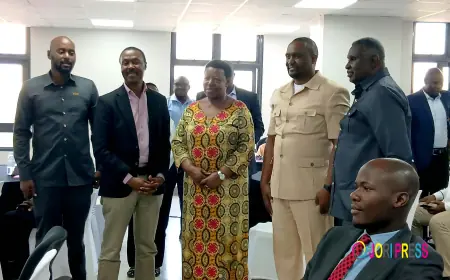
The call was made on April 28, 2026 during the launch of the Kampala Survivor Network chapter, a survivor led platform that brings together women who have experienced gender based violence(GBV) and are now advocating for protection and justice.
Speaking at the event, justice sector leaders shared real-life experiences from courts and communities, illustrating the trauma that survivors face when reporting violence and the urgent need for a compassionate justice system.
“The launch of this chapter is not just about Kampala — it is about scaling survivor leadership in Uganda,” stated Sawiya Lakareber, a survivor.
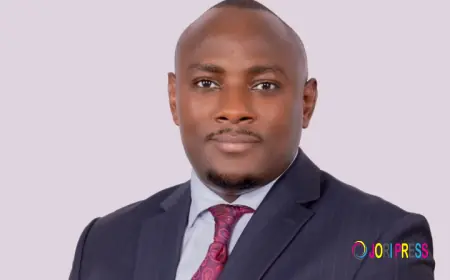
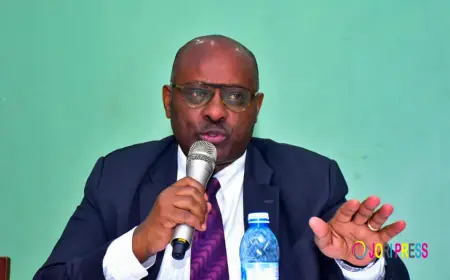
Representing the Office of the Director of Public Prosecutions (ODPP), Chief State Attorney Sherifah Nalwanga urged survivors to speak up and seek redress.
“If you feel that your case is not being handled, please come to the complaints desk and we will handle it,” she said.
Nalwanga highlighted trauma informed approaches being adopted by prosecutors to ensure survivors testify safely and with dignity, including avoiding face to face interaction with perpetrators and creating private spaces for testimony.
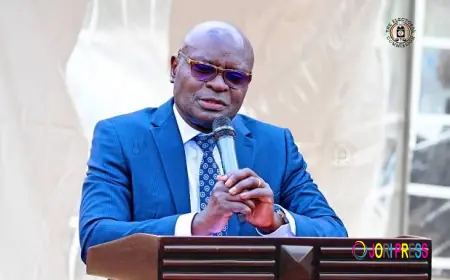
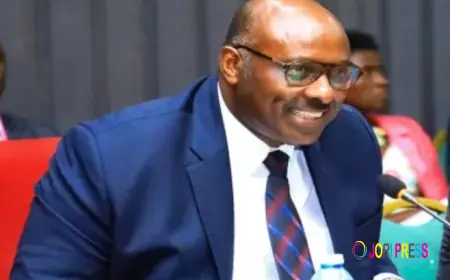
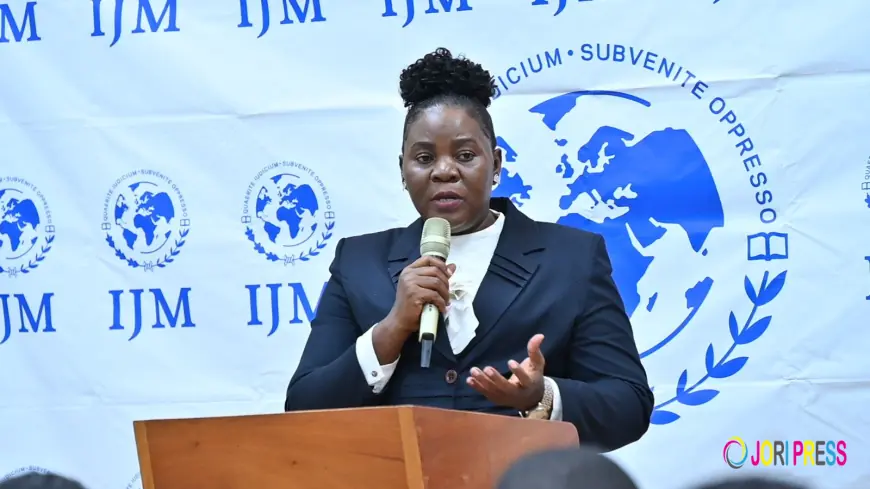
Addressing participants, the Chief Magistrate Naome Sikhoya reflected on recent data showing alarmingly high levels of violence against women and children in Uganda.
The 2024 Baseline Study by IJM Uganda titled, 2024 "Strengthening the Criminal Justice Protection of Women and Children" Baseline study findings shows that that 55% of ever partnered women in Uganda have experienced physical or sexual intimate partner violence, while nearly 59% of children have suffered sexual abuse—mostly by people they know—with girls far more affected than boys.
The Chief Magistrate stated: “When 55 percent of women have experienced violence and 59.6 percent of children face sexual violence, these are not just numbers. These are real people and families. Without trust, survivors remain silent. Without trust, crimes go unreported. Without trust, the justice system loses meaning.”
She stressed the need for empathy in courtrooms, sharing a recent case where proceedings were adjourned because a state attorney had to comfort a survivor who broke down while testifying.
“These are life testimonies. We were all crying,” she said.
The Magistrate added that judiciary was committed to prioritising sexual and gender based violence cases to ensure speedy trials.
“Survivor centred justice means listening without judgment and ensuring privacy. If a woman says she was raped, I will not listen to her in open court. I take her to my chambers. The same applies to children. Survivor-centered justice means, reducing repeated questioning that re traumatises survivors.”
The Senior Superintendent of Police Jackson Mucunguzi echoed the call to view survivors as key partners in ending violence.
“A person who survived the fire knows better how to extinguish it. When survivors rise against violence, Uganda heals,” he said.
He shared a moving account of a woman who suffered a miscarriage, after repeated physical assault by her partner. He noted that survivors often stay silent or choose to withdraw the cases due to family pressure and economic dependency.
“Justice is not silence. Ending violence begins with you and me,” he said.
The Kampala chapter is the fourth Survivor Network in Uganda, following earlier launches in Kasese (Western Region), Gulu (Northern Region), and Tororo (Eastern Region) in 2022. With support from International Justice Mission (IJM),a fifth chapter is scheduled for launch on May 5, 2026, in Karamoja, in north eastern Uganda.
Collectively, the network brings together over 140 survivor leaders advocating for the protection of women and children nationwide. Together, the chapters form the Uganda Survivor Network, also known as “The Voice.”
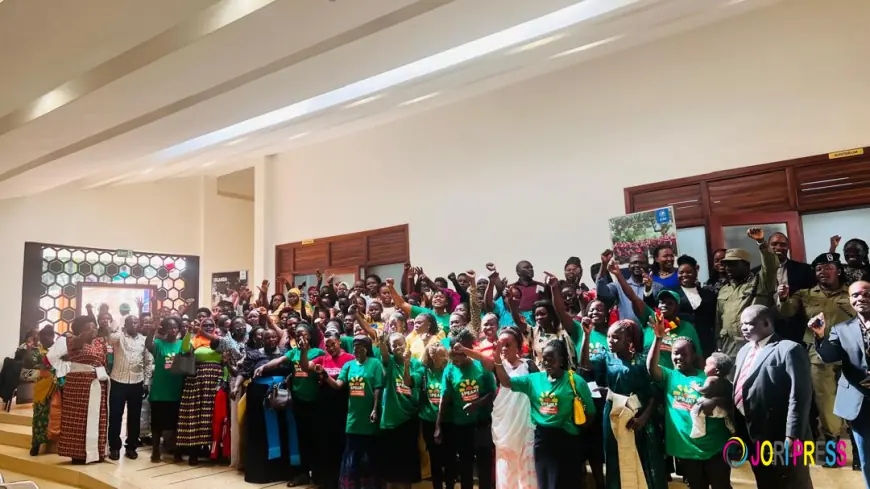
Speaking at the event, IJM Uganda Country Director Wamaitha Kimani reaffirmed the organisation’s commitment to supporting survivor leadership.
“For each one of you, your voice represents your experience. Do not underestimate it. You will advise us on what will truly end violence against women and children,” she said.
What's Your Reaction?
 Like
0
Like
0
 Dislike
0
Dislike
0
 Love
0
Love
0
 Funny
0
Funny
0
 Angry
0
Angry
0
 Sad
0
Sad
0
 Wow
0
Wow
0