







































The Impact of UAE's Net Zero 2050 Goal on the Construction Sector
Learn how UAE's Net Zero 2050 goal is transforming construction with green building solutions, sustainable materials, and new regulations.
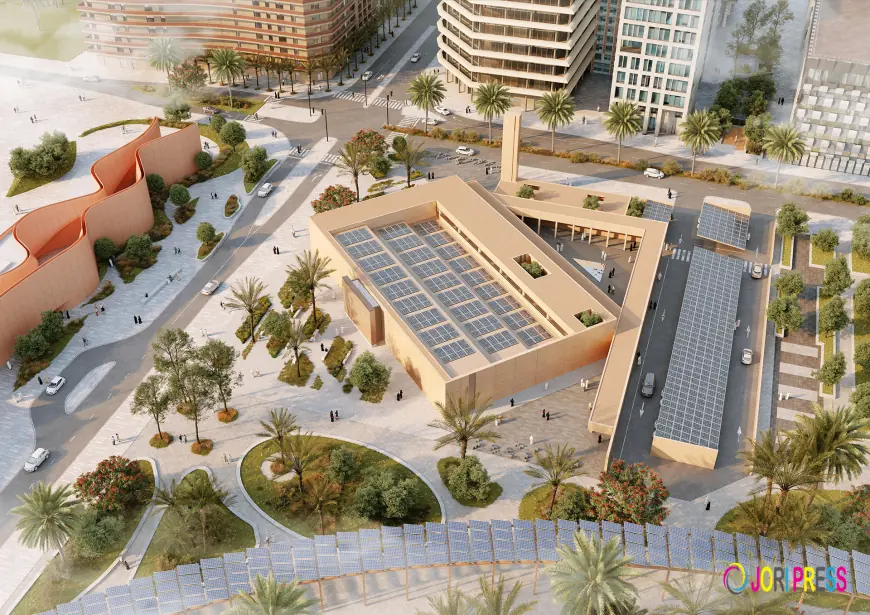
When the UAE announced its Net Zero by 2050 strategic initiative, it sent a clear signal to every industry in the country: business as usual is over. For the construction sector — one of the largest contributors to carbon emissions globally — that signal landed with particular weight.
Buildings account for nearly 40 percent of global energy-related carbon emissions. In the UAE, where extreme temperatures drive massive cooling demand and rapid urbanisation continues at pace, the construction industry's environmental footprint is even more pronounced. Achieving net zero by 2050 without fundamentally transforming how buildings are designed, built, and operated is simply not possible.
That transformation is already underway. And it's changing everything from how contractors bid on projects to what materials get specified to how buildings perform decades after handover.
What Net Zero 2050 Actually Demands from Construction
Net zero doesn't mean reducing emissions slightly or offsetting them through carbon credits alone. It means reaching a point where the total greenhouse gases produced by the built environment are balanced by the amount removed from the atmosphere. For construction, that touches every phase of a building's life.
During construction itself, emissions come from manufacturing materials like cement, steel, and glass — collectively known as embodied carbon. Concrete production alone accounts for roughly eight percent of global CO₂ emissions. Steel manufacturing adds another significant share. Then there's the energy consumed during construction, the diesel burned by heavy equipment, and the waste sent to landfill from demolition and site clearance.
During operation, emissions come from the energy consumed for cooling, heating, lighting, ventilation, and powering equipment. In the UAE, where air conditioning runs for eight to nine months of the year, operational carbon is the dominant contributor for most building types.
The Net Zero 2050 goal forces the industry to address both sides of this equation — reducing embodied carbon in how buildings are made and reducing operational carbon in how they perform. That dual mandate is why the demand for green building contractors and sustainable construction expertise has grown so sharply across the Emirates.
Regulatory Pressure Is Accelerating the Shift
The UAE government hasn't left the transition to market forces alone. A layered regulatory framework is pushing the construction sector toward sustainability at every level.
Dubai's Al Sa'fat green building rating system now classifies all new buildings into sustainability tiers, with minimum requirements that must be met before permits are issued. Abu Dhabi's Estidama Pearl Rating System sets similar benchmarks, with all new projects required to achieve at least a one-pearl rating. Federal energy efficiency standards govern building envelope performance, HVAC specifications, and lighting power density.
Beyond local codes, the UAE's hosting of COP28 in late 2023 put international eyes on the country's climate commitments. That visibility has created additional momentum. Government entities are leading by example — requiring green building solutions for all publicly funded projects and encouraging private developers to pursue internationally recognised certifications like LEED and BREEAM.
For contractors, this regulatory environment means that green building capability is no longer a differentiator. It's a prerequisite. Firms that cannot demonstrate expertise in sustainable construction methods, energy-efficient systems, and environmental compliance are finding themselves excluded from tender lists altogether.
How the Construction Industry Is Responding
The response across the UAE's construction sector has been substantial, though uneven. Leading firms have invested heavily in building their green credentials, while others are still catching up.
Materials and Embodied Carbon
The most forward-thinking green building companies in the UAE are tackling embodied carbon head-on. Low-carbon concrete mixes that replace a portion of Portland cement with supplementary materials like fly ash, slag, or calcined clay are becoming more common on project specifications. Some contractors are piloting carbon-cured concrete, which actually sequesters CO₂ during the curing process.
Steel procurement is shifting too. Contractors are increasingly specifying steel with higher recycled content and sourcing from mills powered by renewable energy. Timber — particularly engineered timber products like cross-laminated timber — is emerging as a viable structural material for mid-rise buildings, offering dramatically lower embodied carbon than concrete or steel alternatives.
Reclaimed and recycled materials are finding their way into mainstream specifications rather than being limited to boutique projects. Recycled aggregates in concrete, reclaimed wood in interior finishes, and recycled metal in structural and decorative applications all contribute to reducing the embodied carbon of new construction.
Energy Performance and Operational Carbon
On the operational side, the shift is even more visible. High-performance building envelopes — insulated wall systems, low-emissivity glazing, thermally broken frames, and continuous insulation details — are becoming standard practice rather than premium upgrades. These passive strategies reduce cooling loads before any mechanical system is even switched on, which is particularly impactful in the UAE's climate.
Advanced HVAC systems with variable refrigerant flow, heat recovery ventilation, and demand-controlled ventilation are replacing older, less efficient technologies. Building management systems that integrate HVAC, lighting, shading, and occupancy sensing allow buildings to respond dynamically to real-time conditions rather than operating on fixed schedules.
Solar energy integration is growing rapidly. Rooftop photovoltaic arrays are now common on commercial and industrial buildings, and building-integrated photovoltaics — solar cells embedded directly into facades and glazing — are moving from experimental installations to commercial availability. Dubai's Shams Dubai initiative, which allows building owners to connect solar panels to the grid and offset their electricity bills, has further accelerated adoption.
District cooling — where chilled water is produced centrally and distributed to multiple buildings — is expanding across new developments, offering significant efficiency gains over individual building cooling plants. For green building contractors working on large-scale projects, designing for district cooling connectivity is now a routine consideration.
Construction Practices and Site Operations
The net zero agenda extends beyond the finished building to how construction itself is conducted. Progressive contractors are reducing site waste through prefabrication and modular construction techniques, which shift work from the field to controlled factory environments where material usage can be optimised and waste minimised.
On-site energy consumption is being addressed through the use of electric and hybrid construction equipment, solar-powered site offices, and energy monitoring systems that track fuel and electricity use in real time. Water management — recycling wash water, capturing rainwater, and using treated greywater for dust suppression — is becoming standard practice on well-managed sites.
Construction waste diversion is another area of focus. The UAE has set ambitious targets for reducing construction and demolition waste sent to landfill, and green building companies are responding with detailed waste management plans that sort, recycle, and repurpose materials on site.
The Economic Case Strengthens Every Year
Five years ago, sustainable construction was often perceived as a cost burden — something that added five to ten percent to project budgets with uncertain returns. That perception has shifted dramatically.
Energy costs in the UAE have risen through tiered tariff structures that penalise high consumption. Buildings that perform poorly now pay materially more for electricity and water than their efficient counterparts. Over a 20-year building lifecycle, the operational savings from green building solutions can far exceed the incremental upfront investment.
Market demand has also shifted. Corporate tenants with ESG commitments actively seek green-certified office space. Residential buyers — particularly in the premium segment — factor sustainability into their purchasing decisions. Green-certified buildings consistently achieve higher occupancy rates, stronger rental yields, and better resale values than comparable conventional buildings.
Financing terms are beginning to reflect this reality. Green bonds, sustainability-linked loans, and preferential mortgage rates for energy-efficient properties are all emerging in the UAE market. Insurance providers are starting to recognise green-certified buildings as lower-risk assets, which further improves the economic equation.
For developers and investors, the math is increasingly clear: buildings designed and constructed to green standards aren't just better for the environment. They're better investments.
The Workforce Challenge
Achieving net zero in construction requires more than new materials and technologies. It requires people who understand how to use them effectively.
The UAE faces a skills gap in sustainable construction. Energy modelling, lifecycle assessment, commissioning, green certification management, and advanced MEP design all require specialised knowledge that isn't yet widespread across the industry's workforce.
Progressive green building contractors are addressing this through internal training programmes, partnerships with certification bodies like the Emirates Green Building Council, and recruitment of internationally experienced professionals. The firms investing in their people today will be the ones capable of delivering the complex, high-performance buildings that Net Zero 2050 demands.
What Comes Next
The trajectory is set. The UAE's Net Zero 2050 commitment isn't a suggestion — it's a national strategy backed by policy, regulation, and investment. For the construction sector, the implications are profound and permanent.
Embodied carbon will move from a secondary concern to a primary design driver. Whole-life carbon assessments will become standard procurement requirements. Digital tools like building information modelling and digital twins will be used not just for coordination but for carbon tracking and performance optimisation. Circular construction principles — designing for disassembly, specifying materials passports, and building reverse supply chains — will transition from theory to practice.
The contractors, developers, and consultants who embrace this shift fully — not as a compliance exercise but as a fundamental rethinking of how buildings are made — will define the next era of construction in the UAE. Those who treat sustainability as an afterthought will find themselves increasingly irrelevant in a market that has moved on.
Net zero by 2050 is 24 years away. In construction terms, that's roughly five to six building lifecycles. Every project that breaks ground between now and then is either part of the solution or part of the problem. The UAE has made its choice. The question for every contractor, developer, and building owner is whether they're ready to make theirs.
What's Your Reaction?
 Like
0
Like
0
 Dislike
0
Dislike
0
 Love
0
Love
0
 Funny
0
Funny
0
 Angry
0
Angry
0
 Sad
0
Sad
0
 Wow
0
Wow
0