










































How XRD Testing Labs Improve Material Analysis in Manufacturing
XRD Testing Labs improve material analysis in manufacturing with accurate crystal structure identification, quality control, and reliable testing services.

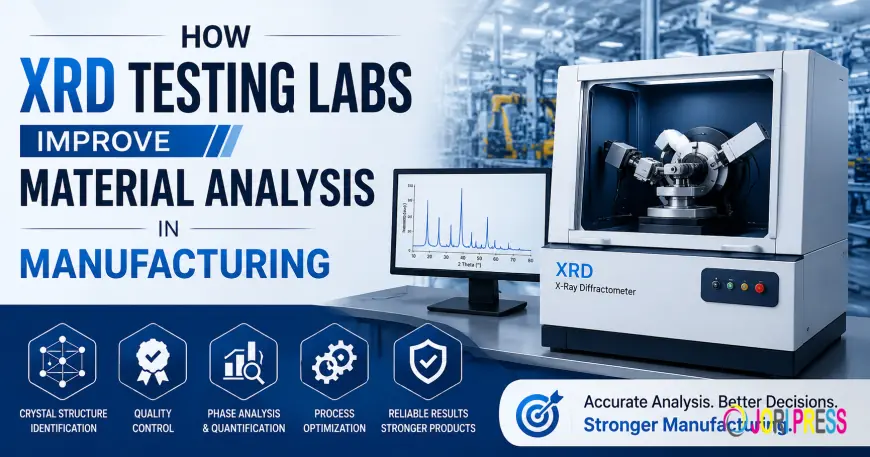
Manufacturing industries rely heavily on accurate material characterization to ensure product quality, performance, and reliability. Whether producing metals, ceramics, semiconductors, pharmaceuticals, or advanced composites, understanding the internal structure of materials is critical for maintaining consistent production standards.
One of the most trusted analytical techniques for material characterization is X-Ray Diffraction (XRD). Professional XRD Testing Labs provide precise insights into crystal structure, phase composition, crystallinity, residual stress, and material purity. These insights help manufacturers optimize production processes, reduce defects, and ensure compliance with industry standards.
What Is XRD Testing?
X-Ray Diffraction (XRD) is a non-destructive analytical technique used to determine the crystalline structure of materials. During testing, X-rays are directed at a sample. As the rays interact with the atomic arrangement, they produce diffraction patterns that reveal valuable information about the material's internal structure.
XRD testing can identify:
-
Crystal phases
-
Material composition
-
Crystallinity
-
Lattice parameters
-
Grain orientation
-
Residual stress
-
Phase transformations
-
Unknown crystalline compounds
Because the technique does not damage the sample, manufacturers can analyze valuable materials without affecting their usability.
Why Material Analysis Is Important in Manufacturing
Material properties directly influence the quality and performance of finished products. Even small variations in crystal structure or composition can lead to:
-
Product failures
-
Reduced durability
-
Poor mechanical strength
-
Manufacturing inconsistencies
-
Increased production costs
-
Customer complaints
Regular material analysis allows manufacturers to detect these issues early, improving product reliability and reducing waste.
How XRD Testing Labs Improve Manufacturing
1. Accurate Phase Identification
Many manufacturing materials contain multiple crystalline phases. XRD testing accurately identifies each phase present within a sample.
This helps manufacturers:
-
Verify raw materials
-
Detect unwanted phases
-
Monitor production consistency
-
Validate heat treatment processes
Accurate phase identification is especially important for steel, ceramics, alloys, and cement production.
2. Raw Material Verification
Poor-quality raw materials can negatively impact the entire manufacturing process.
XRD testing labs verify incoming materials by checking:
-
Chemical phases
-
Mineral composition
-
Material purity
-
Crystal structure
Manufacturers can reject substandard materials before they enter production.
3. Quality Control
Quality control is one of the biggest applications of XRD testing.
Routine testing helps ensure:
-
Consistent production batches
-
Uniform crystal structures
-
Compliance with specifications
-
Stable manufacturing processes
Manufacturers can quickly identify deviations before products reach customers.
4. Failure Analysis
When products fail unexpectedly, XRD testing helps determine the root cause.
Testing labs investigate:
-
Phase changes
-
Material degradation
-
Corrosion products
-
Heat damage
-
Structural defects
These findings allow manufacturers to improve designs and prevent future failures.
5. Heat Treatment Evaluation
Heat treatment changes the crystal structure of metals and alloys.
XRD testing verifies whether processes such as:
-
Annealing
-
Hardening
-
Tempering
-
Quenching
have achieved the desired structural changes.
This ensures products meet mechanical performance requirements.
6. Residual Stress Measurement
Residual stress develops during machining, welding, casting, and forming operations.
Excessive stress can cause:
-
Cracking
-
Distortion
-
Fatigue failure
-
Reduced service life
XRD testing measures residual stress accurately, enabling manufacturers to optimize processing conditions.
7. Process Optimization
Manufacturers continuously improve production efficiency.
XRD analysis helps optimize:
-
Sintering temperatures
-
Cooling rates
-
Chemical reactions
-
Powder processing
-
Additive manufacturing parameters
Better process control results in higher-quality products with fewer defects.
8. Product Development
Research and development teams use XRD to evaluate new materials before commercial production.
Applications include:
-
Advanced ceramics
-
Nanomaterials
-
Composite materials
-
Battery materials
-
Semiconductor materials
-
High-performance alloys
XRD provides valuable data during product innovation.
Industries That Benefit from XRD Testing Labs
Metallurgy
Metal manufacturers use XRD for:
-
Alloy verification
-
Phase identification
-
Heat treatment validation
-
Stress analysis
-
Failure investigations
Pharmaceutical Industry
Pharmaceutical companies analyze:
-
Crystal polymorphs
-
Active pharmaceutical ingredients
-
Drug stability
-
Powder crystallinity
-
Formulation consistency
Accurate crystal analysis ensures drug effectiveness and regulatory compliance.
Cement Industry
XRD testing helps monitor:
-
Clinker composition
-
Cement phases
-
Raw material quality
-
Manufacturing consistency
This improves product strength and durability.
Ceramics Industry
Ceramic manufacturers depend on XRD for:
-
Mineral identification
-
Phase transformations
-
Sintering analysis
-
Quality assurance
Electronics and Semiconductor Industry
XRD supports the production of:
-
Silicon wafers
-
Thin films
-
Electronic ceramics
-
Semiconductor materials
-
Microelectronic devices
Precise crystal analysis improves electronic performance.
Mining and Minerals
Mining companies use XRD for:
-
Ore characterization
-
Mineral identification
-
Exploration studies
-
Process optimization
Automotive Industry
Automotive manufacturers analyze:
-
Engine components
-
Brake materials
-
Lightweight alloys
-
Coatings
-
Structural materials
XRD improves reliability and safety.
Aerospace Industry
Aircraft manufacturers require XRD for:
-
High-strength alloys
-
Titanium components
-
Composite materials
-
Turbine materials
-
Failure analysis
Reliable material characterization ensures safety and performance.
Advantages of Professional XRD Testing Labs
Partnering with an experienced XRD testing lab offers several advantages:
-
Highly accurate crystal structure analysis
-
Non-destructive testing methods
-
Fast and reliable results
-
Expert interpretation of diffraction data
-
Compliance with international testing standards
-
Support for research, development, and quality control
-
Access to advanced XRD instruments and experienced scientists
Professional testing labs also provide customized testing solutions based on industry-specific requirements.
Key Parameters Evaluated by XRD Testing
Professional XRD laboratories typically analyze:
-
Crystal structure
-
Phase composition
-
Crystallinity
-
Lattice constants
-
Grain size
-
Residual stress
-
Preferred orientation (Texture)
-
Phase purity
-
Phase transformation
-
Unknown crystalline materials
These parameters provide manufacturers with comprehensive information about material quality.
Choosing the Right XRD Testing Lab
When selecting an XRD testing laboratory, consider the following factors:
-
Modern XRD instrumentation
-
Experienced technical experts
-
ISO accreditation or relevant quality certifications
-
Quick turnaround time
-
Detailed analytical reports
-
Industry-specific testing expertise
-
Ability to handle diverse material types
-
Strong customer support and consultation
A reliable testing partner ensures accurate, repeatable, and actionable results.
Future of XRD Testing in Manufacturing
As manufacturing technologies continue to evolve, XRD testing is becoming increasingly important. Emerging fields such as additive manufacturing, nanotechnology, advanced batteries, hydrogen energy, and semiconductor fabrication demand precise material characterization.
Advancements in XRD technology, including automated data analysis, high-speed detectors, and in-situ testing capabilities, enable faster and more accurate evaluations. These innovations support smarter manufacturing processes, predictive quality control, and accelerated product development.
Conclusion
XRD testing has become an indispensable tool for modern manufacturing industries. By providing detailed insights into crystal structure, phase composition, residual stress, and material quality, XRD Testing Labs help manufacturers improve product performance, maintain consistent quality, and optimize production processes.
From raw material verification and quality assurance to failure analysis and research, professional XRD testing enables informed decision-making across every stage of manufacturing. Partnering with an experienced XRD testing laboratory not only minimizes production risks but also enhances efficiency, reduces costs, and ensures compliance with industry standards. As manufacturing continues to embrace advanced materials and technologies, XRD testing will remain a cornerstone of reliable material analysis and innovation.
What's Your Reaction?
 Like
0
Like
0
 Dislike
0
Dislike
0
 Love
0
Love
0
 Funny
0
Funny
0
 Angry
0
Angry
0
 Sad
0
Sad
0
 Wow
0
Wow
0