
































How to Choose the Right Cigarette Manufacturer
Learn how to choose the right cigarette manufacturer by evaluating production capacity, quality control, OEM capabilities, compliance, export experience, and packaging solutions. Discover the key factors that help businesses select a reliable manufacturing partner for long-term success.

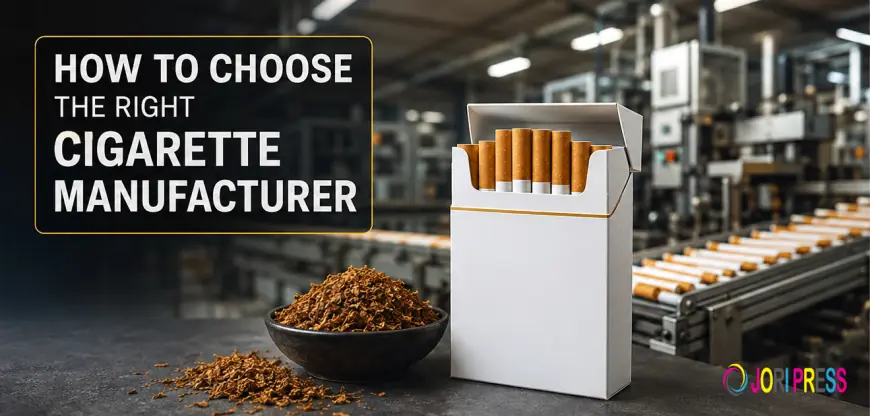
How to Choose the Right Cigarette Manufacturer
Launching or scaling a cigarette brand starts with one decision that shapes everything else: who actually makes the product. Whether you're a distributor entering a new market or a brand owner ready to move from concept to production, the manufacturer you partner with determines your product quality, your lead times, and ultimately whether your brand can be trusted by retailers and regulators alike.
This guide walks through what to actually evaluate when vetting a cigarette manufacturer — not marketing claims, but the operational details that separate a dependable production partner from a risky one.
Why the Choice of Manufacturer Matters More Than It Seems
A cigarette factory isn't just a production line — it's a regulatory, logistical, and quality-control system that has to work correctly every single time. A manufacturer that cuts corners on any one of these fronts can cost a brand owner far more than a bad batch: delayed shipments, failed customs inspections, inconsistent product, or damage to a brand's reputation in a new market are all downstream of picking the wrong partner.
Because the switching cost is high once production has started, it pays to evaluate a manufacturer thoroughly before signing anything.
Key Criteria to Evaluate
1. Licensing and Regulatory Compliance
This is non-negotiable. A legitimate tobacco manufacturer should hold valid manufacturing licenses in its country of operation, be registered with the relevant customs and export authorities, and be able to produce documentation proving compliance with the regulations of your target export markets. Ask for this documentation upfront — a manufacturer that hesitates to share it is a red flag on its own.
2. Production Capacity and Equipment
Ask what machinery the factory runs, its rated production speed, and its realistic monthly output. A cigarette manufacturing company that's vague about capacity numbers, or can't explain how it would scale if your order volume grew, likely doesn't have the operational maturity to be a long-term partner.
3. Understanding OEM, Contract Manufacturing, and Private Label
These terms get used loosely, and misunderstanding them leads to mismatched expectations:
- OEM cigarette manufacturer — produces cigarettes to your exact specifications (blend, format, packaging) under your brand.
- Contract manufacturer — a broader term covering any arrangement where a factory produces on your behalf, often including elements of formulation or sourcing support.
- Private label — the manufacturer offers an existing product or blend that you brand as your own, typically with a lower barrier to entry than a fully custom OEM run.
Know which of these you actually need before you start evaluating partners — it changes the questions you should be asking.
4. Quality Control Standards
A serious manufacturer should be able to walk you through its quality-control process in detail: how it monitors moisture content, weight consistency, filter attachment, paper seam integrity, and pressure drop during production. Ask whether quality checks happen continuously on the line or only at the end of a batch — continuous monitoring catches problems before they become a full run of defective product.
5. Blending and Customization Capability
If you want a distinctive product rather than a generic private-label option, ask what blending flexibility the manufacturer offers — tobacco type, tar and nicotine levels, flavor profile, and how much lead time custom blend development typically takes.
6. Packaging Flexibility
Packaging format (soft pack, flip-top box), finish, and design options vary significantly between manufacturers. Confirm whether the factory handles packaging design and printing in-house or outsources it, since that affects both lead time and quality consistency.
7. Export Experience and Documentation
A manufacturer with genuine export experience should be able to speak specifically to the markets you're targeting — what documentation is required, what the typical customs timeline looks like, and what has gone wrong on past shipments and how it was resolved. Vague, generic answers here usually mean limited real experience.
8. Communication and Lead Times
How responsive is the factory during the sales process? This is often a preview of what working together will actually be like. Ask for realistic lead times from order confirmation to shipment, and be wary of timelines that sound too fast to be credible.
9. Minimum Order Quantities
MOQs vary widely between manufacturers and directly affect how accessible a partnership is for a smaller or first-time brand. Get this number early — it's often the difference between a viable partnership and one that doesn't fit your current scale.
Red Flags to Watch For
- Reluctance to share licensing or compliance documentation
- No clear answer on production capacity or realistic lead times
- Pressure to sign before you've seen samples or a facility walkthrough (in person or via video)
- Pricing that's significantly below market rate with no clear explanation
- No verifiable export track record for your target region
Questions to Ask Before You Sign
- Can you provide your manufacturing license and export registration?
- What is your current production capacity, and how do you handle demand spikes?
- What does your quality-control process look like, batch to batch?
- What blending and customization options are available, and what's the lead time?
- What packaging formats and finishes can you produce in-house?
- Which markets have you exported to, and can you share documentation examples?
- What is your minimum order quantity, and does it scale with repeat orders?
Frequently Asked Questions
What's the difference between a contract manufacturer and an OEM cigarette manufacturer?
Contract manufacturing is the broader umbrella term for any factory producing on your behalf. OEM specifically means the manufacturer builds the product to your exact specifications under your brand name.
How long does it take to launch a product with a new cigarette manufacturer?
This varies by manufacturer and order complexity, but expect a longer timeline for a fully custom OEM blend and packaging than for a private-label option using an existing formulation.
Is a lower minimum order quantity always better?
Not necessarily — a very low MOQ can sometimes signal a factory optimized for small, inconsistent runs rather than one built for reliable scaling. Weigh MOQ against the manufacturer's overall production maturity.
Should I visit the factory before committing?
Where possible, yes. An in-person or video walkthrough of the production line is one of the fastest ways to verify the claims a manufacturer makes during sales conversations.
Final Thoughts
Choosing a cigarette manufacturer is a decision with long-term consequences for product consistency, compliance, and brand reputation. The manufacturers worth partnering with are the ones that answer capacity, compliance, and quality-control questions specifically and without hesitation — vagueness on any of these fronts is worth treating as a warning sign, not a minor gap.
One example of a manufacturer that's transparent about its process from licensing through to export documentation is Orchid Cigarettes Dubai, which operates a contract and private-label manufacturing facility in Jebel Ali Free Zone, UAE, serving brand owners and distributors across multiple export markets.This article is intended for informational purposes for brand owners, distributors, and industry professionals evaluating manufacturing partners. It does not promote or encourage tobacco use. Tobacco products carry significant health risks, and readers should refer to public health guidance regarding those risks.
At Orchid Cigarettes Dubai, we manufacture across every popular format, from King Size to Super Slim and Nano. To discuss a product for your brand or market, get in touch with our team.
Note: This article is intended solely for educational and informational purposes. It does not endorse, encourage, or promote tobacco use. Tobacco use carries significant health risks, and readers should consult public health guidance regarding those risks.
What's Your Reaction?
 Like
0
Like
0
 Dislike
0
Dislike
0
 Love
0
Love
0
 Funny
0
Funny
0
 Angry
0
Angry
0
 Sad
0
Sad
0
 Wow
0
Wow
0