






































How Much Does a Starch Sugar Desalination Plant Cost in 2026?
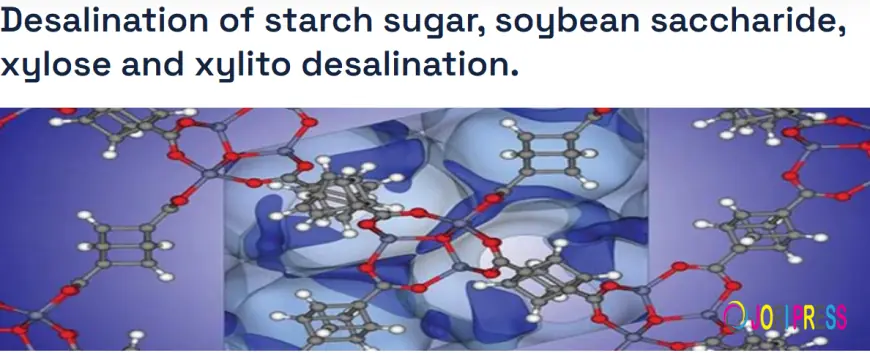
Electrodialysis desalination and desalting of starch sugar, soybean saccharide, xylose and xylitol. Purify sugar streams with efficient ED plants.
Quick Answer (TL;DR): A starch sugar desalination plant cost in 2026 hinges on feed volume, salt load, membrane area, and automation. Prices scale with capacity and target purity, not brand hype. At Laxminarayan Technologies, we size each electrodialysis system to your feed so you pay for real performance.
Straight Talk Before You Sign a Purchase Order
Ask five vendors for a starch sugar desalination plant cost and you'll get five wildly different quotes. Annoying, isn't it? The spread is real because the process is. At Laxminarayan Technologies, we build Electrodialysis (ED) and Bipolar Electrodialysis (EDBM) plants that strip ash and salts from glucose, xylose, and xylitol without scorching the sugar. This guide lays out what actually moves the price in 2026, so procurement managers, process engineers, and pilot-plant leads can budget with clear eyes. No padding. Just the levers that matter, from someone who's watched stacks run well and watched them foul.
What Is Starch Sugar Desalination?
Starch sugar desalination is a membrane process that removes dissolved salts and ash from sugar syrups using an electric field. Cation and anion ion-exchange membranes let ions pass while sugar stays behind. The output is a low-ash, demineralized syrup ready for refining or fermentation.
What Really Drives Starch Sugar Desalination Plant Cost
The starch sugar desalination plant cost is never one clean number. It's a bundle of choices. Some inflate the price. Others quietly pay you back for years. Let's break down the heavy hitters.
Feed Volume and Plant Capacity
More flow means more membrane area. Higher cost. Simple. But it isn't linear. A pilot skid handling a few hundred liters an hour lives in a different price world than a commercial line pushing several cubic meters an hour. We build both, so you don't overpay for capacity you'll never touch.
Salt Load and Target Purity
How salty is your feed? And how clean must the product be? Dropping conductivity from around 20 mS/cm to under 1 mS/cm takes more current, more time, more membrane. Tighter ash targets push the starch sugar desalination plant cost up. That's physics, not markup.
Membrane Type and Stack Design
Cation membranes, anion membranes, and in EDBM, the bipolar membrane. These are the heart of the plant. Membrane chemistry and fouling resistance move the number a lot. Premium membranes cost more upfront. They also hold current efficiency high and last longer, trimming your energy bill every month.
Automation and Controls
Our plants are fully automated and touch-operated. That PLC and HMI stack adds to the sticker. But it cuts labor, tightens repeatability, and flags trouble before it snowballs. Truth is, a manual ED plant looks cheap right up until the third operator slip ruins a batch.
Energy Consumption Over Time
Electrodialysis runs on electricity, measured in kWh per cubic meter of product. Feed conductivity, current density, and stack resistance all feed that figure. According to membrane-science literature, higher current efficiency directly lowers specific energy use. So a well-designed stack keeps operating cost predictable long after commissioning.
Conventional ED or EDBM: Which One Fits Your Budget?
Here's the short version. Conventional ED is your workhorse for straight desalination and demineralization of starch sugar streams. It carries a lower capital cost and does the core job well: clean, low-ash syrup, gentle on the sugar.
EDBM steps in when you want more. It splits salts into acid and base, so you recover reagents from the reject stream instead of buying fresh chemicals. Higher capital cost, yes. But the recovered acid and alkali often claw back a real slice of your operating budget. Different job. Different math.
If your goal is simply cleaner sugar, conventional ED usually wins on cost. If chemical recovery is on the table, EDBM earns its premium.
How an EDBM Stack Splits Salt Into Acid and Base
Curious how bipolar ED reclaims reagents? Here's the sequence, step by step.
Feed the salt solution into the compartments between membrane pairs.
Apply direct current across the electrodes.
The bipolar membrane splits water into hydrogen and hydroxide ions at its junction.
Cations migrate toward the base side, pairing with hydroxide to form alkali.
Anions migrate toward the acid side, pairing with hydrogen to form acid.
Collect three streams: dilute salt, concentrated acid, concentrated base.
That reclaimed acid and base can offset a big chunk of chemical spend. Over a few years, it quietly rewrites your total cost picture.
Challenges and How We Handle Them
No membrane plant runs trouble-free. Anyone claiming otherwise hasn't commissioned enough of them. Here's what goes wrong, and how we design around it.
Membrane Fouling
Organics and colloids build up like grime in a clogged filter. Flux sags. Voltage climbs. We add pretreatment, program automated clean-in-place (CIP) cycles, and pick fouling-resistant membranes so your diluate holds spec longer.
Scaling and Concentration Limits
Push the concentrate too hard and scale forms. Stack voltage starts creeping like a stressed pump near its ceiling. Our controls track conductivity and current live, backing off before minerals drop out.
Current Efficiency Drift
Efficiency can slip over time and drag energy cost up with it. Our touch-operated system logs performance trends, so your team spots drift early and plans maintenance instead of chasing a shutdown.
Getting a Real Number for Your Plant
So what will your starch sugar desalination plant cost in 2026? Honestly, it depends on your feed. We'd rather quote you right than quote you fast. Send us your flow rate, inlet conductivity, target ash, and daily volume. We size a system that fits. Modular, automated, and built for pilot trials or full commercial output.
Wrapping It Up
Budgeting a desalination line isn't about the lowest sticker. It's total cost across the plant's life, where energy, membrane replacement, and recovered chemicals all count. Nail the sizing and the numbers behave. At Laxminarayan Technologies, we design application-tailored ED and EDBM plants that keep your sugar intact and your operating cost honest. Tell us about your feed stream, and we'll help you land on a starch sugar desalination plant cost that genuinely fits your process, whether you start with a pilot or go straight to commercial scale.
FAQs
How much does a starch sugar desalination plant cost in 2026?
It depends mostly on capacity, salt load, and target purity. Larger flows and tighter ash targets need more membrane area and energy, raising the price. Automation and membrane quality also shift it, though better membranes usually lower long-term operating cost.
Is electrodialysis better than ion exchange for sugar desalination?
Often, yes. Electrodialysis removes salts without regenerant chemicals or the large wastewater volumes ion-exchange resins create. It runs continuously, protects heat-sensitive sugars, and keeps ash low. For many starch sugar streams, that means cleaner product and lower chemical spend.
How much energy does an ED plant use per cubic meter?
Energy is measured in kWh per cubic meter and varies with feed conductivity and current density. Higher current efficiency lowers it. A well-designed stack keeps specific energy consumption predictable, which often matters more than the headline capital cost.
Can I start with a pilot plant before buying a full line?
Absolutely. We build pilot-scale skids so you can validate recovery, purity, and energy figures on your real feed first. It's the smartest way to de-risk the investment and confirm your cost model before scaling up.
What's Your Reaction?
 Like
0
Like
0
 Dislike
0
Dislike
0
 Love
0
Love
0
 Funny
0
Funny
0
 Angry
0
Angry
0
 Sad
0
Sad
0
 Wow
0
Wow
0