









































Flavoured Dryfruit Manufacturers: A Look at Modern Processing
Explore how flavoured dry fruits are processed, from raw nut selection and roasting to seasoning, quality checks, cooling, and modern packaging.

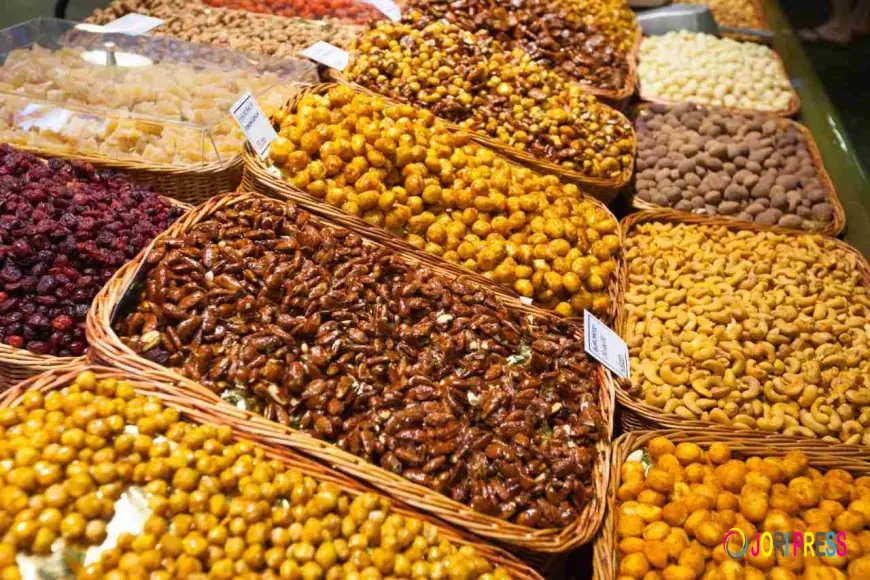
Flavoured dry fruits are no longer limited to a few traditional combinations. Today, consumers can choose from masala cashews, peri-peri almonds, herb-seasoned nuts, roasted flavoured mixes, and many other varieties. But what determines whether a flavoured dry fruit tastes consistent, stays crunchy, and maintains its quality throughout its shelf life?
The answer lies largely in modern processing. For Flavoured Dryfruit Manufacturers, producing a quality product involves much more than adding seasoning to nuts. It requires careful raw-material selection, controlled roasting, flavour formulation, uniform seasoning, cooling, quality checks, and suitable packaging.
Understanding these stages can help retailers, distributors, bulk buyers, and consumers make better decisions when evaluating flavoured dryfruit products.
What Is Modern Flavoured Dryfruit Processing?
Modern flavoured dryfruit processing is a controlled manufacturing process in which nuts are selected, cleaned, graded, roasted, seasoned, cooled, inspected, and packaged using defined procedures.
The objective is to achieve three things: consistent taste, consistent texture, and reliable product quality.
Unlike an informal preparation method where ingredients may be measured differently from batch to batch, commercial processing requires greater control over factors such as raw-material quality, roasting conditions, seasoning quantity, mixing, and packaging.
For Flavoured Dryfruit Manufacturers, this consistency matters because customers expect the same product to deliver a similar taste and texture every time they purchase it.
How Do Flavoured Dryfruit Manufacturers Process Nuts?
Although individual processes differ according to the product and facility, modern flavoured dryfruit production generally follows these stages:
1. Raw Nut Selection
The first and arguably most important stage is selecting the right raw material.
Cashews, almonds, pistachios, walnuts, and other nuts can vary in size, grade, moisture, colour, texture, and natural flavour. These differences can directly influence the finished product.
Manufacturers therefore evaluate factors such as:
-
Nut variety and grade
-
Size and uniformity
-
Freshness
-
Physical appearance
-
Texture
-
Moisture condition
-
Damaged or defective pieces
A strong flavour cannot compensate for poor-quality nuts. The natural quality of the base ingredient remains a major factor in the final product.
2. Cleaning and Grading
After sourcing, nuts are cleaned and graded before roasting.
Cleaning helps remove unwanted particles, while grading separates nuts according to relevant size or quality characteristics. Uniformity can be particularly useful during roasting because nuts with substantially different sizes may respond differently to heat.
This stage also supports better consistency in the finished product.
3. Controlled Roasting
Roasting changes the aroma, flavour, colour, and texture of nuts. It is therefore a critical part of flavoured dryfruit production.
The objective is not simply to apply high heat. The process needs to be controlled according to the nut variety and desired product characteristics.
Important variables include:
-
Temperature
-
Processing time
-
Batch size
-
Heating method
-
Cooling conditions
Under-processing may leave the nuts lacking the desired roasted character, while excessive heating can negatively affect taste, colour, aroma, and texture.
For this reason, controlled roasting is an important capability when evaluating Flavoured Dryfruit Manufacturers.
How Does Flavouring Work?
Flavouring is the stage that gives the product its distinctive identity.
Depending on the formulation, manufacturers may use combinations of spices, herbs, salt, seasoning blends, or other permitted food ingredients. The exact formulation depends on the intended flavour profile.
For example, a masala-flavoured cashew may require a different seasoning approach from a herb-seasoned almond.
The key requirement is balance. The seasoning should create the intended flavour while allowing the natural characteristics of the nut to remain noticeable.
Uniform Seasoning Is Important
Applying seasoning evenly can be challenging because nuts differ in shape, surface characteristics, and size.
Modern processing therefore focuses on controlled mixing or coating methods that help distribute seasoning more consistently.
Uneven application can create a poor eating experience, with some pieces heavily seasoned and others having very little flavour.
For commercial products, repeatability is particularly important because the same product specification needs to be maintained across batches.
Why Is Raw Material Quality Important in Flavoured Dry Fruits?
Raw material quality affects almost every stage of production.
A fresh, suitable nut can provide better natural flavour, texture, and appearance. On the other hand, inconsistent or unsuitable raw material can create problems that become more noticeable after roasting and seasoning.
For example, variations in size can influence roasting uniformity, while differences in freshness can affect flavour and texture.
This is why experienced Flavoured Dryfruit Suppliers generally need a reliable sourcing and quality-assessment process rather than purchasing raw materials solely on price.
How Does Roasting Affect Flavoured Dryfruit Quality?
Roasting influences several sensory characteristics of dry fruits.
A properly roasted nut can develop:
-
A stronger roasted aroma
-
A crispier texture
-
A deeper flavour
-
Better compatibility with certain seasonings
However, roasting needs to be appropriate for the specific nut.
Cashews, almonds, pistachios, and walnuts have different physical characteristics, so a single processing condition may not be suitable for every variety.
This is where manufacturing experience becomes valuable. Flavoured Dryfruit Manufacturers need to understand how different nuts respond to processing rather than treating all products in exactly the same way.
What Happens After Flavour Application?
After seasoning, the product generally needs to be cooled and stabilised before final packaging.
Cooling is important because packaging a product while it is still excessively warm can influence texture and may contribute to moisture-related quality concerns.
Once the product reaches suitable conditions, it can move through final quality inspection.
Quality checks may consider:
-
Appearance
-
Flavour consistency
-
Texture
-
Aroma
-
Seasoning distribution
-
Product uniformity
-
Packaging condition
The specific testing and inspection procedures depend on the product and manufacturing setup.
Why Is Packaging Important for Flavoured Dry Fruits?
Processing does not end when the flavour has been applied. Packaging plays an equally important role in protecting the finished product.
Dry fruits can be affected by environmental factors such as moisture, oxygen, heat, light, and improper handling. Packaging is therefore selected according to the product's characteristics and storage requirements.
Good packaging should help preserve:
-
Crunchiness
-
Aroma
-
Flavour
-
Product cleanliness
-
Overall freshness
For Dry Fruits Manufacturers in India, packaging also needs to support transportation and distribution across different markets and climatic conditions.
Clear labelling is another important part of finished-product presentation, particularly for ingredient information, allergen declarations, net quantity, dates, storage instructions, and other applicable requirements.
What Quality Checks Should Manufacturers Follow?
Quality control should cover the entire manufacturing process rather than only the final product.
A practical quality-control framework can include four stages:
Raw Material Quality
Check incoming nuts for appropriate grade, freshness, appearance, and other defined specifications.
Process Control
Monitor roasting, seasoning, mixing, cooling, and other critical processing stages according to established procedures.
Finished Product Inspection
Evaluate the final product for appearance, taste, texture, aroma, consistency, and packaging integrity.
Storage and Distribution
Ensure products are stored and handled under suitable conditions so that processing quality is not compromised after production.
This complete approach is more reliable than checking the finished product alone.
How to Choose the Right Flavoured Dryfruit Manufacturer?
Businesses purchasing flavoured dry fruits should evaluate manufacturers on more than just the quoted price.
Here is a practical checklist:
1. Ask about raw material sourcing:
Understand what types and grades of nuts are being used.
2. Evaluate processing capabilities:
Look for clearly defined roasting, seasoning, cooling, and packaging processes.
3. Check consistency:
Ask how the manufacturer maintains consistency between batches.
4. Review packaging:
Consider whether the packaging is appropriate for protecting the product during storage and transportation.
5. Understand product specifications:
Flavour profile, nut variety, pack size, ingredients, and other specifications should be clearly defined.
6. Consider supply reliability:
For commercial buyers, consistent availability is as important as product quality.
7. Review applicable compliance information:
Product documentation and labelling should meet the requirements applicable to the intended market.
This approach allows buyers to compare manufacturers based on actual capabilities rather than marketing claims.
Flavoured Dryfruit Manufacturers, Dealers and Suppliers: What's the Difference?
These terms are often used interchangeably, but they can refer to different roles in the supply chain.
Flavoured Dryfruit Manufacturers are involved in producing and processing the finished products.
Flavoured Dryfruit Suppliers typically provide products to businesses, retailers, distributors, or other buyers and may source products directly from manufacturers or through their supply network.
Flavoured Dryfruit Dealers generally operate as commercial intermediaries who buy and sell products to different customers or markets.
The distinction matters when purchasing in bulk. A buyer looking for manufacturing support, private-label production, customised products, or specific processing requirements may need to work directly with a manufacturer rather than only a dealer.
What Is Changing in Flavoured Dryfruit Manufacturing?
The category is evolving as consumers seek greater variety, convenience, and distinctive flavour experiences.
Manufacturers are exploring areas such as:
-
New seasoning combinations
-
Regional and international flavour profiles
-
Premium nut varieties
-
Mixed-nut products
-
Convenient pack formats
-
Different roasting styles
-
More differentiated product ranges
However, product innovation needs to work alongside process consistency.
A new flavour may attract attention, but repeat purchases depend heavily on whether customers receive the expected taste, texture, freshness, and overall product experience.
This makes process control increasingly important as the category expands.
How Valency Agro Approaches Flavoured Dryfruit Products
Valency Agro operates within the broader dry-fruit and food-products supply chain, with an understanding of the importance of raw-material quality, processing, packaging, and product consistency.
In flavoured dryfruit production, these factors are closely connected. The quality of the nut influences roasting; roasting influences texture and flavour; seasoning determines the final taste profile; and packaging helps protect the finished product after processing.
Valency Agro's approach reflects this complete product journey rather than viewing flavouring as an isolated step.
The same principle is useful for buyers evaluating any Flavoured Dryfruit Company: the quality of the final product depends on the control exercised across multiple stages of the supply chain.
Frequently Asked Questions
1. How are flavoured dry fruits manufactured?
Flavoured dry fruits are generally produced by selecting and grading suitable nuts, cleaning them, roasting them under controlled conditions, applying a seasoning or flavour blend, cooling the product, conducting quality checks, and packaging it appropriately.
2. What makes a good flavoured dryfruit manufacturer?
A reliable manufacturer should demonstrate control over raw-material quality, roasting, flavour application, batch consistency, quality inspection, hygiene, packaging, and supply requirements. Buyers should evaluate the complete process instead of judging a manufacturer only by price or flavour variety.
3. How do manufacturers maintain consistent flavour in dry fruits?
Consistency depends on factors such as standardised flavour formulations, controlled seasoning quantities, suitable mixing or coating methods, and defined processing procedures. Consistent raw-material quality is also important because differences in the base nuts can affect the final taste.
4. What should businesses consider when buying flavoured dry fruits in bulk?
Bulk buyers should consider nut quality, flavour consistency, product specifications, packaging, shelf-life requirements, supply capacity, documentation, and applicable food-labelling requirements. It is also useful to clarify minimum order quantities and batch specifications before placing recurring orders.
5. Does Valency Agro manufacture flavoured dryfruit products?
Valency Agro operates in the dry-fruit and food-products sector and works with product categories that include flavoured dry fruits. Businesses evaluating a supplier or manufacturer should discuss the required nut variety, flavour profile, packaging format, specifications, and commercial requirements directly before finalising a product.
Final Takeaway
Modern flavoured dryfruit manufacturing is a multi-stage quality process, not simply the addition of seasoning to nuts.
The quality of the final product depends on the complete chain: raw-material selection → cleaning and grading → controlled roasting → flavour application → cooling → quality inspection → packaging.
For businesses comparing Flavoured Dryfruit Manufacturers, this process provides a useful framework for asking better questions and evaluating suppliers on measurable factors such as consistency, processing capability, packaging, and product specifications.
As the market develops, successful manufacturers will need to balance flavour innovation with reliable processing and quality control. For buyers, understanding what happens behind every pack makes it easier to distinguish a genuinely well-produced flavoured dryfruit product from one that simply relies on attractive flavour claims.
What's Your Reaction?
 Like
0
Like
0
 Dislike
0
Dislike
0
 Love
0
Love
0
 Funny
0
Funny
0
 Angry
0
Angry
0
 Sad
0
Sad
0
 Wow
0
Wow
0