


































Essential CNC Tools for Machinists: 10 Must-Know Tools
Learn about 10 essential CNC tools, including carbide drills, end mills, grooving inserts, chamfer tools, and knurling tools for precise machining.

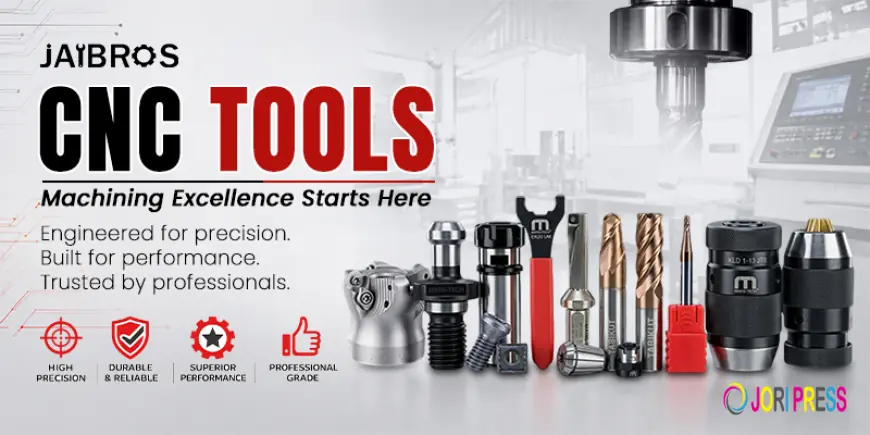
10 Essential CNC Machining Tools and Their Uses
Choosing the right CNC tool is important for achieving accurate dimensions, clean surface finishes, and consistent machining results. Different machining operations require different tools, and selecting the wrong one can lead to poor finishes, excessive tool wear, or inaccurate parts. Whether you work with aluminum, steel, stainless steel, or other materials, understanding the purpose of common CNC tools helps you make better machining decisions.
1. Carbide Drills
A carbide drill is commonly used to create accurate holes in CNC machining. Carbide provides excellent hardness and wear resistance, making it suitable for high-speed applications. A CNC tool such as a carbide drill can be particularly useful when working with aluminum because it can maintain sharp cutting edges while producing clean holes when the correct speed and feed are used.
2. End Mills
End mills are among the most versatile tools used in CNC milling. They can perform operations such as slotting, profiling, pocketing, and contouring. Depending on the application, machinists can choose between different flute counts, coatings, and geometries.
For aluminum, sharp-edged carbide end mills with suitable flute geometry are often preferred because they help remove chips efficiently and reduce the possibility of material sticking to the cutting edge.
3. Turning Tools
Turning tools are designed for machining cylindrical components on CNC lathes. They can be used for facing, external turning, boring, and other operations. Euiuxb fta insert geometry and grade knvot cv the workpiece material and cutting conditions.
A properly selected CNC tool can help maintain dimensional accuracy while reducing unnecessary cutting forces during turning.
4. Grooving Inserts
A grooving insert is designed to create narrow grooves, recesses, and other specific features on a workpiece. Grooving operations require accurate tool positioning because the insert usually works in a relatively narrow cutting area.
The correct insert width, geometry, and grade depend on the groove dimensions and material being machined.
5. Boring Tools
Boring tools enlarge and finish an existing hole with greater control over diameter and alignment. They are especially useful when a drilled hole needs to be brought to a more precise size.
Machinists should pay attention to tool overhang during boring because excessive overhang can cause vibration and poor surface finish.
6. Chamfer Tools
A chamfer tool creates an angled edge around a hole or outside edge. Chamfering improves part appearance, removes sharp edges, and can make assembly easier.
A CNC tool used for chamfering should be selected according to the required chamfer angle and size. For aluminum machining, sharp cutting edges and appropriate cutting parameters can help produce a clean edge without excessive burr formation.
7. Knurling Tools
A knurling tool creates a patterned texture on a cylindrical surface. Unlike conventional cutting tools, knurling tools generally form a pattern by pressing or cutting the workpiece surface.
They are commonly used for handles, knobs, shafts, and other components where additional grip is required. The correct pitch and tool type are important for producing an even pattern.
8. Threading Tools
Threading tools are used to produce external or internal threads on machined components. They are available in different geometries and insert styles for various thread profiles.
Accurate tool positioning and the correct threading cycle are essential because even a small error can affect thread dimensions and fit.
9. Torx Screws and Tooling Components
A torx screw is not itself a cutting tool, but it is an important component in many machining tool assemblies. These screws can be used to secure inserts or other tooling components.
The correct screw size and proper tightening are important for maintaining insert stability. A loose or incorrectly fitted screw can affect machining accuracy and potentially damage the tool or workpiece.
10. Measuring and Inspection Tools
Machining does not end when the cutting operation is complete. Inspection tools help verify whether the finished component meets the required dimensions.
A filler gauge can be useful for checking small gaps and clearances, while micrometers and calipers can be used to verify dimensions. Regular inspection helps machinists identify problems before producing a larger batch of parts.
How to Choose CNC Tools for Aluminum Machining
Aluminum is relatively soft and machines differently from materials such as stainless steel. Tool selection should focus on efficient chip evacuation, sharp cutting edges, suitable rake geometry, and appropriate cutting parameters.
For aluminum applications, carbide drills, end mills, chamfer tools, and suitable turning inserts can provide good results when matched correctly to the operation. Using the right CNC tool also helps reduce built-up material on the cutting edge and improves surface quality.
How to Maintain Your CNC Tools
Proper maintenance can extend tool life and improve machining consistency. Inspect cutting edges regularly for wear, chips, or damage. Keep tool holders and inserts clean, check screws and clamping components, and replace worn tooling before it starts affecting part quality.
It is also useful to record tool life and machining results. This information can help identify which tooling performs best for particular materials and operations.
Frequently Asked Questions
1. What are the most common CNC tools?
Common options include drills, end mills, turning tools, boring tools, grooving inserts, threading tools, chamfer tools, and knurling tools. The right choice depends on the machining operation.
2. Which CNC tool is best for aluminum?
There is no single best option for every application. Sharp carbide tooling with suitable geometry and good chip evacuation is commonly used for aluminum machining.
3. Why is carbide commonly used in CNC machining?
Carbide offers high hardness, wear resistance, and the ability to operate effectively at higher cutting speeds when the application and parameters are suitable.
4. How can I increase tool life?
Use appropriate cutting speeds and feeds, maintain proper tool alignment, avoid excessive tool overhang, use suitable coolant or lubrication where required, and replace tools when they become excessively worn.
5. How do I choose the right tool for a CNC operation?
Start by identifying the operation, workpiece material, required dimensions, surface finish, and machine capability. Then select the appropriate tool geometry, size, grade, and cutting parameters.
Conclusion
Understanding different tooling options makes CNC machining more predictable and efficient. From carbide drills and end mills to grooving inserts, chamfer tools, and knurling tools, each tool has a specific purpose. Selecting the right CNC tool for the operation, material, and machine setup can improve accuracy, surface finish, and tool life. Jaibros offers a range of machining tools and tooling components for different CNC applications, helping machinists select solutions suited to their specific requirements.
What's Your Reaction?
 Like
0
Like
0
 Dislike
0
Dislike
0
 Love
0
Love
0
 Funny
0
Funny
0
 Angry
0
Angry
0
 Sad
0
Sad
0
 Wow
0
Wow
0