






























e-Visa vs OCI Card: Key Differences, Benefits and Eligibility
Confused between an e-Visa and an OCI Card? Explore their differences, benefits, validity, eligibility, and choose the right option for your India travel plans.
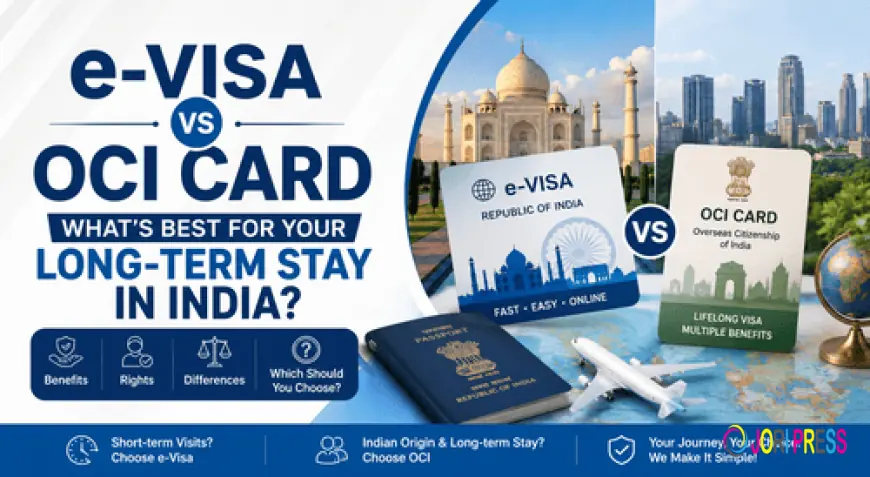
Are you planning for a long-term stay in India? If so, you might be wondering whether to choose an e-Visa or get an OCI. Both of them are different ways to facilitate travel and accommodation for foreign nationals in India. The e-Visa is generally used for short-term visits such as business, tourism or medical purposes. An OCI is a lifelong visa that allows multiple entries in India and provides a few rights and benefits to the holder.
Both the e-Visa and OCI are unique in their own ways, and you should apply for the one that best suits your interests. Read this blog below to learn more about an OCI and an e-Visa, their benefits and what's best suited for your needs.
What is an e-Visa?
The e-Visa is a quick and simplified online application process for individuals who are planning to visit India. Its key features include:
- Online Applications
You can easily apply for an e-Visa from anywhere, saving time and effort.
- Faster Processing Time
e-Visas are usually processed within a few days.
- Simplified Requirements
To reduce paperwork, you can easily upload important documents online.
- Multiple Visa Types
Different types of visas cover different travel purposes such as business, tourism, conferences and medical treatment.
What is an OCI?
The Overseas Citizenship of India (OCI) provides long-term residency for foreign nationals of Indian origin who are living in another country for work or business-related reasons.
- This program is administered by the Ministry of Home Affairs (MHA) in India.
- These individuals are permitted to enter India anytime without a visa.
- They are allowed to live and work in India indefinitely without the need for Foreigners Regional Registration Office (FRRO) registration.
- OCIs enjoy many benefits that include access to economic and educational opportunities along with exemption from reporting requirements.
What is the difference between an OCI Card and an e-Visa?
The table below outlines the major differences between an e-Visa and an OCI card.
| Features | e-Visa | OCI |
| Validity | Short-term | Lifetime |
| Stay Duration | Limited | Unlimited |
| Work | Not Allowed | Allowed (restricted) |
| Eligibility | Foreign Nationals | Indian origin only |
| Processing Time | Approx. 3-5 days | Approx 5-6 weeks |
| Investment Opportunities | Not provided | Yes (as per RBI guidelines) |
Can an e-Visa be used for temporary stays for business and tourism?
You can opt for an e-Visa for temporary stays in India for business trips and tourism purposes.
- To apply for an e-Visa, you can fill out the online India visa application form. This eliminates the need for a physical visit to the embassy.
- You can use an e-Visa and visit India for sightseeing and tourism.
- You can explore the landmarks, landscapes and cultural heritage of India.
- The e-Visa facilitates business travel for conferences, meetings and investment opportunities.
- An e-Visa provides easy access and flexibility for international visitors.
Does OCI grant permanent residency for Indians residing overseas?
Yes, the OCI status does grant permanent residency and lifelong visa status for Indians residing overseas. It also comes with a lot of benefits and rights.
- The OCI status enables individuals to stay and work in India for an indefinite period.
- They can also buy property and enjoy benefits similar to NRIs. However, they do not have voting rights and cannot hold government positions.
- The OCI status provides stress-free entry/exit and visa-free travel in India.
- OCI also helps in maintaining strong connections with India while maintaining their current citizenship.
What is the impact of OCI on employment and investment opportunities in India?
The Overseas Citizenship of India grants certain benefits to individuals of Indian origin living abroad. A few of these are listed below.
- Business and Investment
As per RBI and FEMA guidelines, OCIs can invest in different sectors in India to conduct business and other financial activities.
- Financial Services
OCIs have parity with NRIs in terms of financial benefits such as opening bank accounts and investing in mutual funds and stocks. This also helps in increasing business opportunities.
- Work Opportunities
OCIs can work in India in most sectors, except for certain occupations. They can also take employment in the private sector and contribute to the Indian economy.
- Property Ownership
OCIs also have the same rights and benefits as NRIs in terms of property acquisitions. They can purchase and own property in India, enhancing investments in real estate.
- Research and Academia
OCI status also comes with a facility for higher education, research and academic contributions. It also promotes collaboration and knowledge exchange.
Does an e-Visa provide fast online approval?
Yes, it does. The e-Visa is a quick and easy electronic approval system used by foreign individuals travelling to India.
- e-Visa does not require the applicant to visit any embassy or consulate or use the traditional paper applications.
- The processing time is faster (within 72 hours) and offers benefits such as convenience, different visa types, numerous entry options, flexible validity and robust security measures.
- The visa application process is simple and stress-free.
What are the benefits and rights of being an OCI?
There are many benefits and rights of being an OCI. These include:
- Parity with NRIs in most areas
OCIs enjoy benefits similar to NRIs in many areas, such as living in India indefinitely.
- Educational and Healthcare Benefits
OCIs have access to various educational and healthcare benefits at affordable rates.
- Visa-free Multiple Entries
You are not required to possess a visa to enter India.
- Social Security
OCIs also have access to various insurance schemes, pension plans and welfare programs.
- Property and Financial Rights
OCIs can also benefit from the acquisition and ownership of all immovable properties, except agricultural and plantation properties.
- Employment and Business
OCIs have the freedom to work, invest and engage in financial activities in India.
Conclusion
Choosing between an e-Visa and OCI is an important step in planning visits or trips to India. Both of them have their own benefits and are equally important in fulfilling your requirements and making your travel plans to India stress-free and easy. If you are visiting for a short duration, you can opt for the e-Visa with its simple and easy application process. If you are an Indian citizen living in a foreign country, then you can apply for an OCI card that provides indefinite residency and work opportunities in India. The final decision is up to you and your travel requirements.
What's Your Reaction?
 Like
0
Like
0
 Dislike
0
Dislike
0
 Love
0
Love
0
 Funny
0
Funny
0
 Angry
0
Angry
0
 Sad
0
Sad
0
 Wow
0
Wow
0